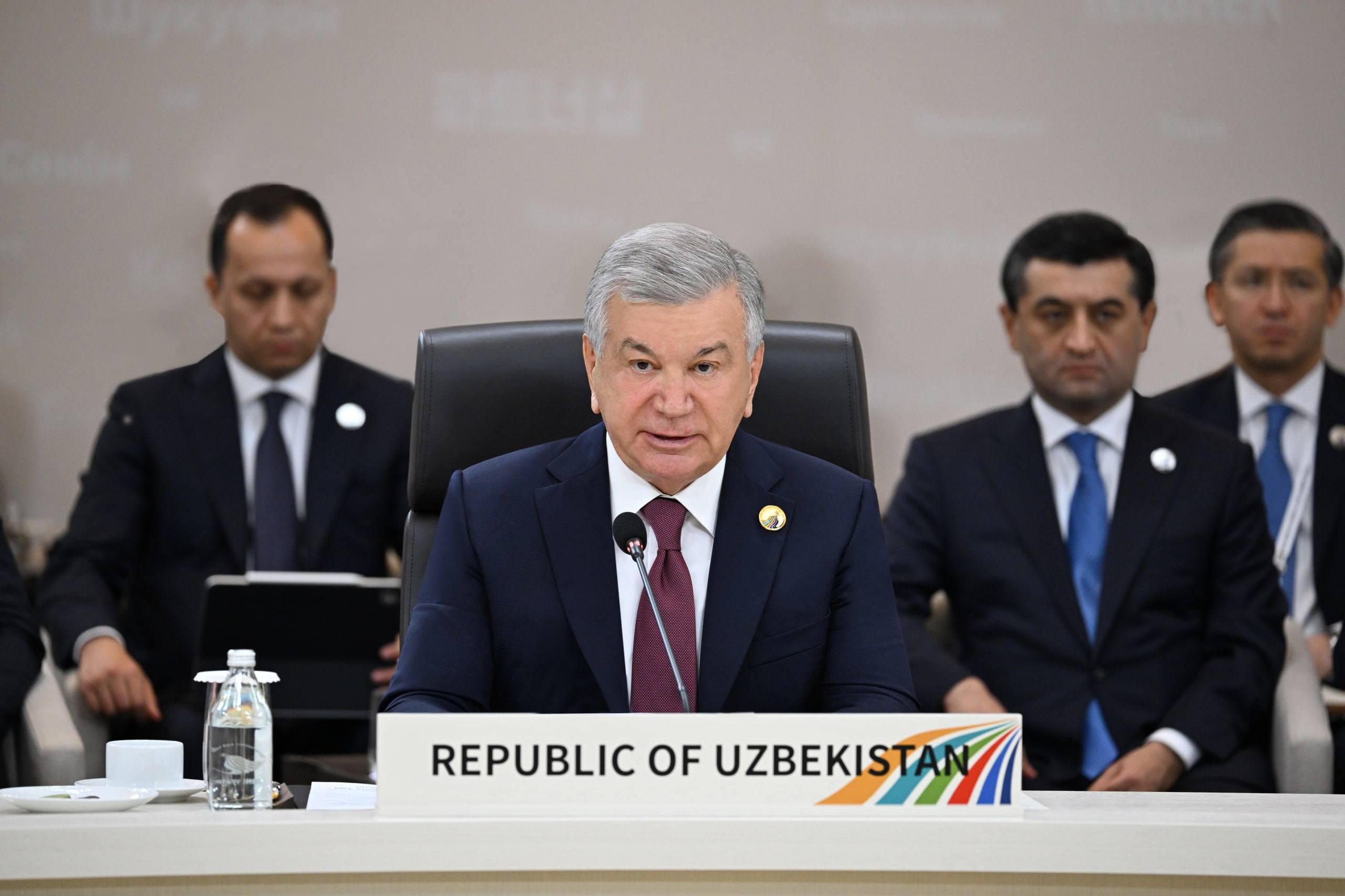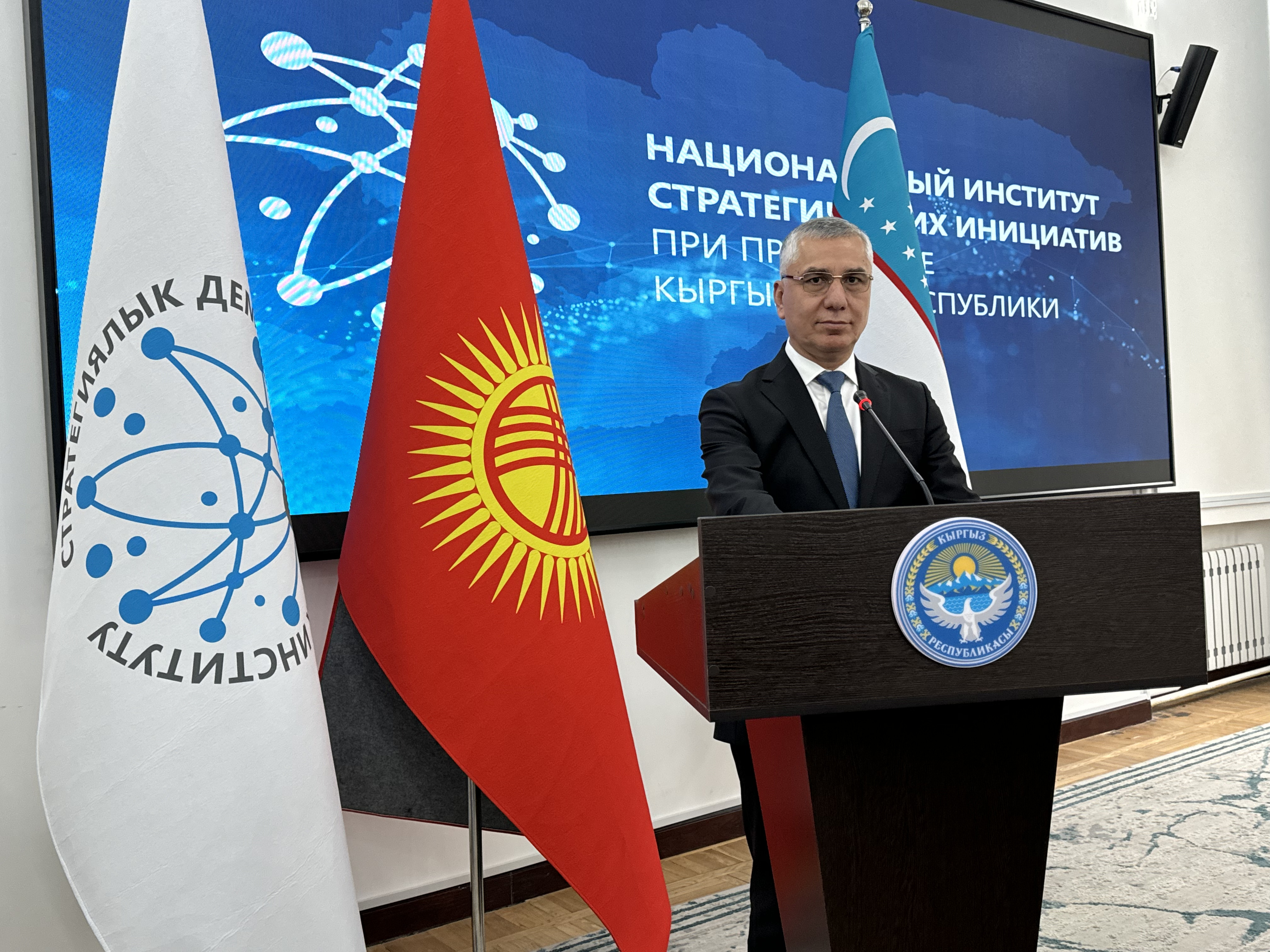
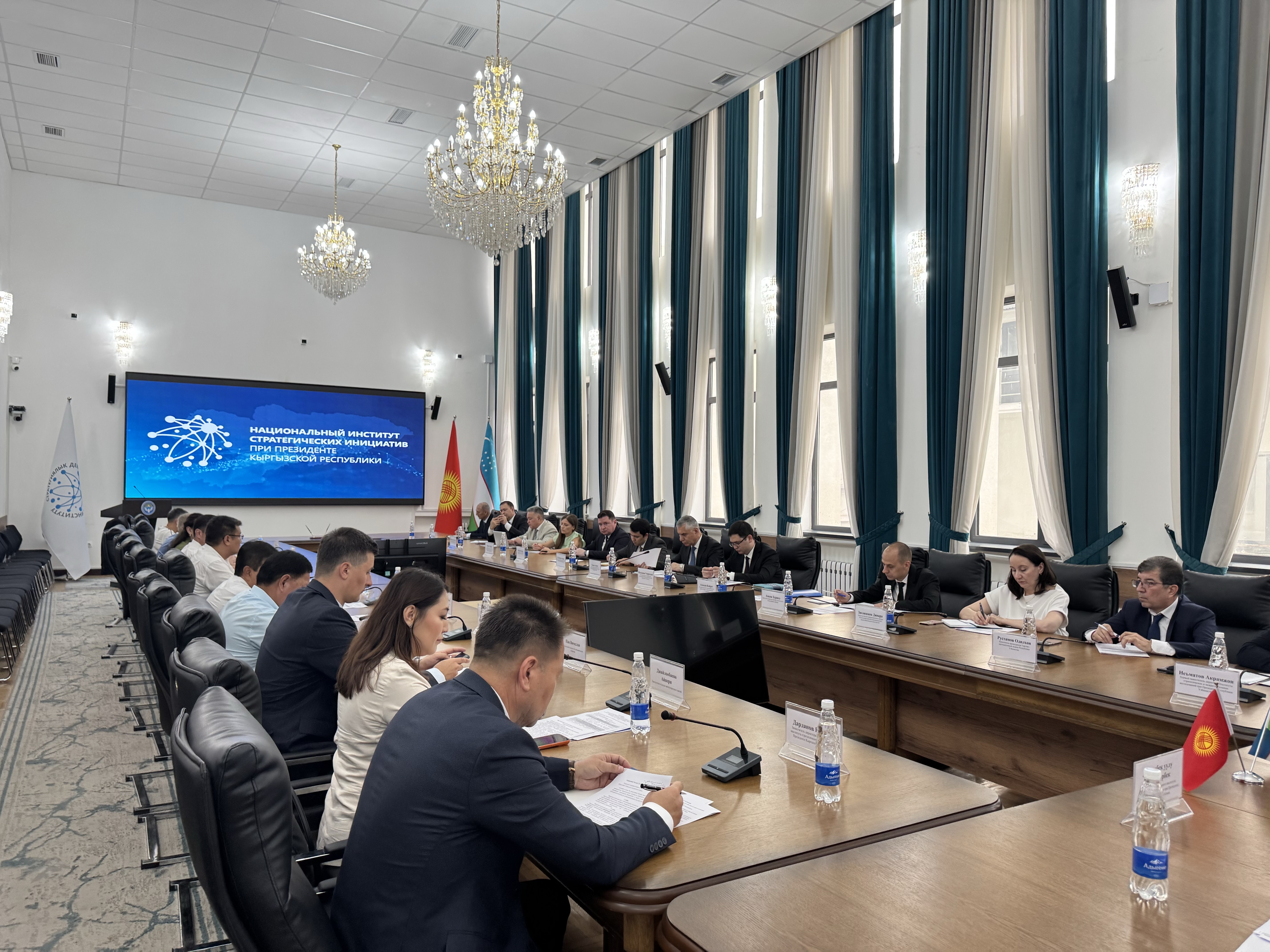
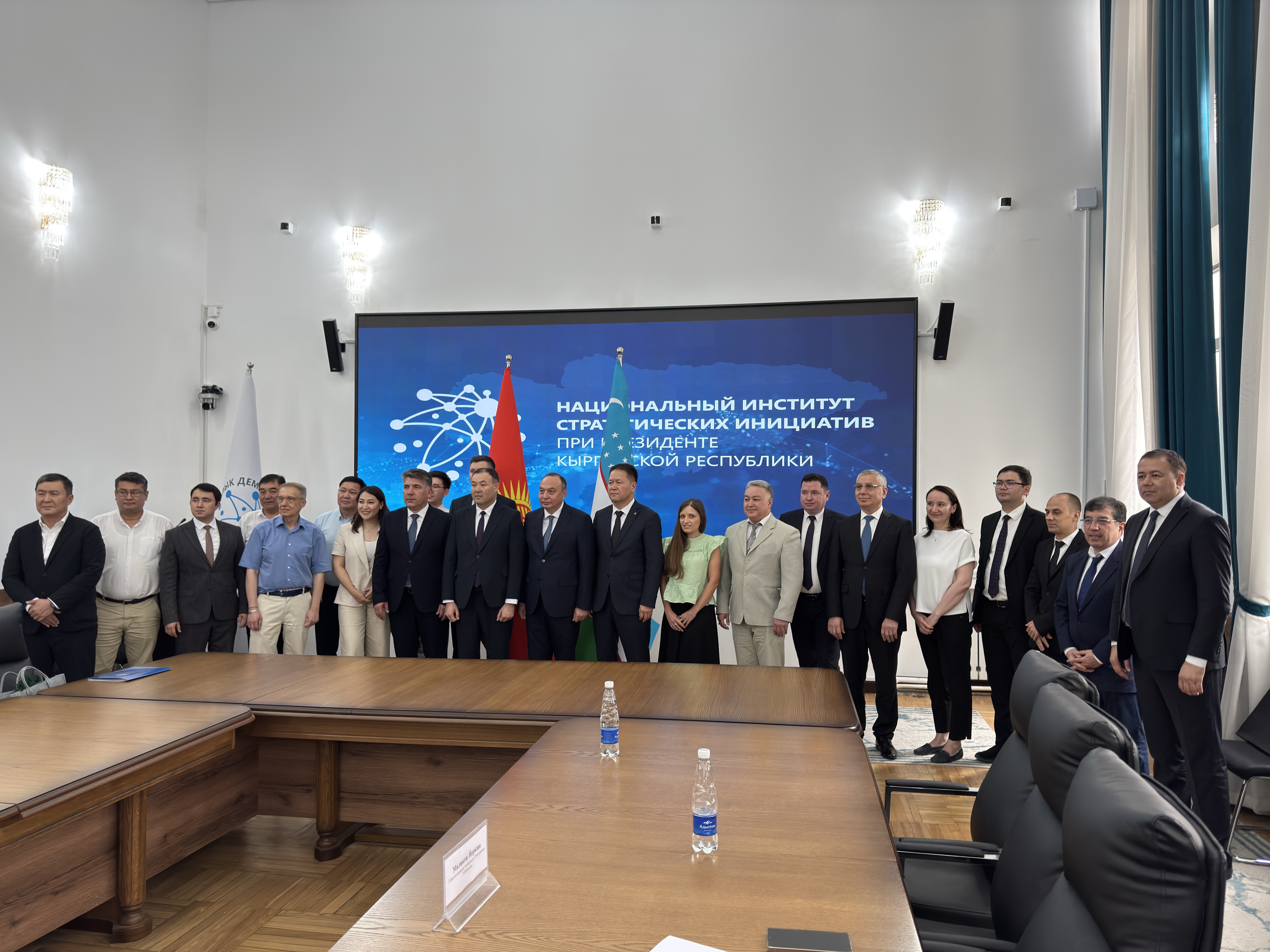
The meeting, held in conjunction with the state visit of President of the Republic of Uzbekistan Shavkat Mirziyoyev to the Kyrgyz Republic, was jointly organized by the Institute for Strategic and Regional Studies under the President of the Republic of Uzbekistan and the National Institute for Strategic Initiatives under the President of the Kyrgyz Republic.
In his presentation, entitled “Deepening Bilateral Cooperation between Uzbekistan and Kyrgyzstan as a Foundation for Regional Economic Integration,” Аzamat Toshev outlined key priorities for developing transport and logistics corridors and advancing economic integration across Central Asia.
The expert emphasized that high-level political dialogue between the two countries continues to gain considerable momentum, providing strategic direction for the full spectrum of bilateral cooperation.
A major milestone in strengthening stability, good-neighborly relations and cooperation was the signing of the Khujand Declaration on Eternal Friendship by the leaders of Uzbekistan, Kyrgyzstan and Tajikistan in 2025. In the Declaration, the three countries reaffirmed their commitment to advancing cooperation not only in safeguarding regional security, but also in expanding trade, economic, transport and logistics ties.
According to the IICA representative, amid the ongoing transformation of the global economy, transport connectivity is becoming a key driver of sustainable growth and competitiveness for the countries of the region. Uzbekistan therefore attaches particular importance to such projects as the China–Kyrgyzstan–Uzbekistan railway, the Trans-Afghan Transport Corridor and the Middle Corridor, which will contribute to the development of an integrated transport network across Central Asia.
The China–Kyrgyzstan–Uzbekistan railway is expected to carry up to 15 million tons of freight annually, shorten transport routes by approximately 900 kilometers and reduce cargo delivery times between regions. This underscores the practical significance of the project not only for the three participating countries, but also for Central Asia as a whole.
Concluding his remarks, Azamat Toshev stressed the need to consolidate efforts to implement strategically important interregional projects involving the construction and modernization of roads and railways, border crossing points and other infrastructure facilities.