Dear Erkin Valitkhanovich,
Your Excellency, Mr. Iijima,
Dear Sergey Gennadyevich,
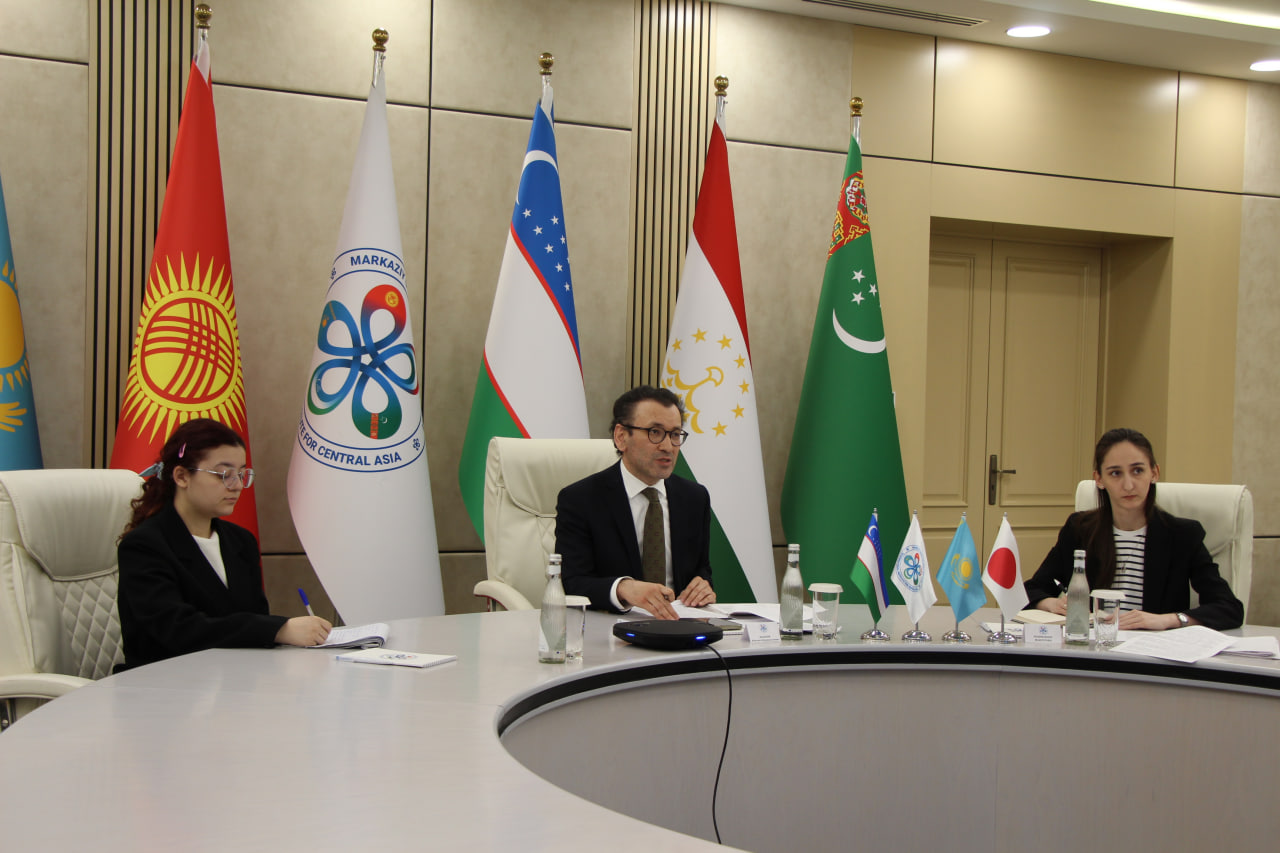
Allow me to extend a warm welcome to all participants of the expert dialogue and to express my sincere gratitude to the organizers for inviting the International Institute for Central Asia to today’s event and for providing me with the opportunity to deliver this address.
I am confident that this format will enable us to engage in a substantive discussion on the current state and future prospects of cooperation between the countries of the region and Japan, as well as to identify priority areas of our collaboration.
On the Role of the Expert Community in Advancing Cooperation between Central Asia and Japan
In light of ongoing global changes and the dynamic development of regional cooperation in Central Asia, including the active expansion of “Central Asia Plus” formats, we believe that there is a growing need to update a number of mechanisms within the Dialogue between the countries of the region and Japan.
First. Taking into account the experience of cooperation between the Central Asian republics and other external partners within “CA Plus” formats, we consider it possible, at the initial stage, to discuss the establishment of a “virtual” secretariat for the “Central Asia + Japan” format.
Second. We also propose to intensify the activities of the Intellectual (Tokyo) Dialogue within our format. We believe that holding off-site meetings in the countries of Central Asia could give new momentum to this platform. For example, one of the upcoming sessions of the Tokyo Dialogue, on the eve of a summit, could be held in Uzbekistan. Its agenda could include issues related to the modernization of the “Central Asia + Japan” Dialogue in light of new global and regional realities.
Third. In order to attract the attention of Japanese business circles to the investment potential of Central Asia, we consider it appropriate to continue holding Business Dialogues in the “Central Asia + Japan” format in the countries of the region, as well as to use well-established platforms for this purpose, such as the Tashkent International Investment Forum or the Astana International Financial Centre.
Fourth. Uzbekistan highly appreciates the results of the implementation of the “Initiative for Cooperation in Transport and Logistics,” proposed in 2017, which has had a positive impact on the modernization of the region’s transport and logistics industry. In our view, reviving this initiative under new conditions could facilitate more active participation by Japan in strategically significant programs and projects aimed at developing Central Asia’s transport and logistics infrastructure. In particular, Japan, together with other foreign partners, could play a key role in enhancing transport and economic connectivity between Central and South Asia.
Fifth. Japan’s technological achievements and new projects in the field of green energy deserve special attention. Of particular note is Tokyo’s “green” initiative aimed at ensuring financing for energy transition programs in Asia. We advocate for intensified cooperation in environmental protection, the joint implementation of projects to combat climate change, the rational use of water resources, and the introduction of green technologies.
Sixth. The tourism industry is one of the most important resources for the development and modernization of the countries of Central Asia. Our region is home to numerous UNESCO World Heritage sites, as well as many attractions of interest to Japanese tourists. The development of joint tourism programs and routes will help increase tourist flows between Japan and the countries of the region, while also enabling the study and adoption of Japan’s rich experience and best practices in tourism services.
Seventh. Over the past decades, the countries of Central Asia and Japan have accumulated substantial experience in cooperation on Afghan-related issues, including assistance in the restoration of Afghanistan’s economy. Uzbekistan highly values Japan’s role as one of the largest donors and an influential participant in the Afghan peace process. We support deeper cooperation and dialogue between the countries of the region and Japan on issues related to the peaceful reconstruction of Afghanistan.
Overall, we believe that the “Central Asia + Japan” format is in demand both by the countries of our region and by Japan. It serves as a platform for open discussion and decision-making that promote economic, humanitarian, and political interconnectedness between our region and Japan.
I am confident that this format will complement the high level of bilateral relations with the countries of Central Asia by ensuring regular high-level political dialogue for Tokyo, active economic cooperation, investment activities, and vibrant cultural and humanitarian engagement.
In conclusion, allow me to thank all participants of today’s event for their views and assessments. I am confident that our meeting will become an important step toward strengthening ties between Central Asia and Japan, opening new horizons for future cooperation.
Thank you for your attention.