Our countries have agreed on a unified vision for the development of regional cooperation for the first time—the "Central Asia - 2040" Concept, which confirmed the commitment of the states to impart an irreversible and progressive nature to the process of regional cooperation. The document covered all key areas of interaction, outlined specific practical plans for the future, and determined forms and mechanisms for their implementation.
In essence, the Astana Summit demonstrated the states' commitment to further promoting intra-regional cooperation and enhancing comprehensive cooperation within the Central Asian five.
Since the first meeting in 2018 in Astana, the Central Asian countries have come a long way. It is worth recalling all the main stages of how we have collectively transformed the modern face of Central Asia, turning the region into a space of peace and harmony, friendship, and good neighborliness, mutual trust, and cooperation.
Just seven years ago, our borders were almost entirely closed. We witnessed armed clashes and minefields on border territories, transport blockades, and high trade barriers.
Endless disputes over water resource usage, access to pastures, and water facilities threatened to escalate into open confrontation.
Certain forces in the region provoked rivalry and competition, fostering distrust and exploiting our shared historical heritage. Our disunity made us weaker, depriving us of prospects for consolidation and hindering the region's potential for common interests.
All of this fundamentally contradicted the cultural and civilizational values of the Central Asian peoples, who have lived side by side in peace and harmony for centuries, shared a common religion, observed shared customs and traditions, and were bound by thousands of invisible threads.
Moreover, the deepening global crisis of trust and the escalation of armed conflicts began to negatively impact the stability and sustainable development of the region. In this context, the understanding grew that the well-being of Uzbekistan, like that of other countries and peoples of Central Asia, depended on joint efforts to strengthen cooperation and a willingness to jointly promote the interests of regional security and sustainable development.
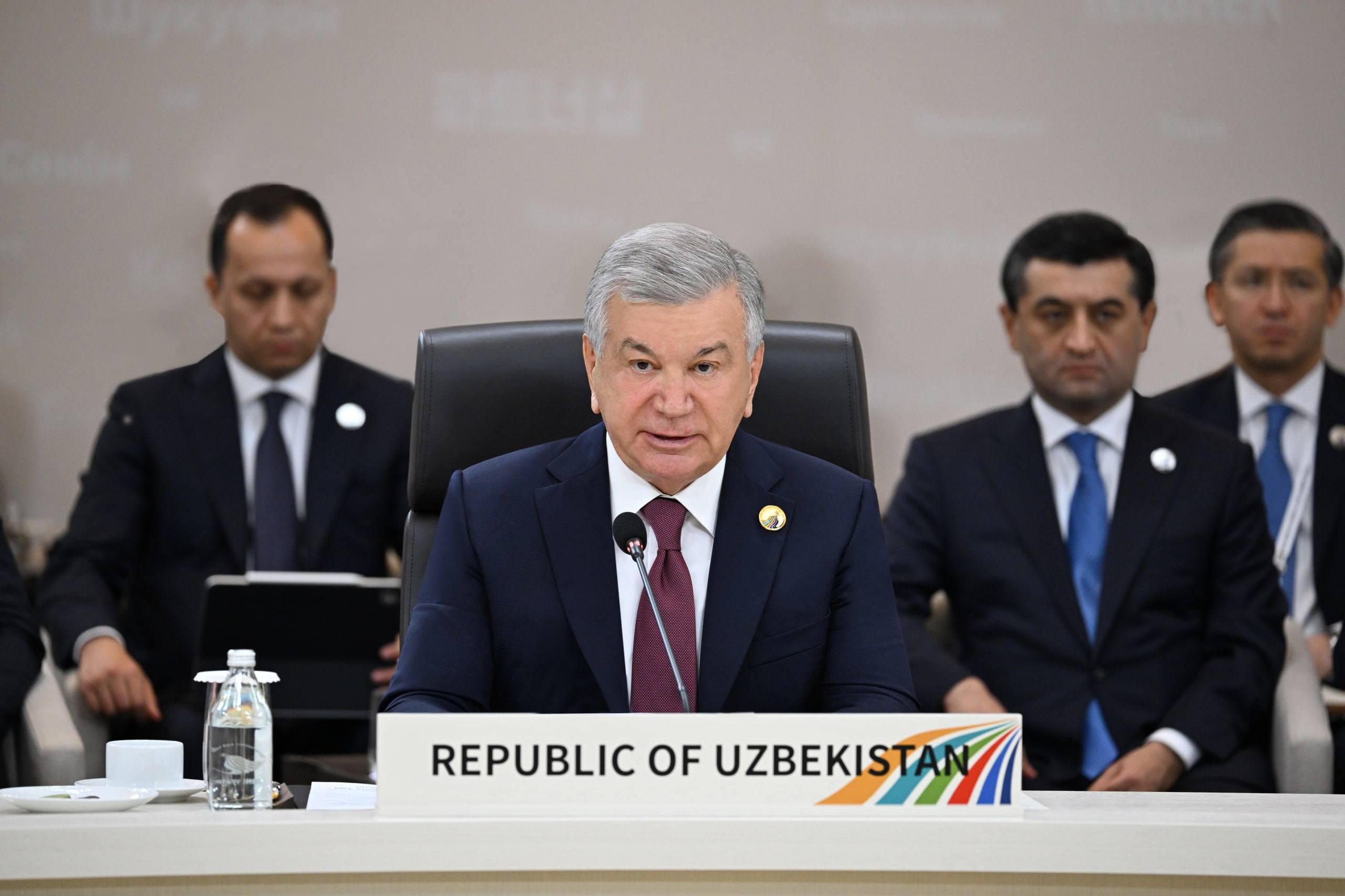
It must be acknowledged that the leader who keenly felt the emerging public demand for radical changes, the resolution of accumulated problems, and the fundamental break from outdated approaches to building relations with neighbors was the new President of Uzbekistan, Shavkat Mirziyoyev.
The newly elected Head of Uzbekistan formulated a new comprehensive Doctrine of foreign policy. It defines Uzbekistan's vision and approaches to pressing issues of international and regional security, modern challenges and threats, the formation of a new world order, and more.
The Doctrine provides for the development of multifaceted cooperation with developed countries of the world based on equality, mutual respect, trust, and consideration of each other's interests. Special attention is given to maintaining consistent political dialogue with leading countries of Asia, Europe, America, and Africa, as well as reputable international organizations.
The primary priority area of Uzbekistan's foreign policy activity in this Doctrine, as defined by the President of Uzbekistan, is the Central Asian region. The goal of achieving "zero problems with neighbors" is at the forefront. The conceptual basis of regional policy is the principles of not strengthening one's own security at the expense of others, openness, pragmatism and constructivism, proactive dialogue based on equality, mutual respect, and consideration of interests.
Uzbekistan objectively bears special responsibility for the future of Central Asia. This is dictated by the fact that we share common borders with all the countries in the region. Over half of the population of Central Asia lives here, along with large communities of all the peoples in the region. Virtually all vital issues of Uzbekistan's development—from water to transport corridors, regional security, and trade—depend on good neighborly and predictable relations with neighboring countries.
This is why, in his first address to Parliament in 2016, the Head of Uzbekistan clearly outlined the hierarchy of priorities, placing the strengthening of relations with Central Asian countries first. "The main priority of Uzbekistan's foreign policy activity is the Central Asian region, which is closely linked to our country's national interests.
We consistently adhere to an open, friendly, and pragmatic policy toward our nearest neighbors—Turkmenistan, Kazakhstan, Kyrgyzstan, Tajikistan," Shavkat Mirziyoyev emphasized at the time. It is no coincidence that the Head of our state, immediately after his election, made his first official visits to Ashgabat and Astana, once again confirming our primary priority—Central Asia above all.
In this historic address, our country's leader announced Tashkent's firm intention to pursue a constructive policy toward its closest neighbors, resolve accumulated regional problems based on equality, mutual consideration of interests, and the search for reasonable compromises, and create a belt of friendship and prosperity, security, and stability around Uzbekistan, a country located at the very heart of the region.
The President of Uzbekistan set out the main tasks of regional policy for the government and foreign policy apparatus—completing the processes of border settlement, jointly resolving issues of rational and fair water use, establishing interconnectedness among countries in economic, environmental, transport-logistical, and scientific-technological development, and more.
Changes in Tashkent's approach to building political-diplomatic, economic, cultural-humanitarian interaction in Central Asia have created conditions not only for a radical improvement in Uzbekistan's interstate relations with its neighbors but also laid the foundations for further consolidation and integration of Central Asia in a new format.
In this context, the most significant event for the entire region was the launch of the Consultative Meetings of the Heads of State of Central Asia (CMHSA) by Shavkat Mirziyoyev, which have today transformed into an effective platform for regional dialogue aimed at jointly building a territory of stability, security, and sustainable development.
The idea of holding regular meetings was first voiced by the President of Uzbekistan, Shavkat Mirziyoyev, in September 2017 at the 72nd session of the UN General Assembly. At that time, the Head of State declared that the main priority of the country's foreign policy was "a peaceful and economically prosperous Central Asia," and all of Uzbekistan's efforts would be directed at "increasing dialogue, constructive interaction, and strengthening good neighborliness."
In November of the same year, at his initiative, a high-level international conference, "Central Asia: A Common Past and a Shared Future," was convened in Samarkand. The foreign ministers of the five regional states who participated in it supported the proposals of the Leader of Uzbekistan to establish Consultative Meetings of Heads of State. It was then that the "Samarkand Consensus" was formed, where all the countries declared their intention to develop regional cooperation together, discuss, seek ways, and make decisions on issues relevant to themselves and the region as a whole.
The "Samarkand Consensus" was also supported by the international community. Just six months later, in June 2018, at the initiative of the President of Uzbekistan, the UN General Assembly adopted a resolution "Strengthening Regional and International Cooperation for Peace, Stability, and Sustainable Development in the Central Asian Region." It highly appreciates the efforts and initiatives of the Central Asian countries aimed at strengthening stability and economic cooperation in the region.
All this made it possible, in just a few years, to fundamentally change the situation in Central Asia. First of all, it was possible to overcome existing fairly complex and sensitive issues regarding border issues.
Uzbekistan has completely completed the legal formalization of its border with Kazakhstan, delimited its border with Turkmenistan, Tajikistan, and Kyrgyzstan. Dozens of border crossing points have resumed their activities, significantly facilitating the movement of people between our countries.
Today, the borders between Uzbekistan and the Central Asian countries can rightfully be called bridges of friendship and good neighborliness. A confirmation of this is the procedure for crossing the Uzbek-Kyrgyz border with the presentation of an internal document—a national ID card, which has been in effect since September 1, 2023. A similar project is being discussed with the Kazakh side.
At the Astana summit, President Shavkat Mirziyoyev proposed the mutual recognition of national ID cards in Central Asia and the development of mass tourist products based on the principle of "One tour - the whole region."
At the same time, we are witnessing significant progress in describing the Tajik-Kyrgyz border. To date, 94% of the total length of the border has been agreed upon.
In other words, this indicates that despite all the disagreements, the resolution of acute, sensitive, and complex issues is quite possible if guided by the principles of mutual trust and the willingness of the parties to mutually acceptable compromises, taking into account each other's interests.
The complete reboot in our vast region has benefited everyone. Thanks to the high level of consolidation, there is noticeable progress in the region's economy. The level of cooperation and intra-regional trade has significantly increased, and ties with foreign partners have expanded.
Intra-regional trade has grown 4.4 times, the number of joint ventures—five times, and the volume of mutual investments—almost twice.
Today, Central Asia has become a more interconnected region capable of collectively realizing emerging opportunities. Uzbekistan, together with Kyrgyzstan and Tajikistan, has created investment funds to finance large joint projects. Within these institutions, cooperation projects in the automotive industry, electrical engineering, textile industry, and agriculture have already begun.
For example, a joint venture for the production of passenger cars operates in Kazakhstan. A household appliance plant has been launched in Tajikistan. Kyrgyzstan and Kazakhstan have created a joint venture to build solar power plants in the Issyk-Kul region.
At the initiative of Uzbekistan, work has begun with all the countries of the region to create cross-border trade zones. Currently, the mechanism for forming such zones has been launched with Kazakhstan, Kyrgyzstan, and Turkmenistan.
As a result, over the past 7 years, the region's economy has grown from $273.3 billion to $450 billion.
In line with overall changes, significant progress has been observed in areas related to water, water-energy, and environmental issues.
Notable in this context were the 2023 agreements between Uzbekistan, Kyrgyzstan, and Kazakhstan, including the signed "roadmap" for the joint construction of the Kambar-Ata HPP-1, as well as agreements to jointly address water discharges from the Toktogul Reservoir during the summer growing season.
Equally important was the agreement between Uzbekistan, Tajikistan, and Kazakhstan on the operating mode of the Bahri Tojik (Kayrakkum) Reservoir during the growing season, which opened the possibility of ensuring the necessary water supply in the middle reaches of the Syr Darya River.
In the new geopolitical conditions, Central Asia is once again reclaiming the role it played during the times of the Great Silk Road, serving as a bridge between East and West, North and South, and a crossroads of various economic interests. The region is becoming an important element of transport and communication routes within the Trans-Caspian corridor, the North-South route, and new projects connecting Central and South Asia, diversifying corridors from China to Europe.
A breakthrough in diversifying transport and transit routes for Central Asia was the signing of an agreement on the construction of the "China-Kyrgyzstan-Uzbekistan" railway, designed to connect our region with the European railway network.
In recent years, cultural and humanitarian exchanges have significantly intensified. Cross-cultural years, film days, exhibitions, concerts, tours, and joint sports events have become regular occurrences. A striking indicator of this is the growth of intra-regional tourism, which has already reached 79% of all tourist destinations preferred by citizens of our countries. In Uzbekistan alone, this figure reached 6.6 million in 2023, with the majority being tourists from neighboring countries.
In Uzbekistan alone, this figure reached 6.6 million in 2023, with the majority being tourists from neighboring countries.
Another key component of Uzbekistan's comprehensive strategy to transform Central Asia into a zone of stability and sustainable development is the achievement of long-term peace in Afghanistan. With the election of Shavkat Mirziyoyev as President of Uzbekistan in 2016, Tashkent's Afghan policy has become systematic and comprehensive. A feature of the new approach towards Afghanistan is the consolidation of efforts by regional states and the entire international community to achieve long-term peace on Afghan territory and ensure the integration of this country into global economic relations with the region.
In the special resolution adopted by the UN General Assembly in 2022 at the initiative of President Shavkat Mirziyoyev, "Strengthening Connectivity between Central and South Asia," a special role is assigned to Afghanistan in establishing ties between Central Asia and South Asia, a region with a combined population of nearly 2 billion people.
Another significant feature of Tashkent's current Afghan policy is that Uzbekistan considers Afghanistan as an organic, integral part of the entire Central Asia.
It is no secret that the new Central Asia has become a region of attraction for world powers and leading states. Today, Central Asia actively interacts within more than 10 "CA+" formats with nearly 40 countries and two regional organizations. Speaking of the potential and opportunities for cooperation, it should be noted that the countries in this economic space account for 75% of the world's GDP, and they are home to about four billion people globally.
For Uzbekistan and Central Asian countries, this is primarily a source for attracting foreign investment into key sectors of our economies, new markets for promoting our goods and services, as well as millions of tourist flows.
In turn, Central Asia offers our partners a promising, large market with over 80 million consumers. The region holds 7% of the world's oil and gas reserves, along with substantial deposits of rare earth critical materials needed for digital and green transformation. Specifically, the reserves of 10 critical materials available in the region range from 5.2% to 38.6%.
Central Asia is also a region with a growing volume of competitive labor resources. According to UN estimates, by 2050, the region's population will exceed 100 million people, while remaining one of the youngest regions, with an average age of about 30 years.
It cannot be denied that Central Asia has essentially become an independent player on the global stage, strengthening its subjectivity. Moreover, our countries actively take common or close positions in building relations with external partners.
The results of the transformations in Central Asia are highly valued and recognized worldwide. In his speech at the last summit of the Central Asian Heads of State, the Special Representative of the UN Secretary-General for Central Asia, Head of the Regional Center for Preventive Diplomacy in Central Asia, Kaha Imnadze, drew attention to the new quality of strategic partnership in the region, noting that "Central Asia in many dimensions can become a unique model of regional cooperation and an example for other regions of the world on how to build good-neighborly relations for the benefit of all peoples living in the region."
A similar opinion is shared by the Chairman of the Russian Council on Foreign and Defense Policy, F. Lukyanov. According to him, stability and openness have become the hallmark of Central Asia.
"The defining role in these positive processes is played by Uzbekistan under the leadership of President Shavkat Mirziyoyev, whose policies have shifted towards a firm line of openness and inclusiveness in the process. This dynamic sets the tone for the entire region, providing an example for everyone else. It is the activity and energy of the leadership of Uzbekistan, and personally of President Mirziyoyev, that give the necessary impulse to turn objective trends into real processes," believes F. Lukyanov.
Richard Weitz, an expert at the Hudson Institute (USA), noted that "the speed with which Shavkat Mirziyoyev facilitated the improvement of relations with other Central Asian states indicates that these partners anticipated and welcomed Tashkent's new regional approach."
According to him, the country is at the heart of Eurasia, among many possible East-West and North-South transport corridors, which "makes Tashkent's support critically important for major regional projects and vital for the stability and prosperity of Eurasia."
International experts recognize the important role in promoting rapprochement with neighbors and building a regional identity for Central Asian countries. Zhao Huasheng, a professor at Fudan University in Shanghai, notes that "Central Asian countries increasingly recognize a common identity both within the region and beyond."
In his opinion, "Central Asia as a whole is more recognizable in the world, has more opportunities to strengthen its international authority, and can have greater weight in relations with the outside world."
The unity of views at the Astana summit was also reflected in the aspiration to form a Central Asian identity as an important condition for establishing common responsibility and solidarity in enhancing the well-being and prosperity of Central Asia. As rightly noted by President of Uzbekistan Shavkat Mirziyoyev in his speech at the 78th session of the UN General Assembly in September 2023, "We can confidently say that our peoples are united by a sense of regional identity, and this feeling is increasingly strengthening."
The second cycle of meetings of the leaders of the "Central Asian Five," launched in Astana, places special responsibility on Uzbekistan as the country hosting the CA Heads of State Summit in 2025 for the steady advancement of comprehensive regional cooperation. What does this mean?
Firstly, further deepening of the political dialogue.
It is necessary to strengthen political trust, based on the principles of openness, equality, respect, and consideration of interests. In this regard, the continuation and further expansion of regular political dialogue at all levels, giving it a systematic and multifaceted character, will play an important role.
Efforts should be closely coordinated on security issues, which are becoming even more relevant in the face of global economic crises and sharp confrontations between various power centers.
In these conditions, the initiative of President of Uzbekistan, voiced within the framework of the 6th CA Heads of State Summit, to develop a Concept of Regional Security and Stability is of particular importance.
Secondly, our priority task should be to achieve a strategic breakthrough in the economic sphere.
It is extremely important to highlight cooperation in the areas of trade, investment, technology, and innovation as imperatives of our interaction. The economy should become the framework and driving force of mutually beneficial cooperation.
We support the development of our region as one of the global centers of economic growth and investment activity.
President of Uzbekistan noted that ultimately, "our strategic goal should be the formation of a Single Regional Market in the long term."
Thirdly, promoting joint projects of industrial cooperation.
Today, the countries of the region are fully ready to cooperate in this direction. At the Astana summit, the President of Uzbekistan proposed the creation of a Unified Industrialization Map of the region and the launch of a Council at the ministerial level. The President of Kazakhstan, in turn, emphasized the importance of developing a network of trade, logistics, and industrial hubs in border areas.
Fourthly, the realization of transport and communication potential.
An important step for deepening cooperation in this area could be the development of a Strategy for Regional Transport Corridors in Central Asia, the adoption of a Regional Program for the Sustainable Development of the CA Transport System, and the formation of a Regional Council on Transport Communications of the CA countries to coordinate interaction in the development of the transport and logistics sector in the region.
Fifthly, cooperation in the energy sector.
There is an objective need to develop joint approaches to the formation of a common energy market in Central Asia.
An important role here could be played by increasing mutual supplies of energy resources, the construction of energy facilities, and the implementation of joint projects for the widespread adoption of renewable energy sources, modern resource-saving, and environmentally friendly technologies.
Sixthly, adaptation to climate change and ensuring food security.
In our region, problems related to global climate change, water scarcity, desertification, and soil degradation are worsening, leading to declining crop yields.
Central Asian countries fully agree on the need for coordinated cooperation to counter the consequences of climate change, especially in the face of increasing extreme weather events.
In turn, food security and stable food supply issues are becoming extremely important in the context of disruptions in the agricultural supply system caused by the consequences of climate change and increased tensions in world politics.
In this context, it seems important to strengthen cooperation in the field of agro-industrial cooperation to create high-yielding varieties of crops, find more rational irrigation methods, and introduce water-saving technologies and innovations in the agricultural sector.
Seventhly, strengthening cultural and humanitarian ties.
It is important to continue our efforts to expand interaction in the fields of culture, science, education, and tourism. The growing cohesion of Central Asian countries offers unprecedented opportunities to transform the region into one of the most attractive tourist destinations in the world.
For the further development of the regional tourism industry, we have all the opportunities. Of the more than 1,000 UNESCO World Heritage sites, over 20 are located in the region, which forms a huge potential for further popularization of the region's cultural and historical sites.
The practical implementation of all these priority tasks requires constant "replenishment" of regional interaction at all levels with new scientifically grounded ideas and proposals. In this regard, the President of Uzbekistan proposed holding a meeting of the Central Asian Expert Forum of leading think tanks and academic circles in our country to jointly develop conceptual recommendations and proposals that can be considered at the next summit of heads of state.
In this context, a special responsibility is placed on the International Institute for Central Asia, a unique research organization established at the initiative of President Shavkat Mirziyoyev.
Overall, the process of regional rapprochement in Central Asia, launched in 2017 as a result of large-scale reforms in Uzbekistan and Tashkent's innovative policy of good-neighborliness and cooperation, has today acquired a stable and irreversible character.
The country's shift towards openness and the practical implementation of the priority of Central Asia proclaimed in the foreign policy Doctrine of President of Uzbekistan have ensured a radical renewal of political and economic processes in the region.
The political will, unprecedented pragmatism, strengthening of confidence-building measures, and the flexibility of the diplomacy of the Head of State, readiness for reasonable compromises to resolve key inter-state and regional issues, have ensured a strategic shift in Central Asia from disputes and disagreements to mutual understanding and cooperation.
The consolidation of these revolutionary approaches during intensive bilateral contacts and Consultative meetings of heads of state contributed to the establishment of a shared commitment of countries to jointly build a peaceful, stable, and sustainably developing and prosperous Central Asia.
This ongoing peaceful, constructive transformation of a strategically important region in the heart of Eurasia, amidst global upheavals, is already a phenomenon of global politics, which has become the subject of expert discussions and will undoubtedly be the topic of future deep scientific research.
One thing is certain – the main architect of the emerging New Central Asia, who has already inscribed his name in the history of the region, is President of Uzbekistan Shavkat Mirziyoyev. The awarding of the Honorary Badge of the CA Heads of State to the President of Uzbekistan at the Central Asian Summit in Astana was another recognition of the personal contribution of our country's leader to the development of friendship, good-neighborliness, and mutual understanding among the states of the region.
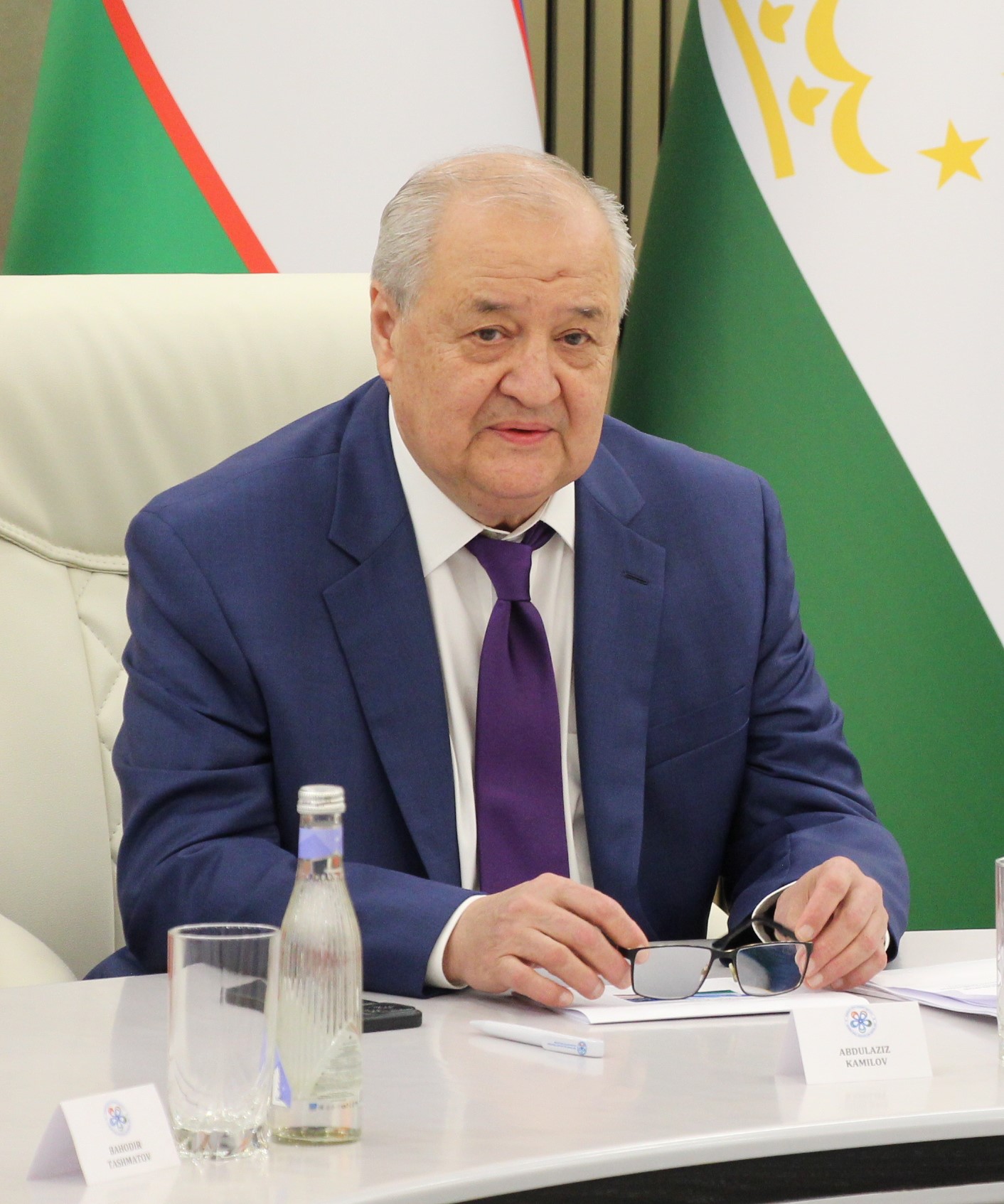
Abdulaziz Kamilov,
Special Representative of the President of the Republic of Uzbekistan for Foreign Policy Affairs