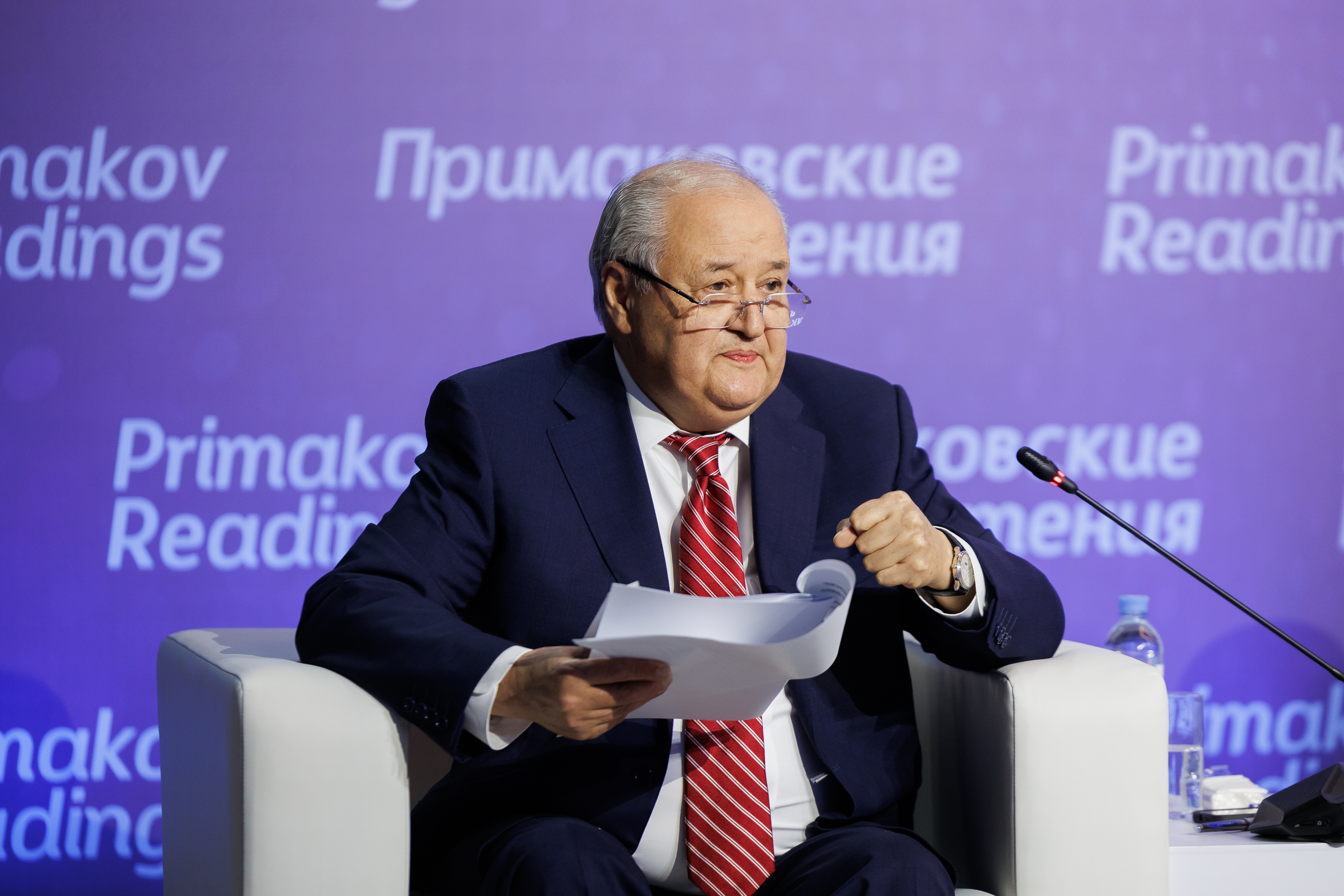
The discussion was moderated by Abdulaziz Kamilov, Foreign Policy Advisor to the President of the Republic of Uzbekistan. The session brought together Vitaly Naumkin, Academic Director of the Institute of Oriental Studies of the Russian Academy of Sciences (IOS RAS); Irina Zvyagelskaya, Head of the Center for Middle East Studies at the Institute of World Economy and International Relations (IMEMO) of the Russian Academy of Sciences; Mohammed Ali Chihi, Executive Director of the Global Institute for Strategic Studies (Qatar); and Güray Alpar, Chairman of the Institute for Geopolitical Forecasting (Türkiye).
Opening the session, Abdulaziz Kamilov noted that the Middle East is experiencing one of the most challenging periods in its modern history, while developments in the region are having a direct impact on international security. He emphasized that, for the countries of Central Asia, preserving the Middle East as a region of predictability, cooperation, and sustainable development is of fundamental importance, as the escalation of conflicts generates long-term risks to regional connectivity and security.
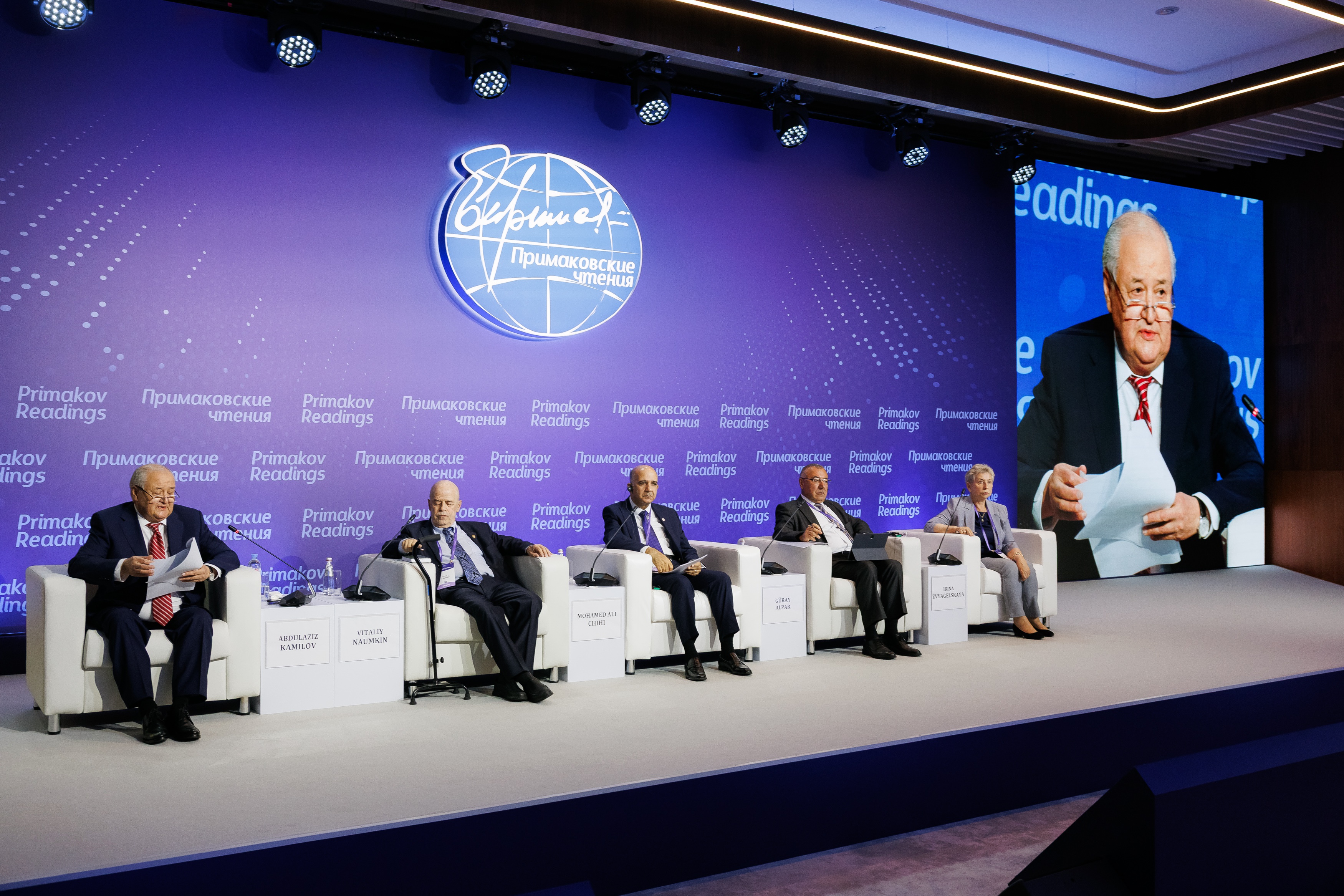
According to Vitaly Naumkin, prospects for resolving the Iranian crisis will largely depend on the willingness of the parties to engage in political dialogue. He also highlighted the growing role of regional states, including Qatar and Pakistan, in facilitating the negotiation process.
Representing Qatar, Mohammed Ali Chihi underscored the need to seek compromise solutions among all stakeholders, noting that further stabilization of the situation will not be possible without strengthening regional dialogue and advancing a settlement of the Palestinian issue.
In turn, Güray Alpar emphasized the increasing importance of economic factors and energy security in ensuring stability in the Middle East, stressing the need for regional countries to consolidate their efforts to prevent further escalation.
Irina Zvyagelskaya drew particular attention to the internal drivers of protracted conflicts in the Middle East. In her view, a sustainable settlement cannot be achieved without addressing issues of national identity, the condition of state institutions, and deep-rooted historical grievances. She also stressed that the primary responsibility for advancing the peace process should rest with the countries of the region themselves.
Concluding the discussion, Abdulaziz Kamilov emphasized that achieving long-term stability in the region requires recognition of the interconnected nature of existing challenges, the expansion of regional dialogue, and the pursuit of balanced solutions involving all interested parties.