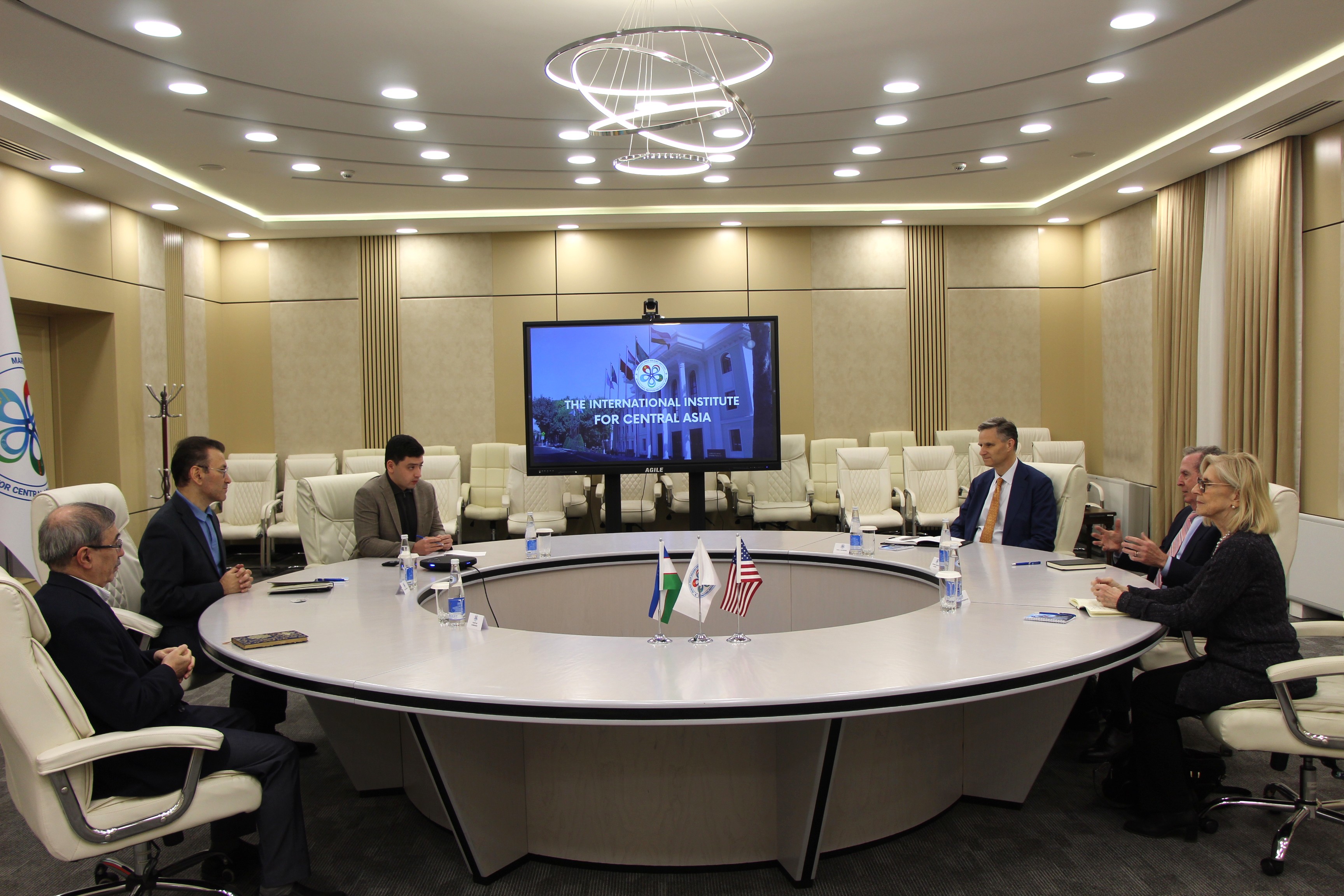
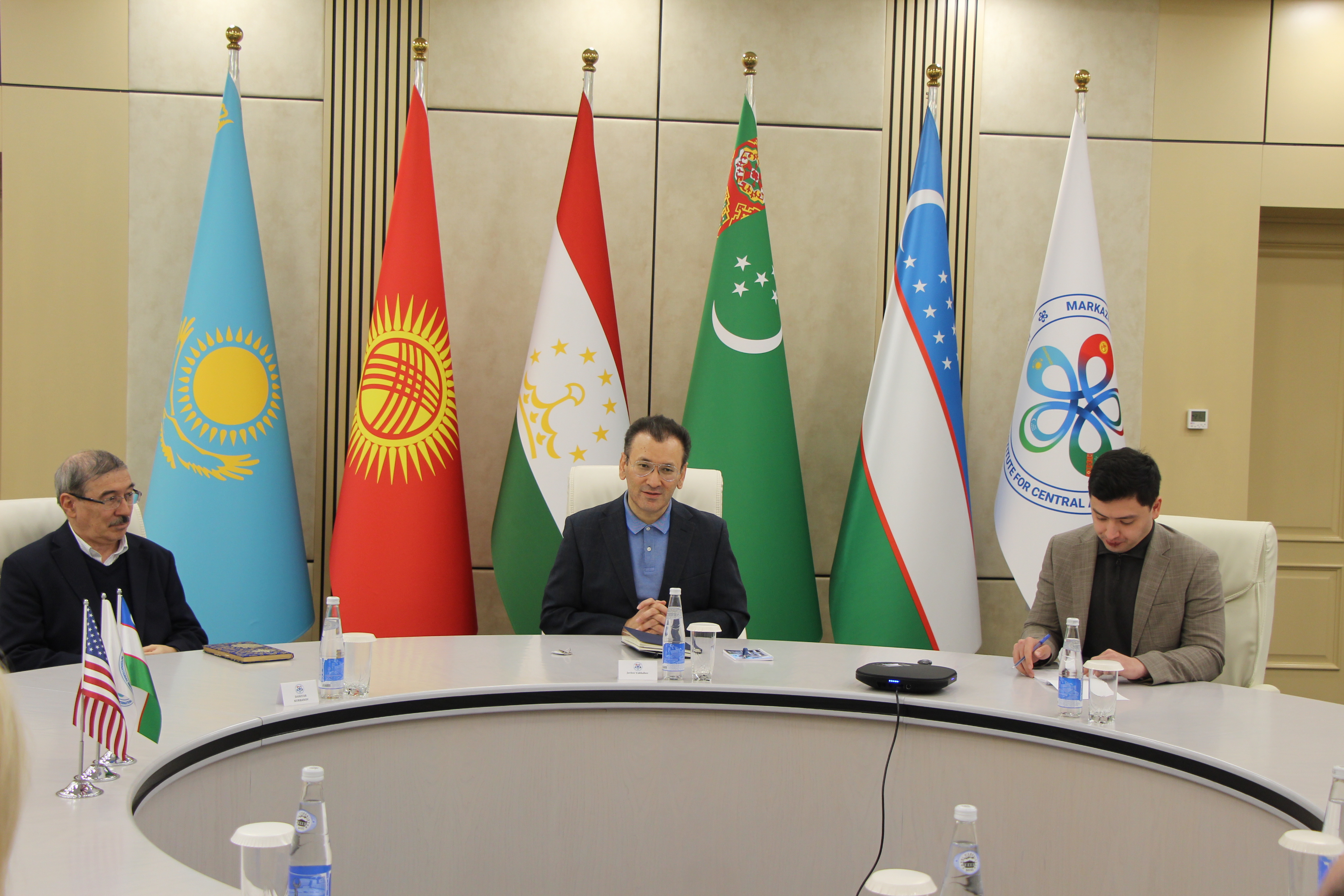
Javlon Vakhabov noted that in recent years Central Asia has become a space of active dialogue and expanding regional cooperation. In his view, stronger ties between expert and academic institutions make it possible to study the region's developments in greater depth, compare assessments and develop practical approaches to shared challenges.
Paul Saunders underlined the importance of maintaining direct expert engagement between the United States and the countries of Central Asia. He observed that think tanks can contribute substantially to the discussion of regional processes by helping to clarify the positions of the parties and to identify areas for mutually beneficial cooperation.
Andrew Kuchins remarked that the changes under way in Central Asia merit careful study. He emphasized that exchanges of views between researchers from the region and American experts foster a deeper understanding of political and socio-economic processes, as well as of the prospects for regional cooperation.
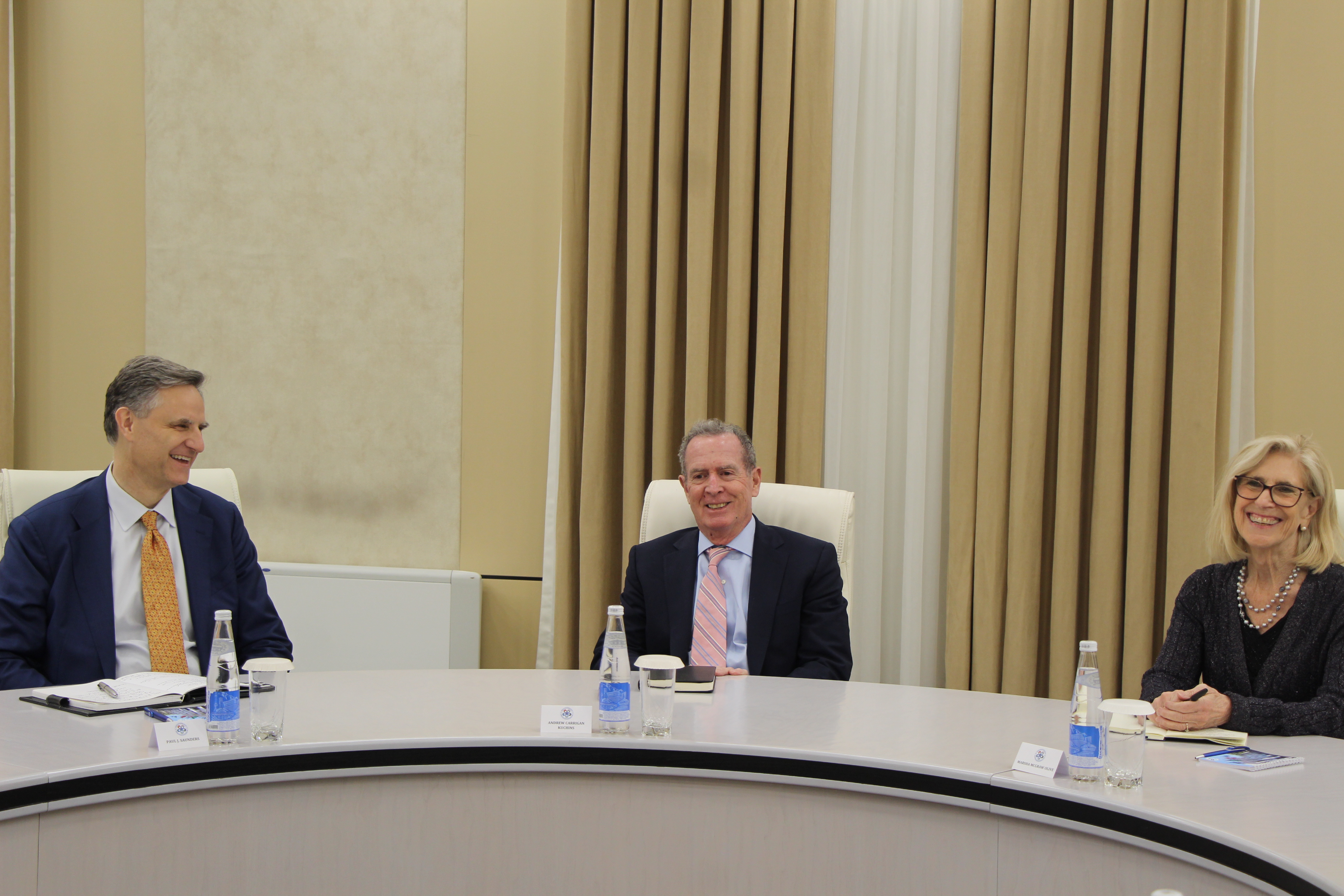
Marsha McGraw Olive highlighted the value of academic contacts and inter-university cooperation. In her words, joint research, expert discussions and knowledge sharing can lay the groundwork for long-term cooperation and for new initiatives of mutual interest.
The Center for the National Interest is an American foreign policy think tank founded in 1994. The Center publishes the journal The National Interest.