The journey through ancient history began with archaeological finds reflecting the life of the region's earliest inhabitants, the growth of farming and crafts, and the first urban settlements. Materials on Bactria, Sogdiana, Khwarazm, and the Kushan Empire made it possible to follow the emergence of statehood and the widening of trade and cultural ties across Central Asia.
Particular attention went to the First Renaissance of the 9th–12th centuries. This part of the exhibition captures the flourishing of scholarly thought and learning, and the contribution of the region's scholars and thinkers to mathematics, astronomy, medicine, and philosophy.
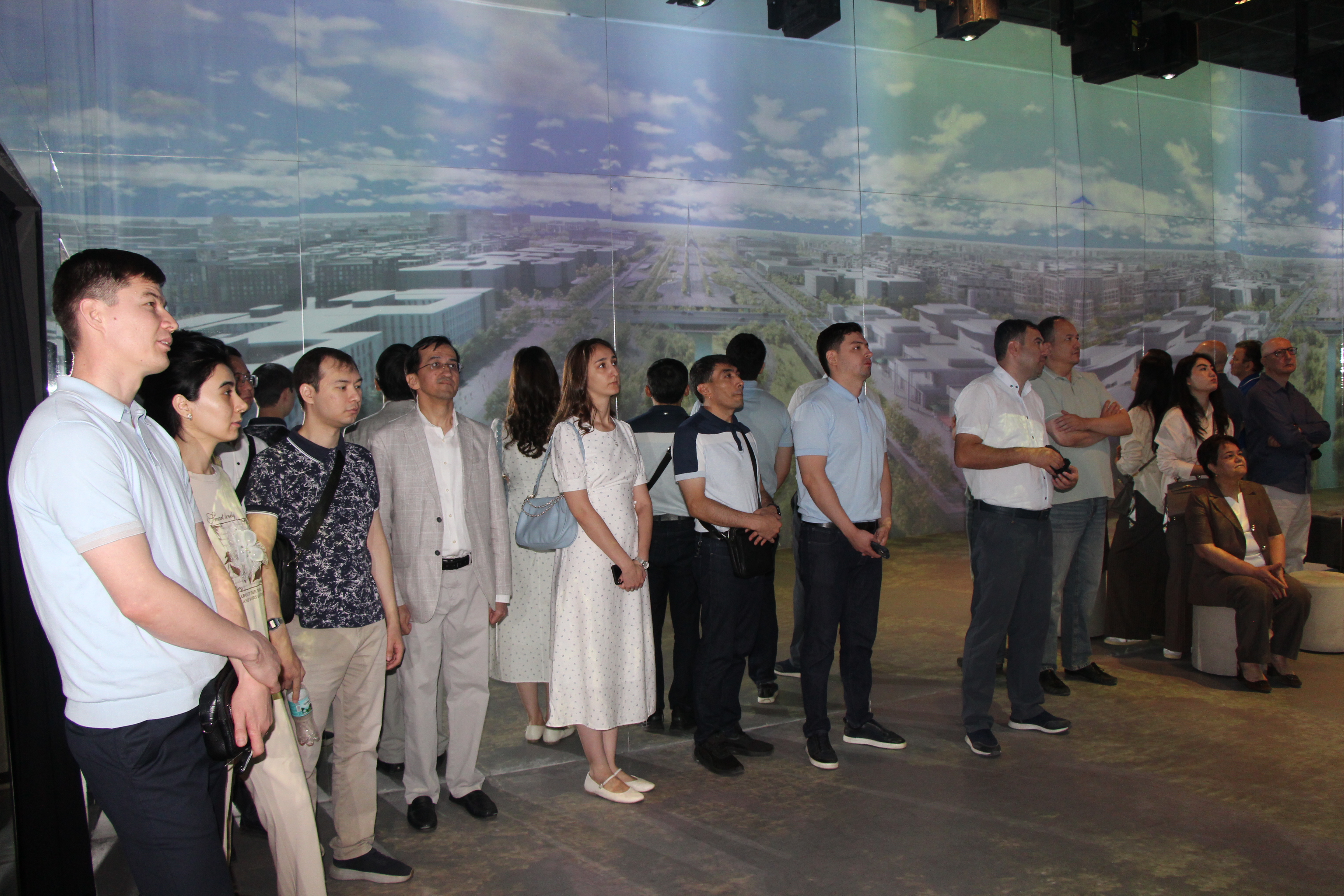
The researchers also examined the legacy of Amir Temur and the Timurids, tied to the Second Renaissance of the 14th–15th centuries. The materials on display reflect the development of statehood, architecture, art, and urban culture, with considerable space given to the scientific work of Mirzo Ulugbek and his school of astronomy.
The next section is devoted to the Emirate of Bukhara and the Khanates of Khiva and Kokand. Everyday objects, national dress, jewellery, and examples of craftsmanship offer a glimpse into the economic life and cultural traditions of the period.
The Jadid enlightenment movement featured as a theme in its own right. This section tells of their drive to renew the education system, develop the press and the spread of knowledge, and help transform public life.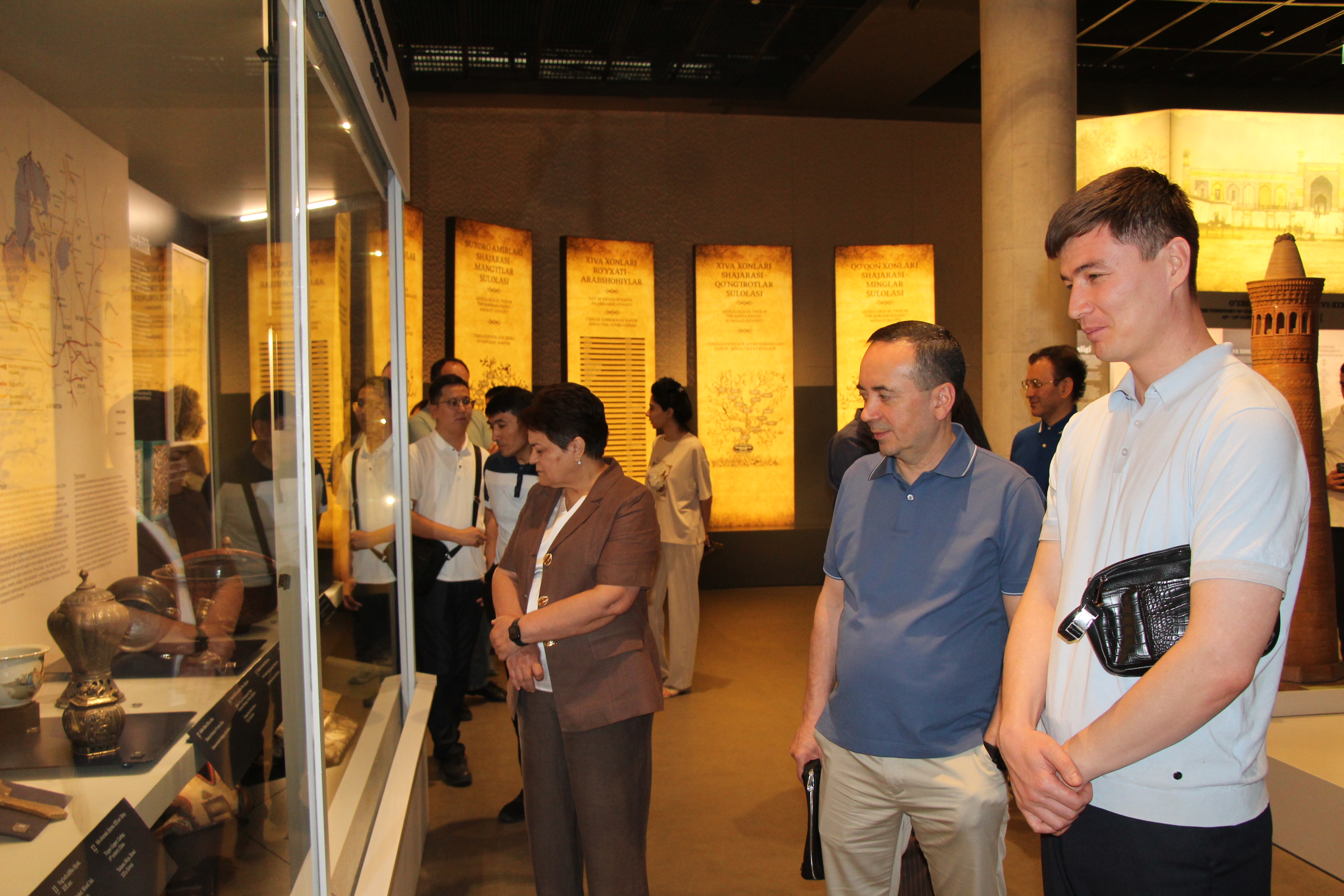
The tour concluded with the exhibition devoted to independent Uzbekistan, which presents the making of the sovereign state and its contemporary transformations, including the reforms of 2016–2026 under the building of a New Uzbekistan.
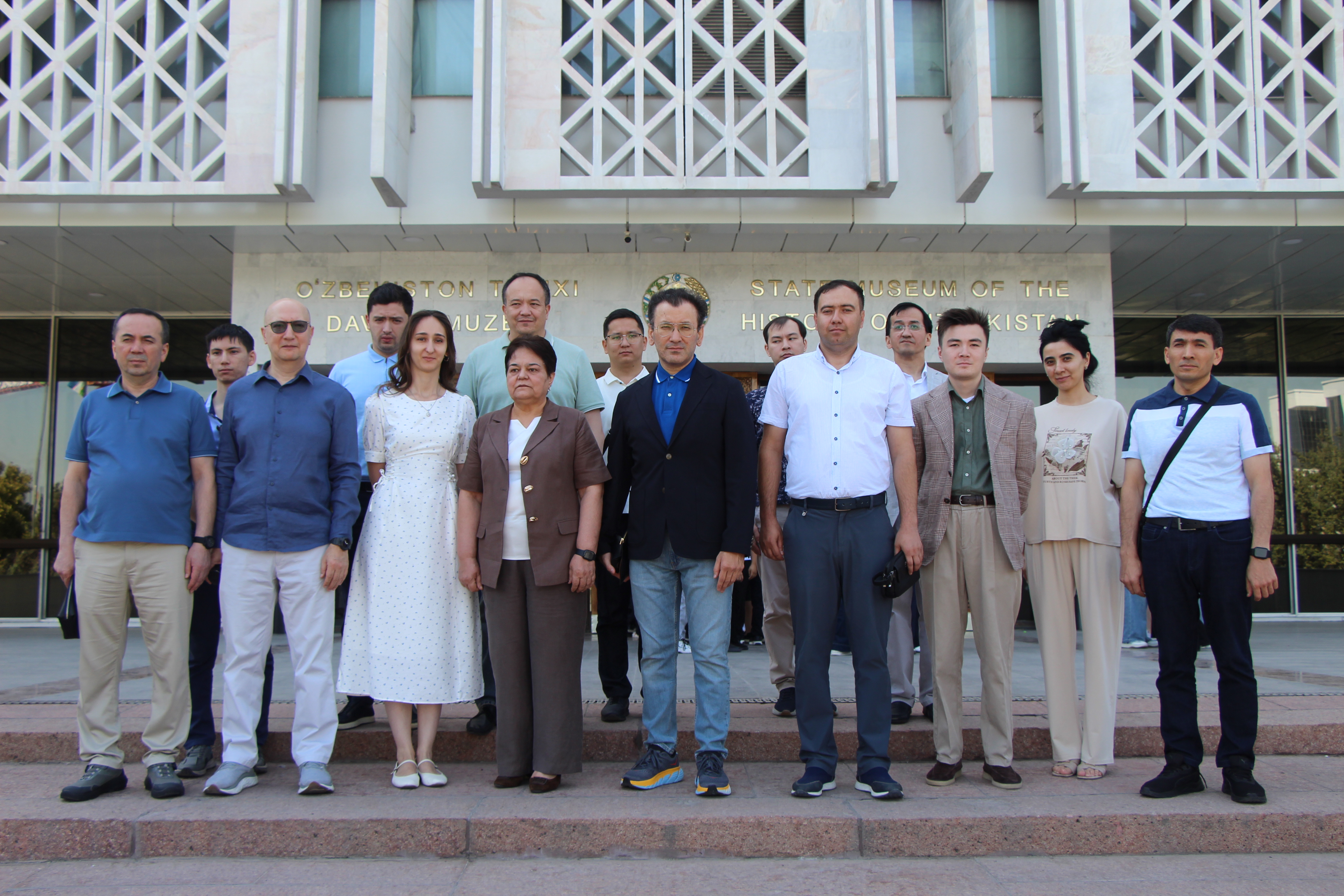
The visit made it possible to view the history of Uzbekistan through its material evidence and its scholarly and cultural heritage. For IICA researchers, particular significance lies in how these processes connect to the shared history of the peoples of Central Asia.
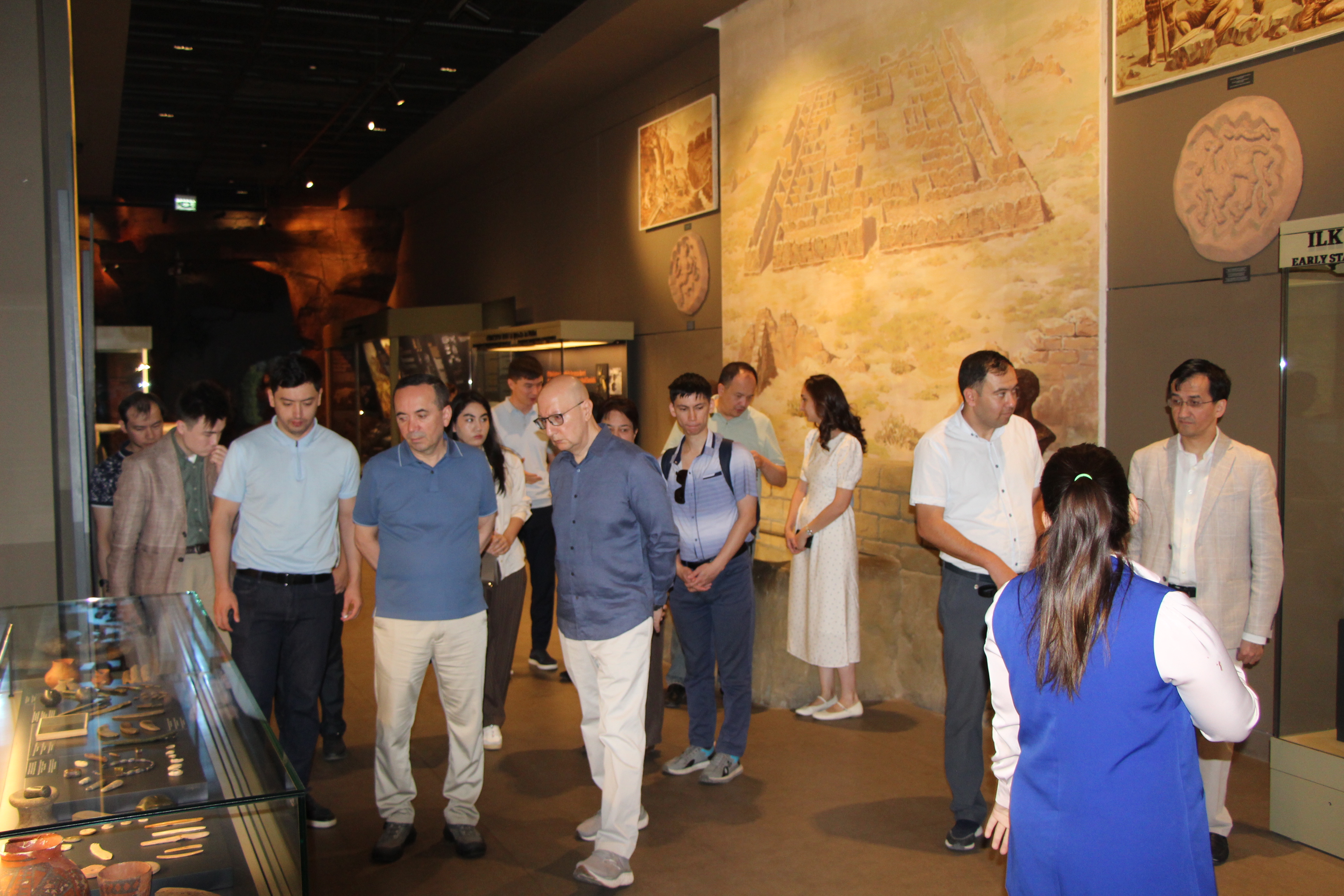
Founded in 1876, the State Museum of History of Uzbekistan is one of the oldest in the region and marks its 150th anniversary this year. Since the first years of independence, it has been housed in a building constructed in 1970 — one of the landmarks of Tashkent modernism, now inscribed on the UNESCO World Heritage List. In line with a resolution of the President of the Republic of Uzbekistan on measures to develop museum services, a large-scale renovation was carried out here from June 2024 to July 2026. The number of exhibition spaces grew from 9 to 20, and the collection of more than 350,000 items received new display cases and multimedia support.