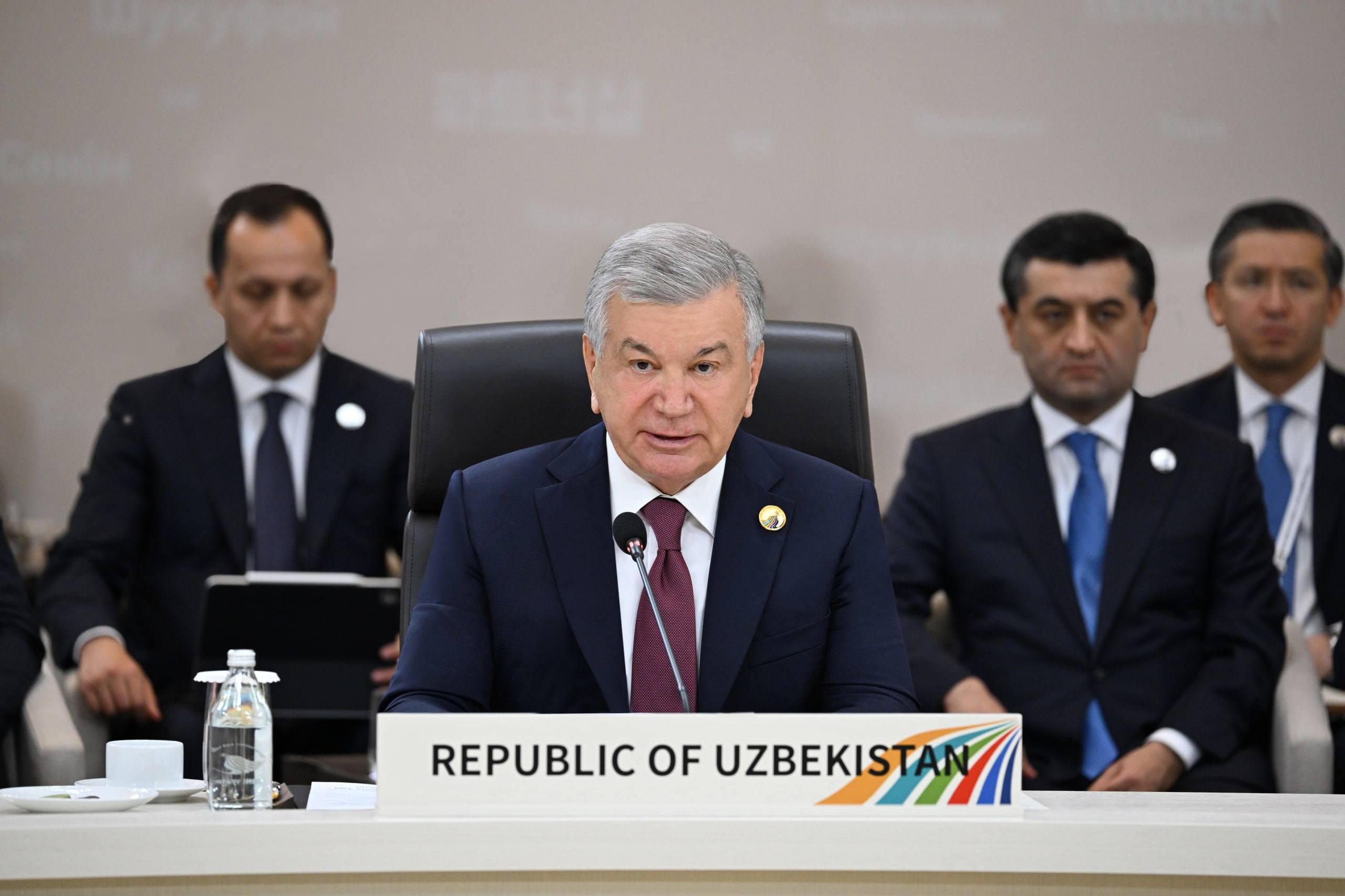
Presenting the initiative, the Head of State noted that its implementation is intended to «bring together the trade, economic and investment opportunities of the parties within a single business logic». According to him, the new platform should facilitate a shift from implementing individual joint projects to building more comprehensive industrial and technological cooperation between the parties.
Developing this idea, the President also proposed «directing joint efforts towards the production of automotive components, electrical equipment, engineering products, and pharmaceutical and chemical products».
Of particular significance is that the initiative envisages not merely an industrial zone, but a comprehensive industrial and technological platform designed for the multilateral participation of the Central Asian states and the Republic of Korea.
This format makes it possible to link investment projects with production localization, the development of engineering competencies, scientific and technological cooperation, and workforce training, creating conditions for a deeper presence of foreign companies in the regional economy.
At the same time, the initiative put forward by the President of Uzbekistan builds on the accumulated experience of Uzbek–Korean industrial cooperation. One example of this is cooperation with Korean companies in the «Navoi» Free Industrial and Economic Zone, established in December 2008, where the production of automotive components was subsequently launched.
In 2017, with grant support from the Korean side, the parties established the Uzbek-Korean Educational and Practical Textile Technopark, which made it possible to form a “technology – research – workforce – production” linkage.
Cooperation between the two countries was further developed in 2024, when an agreement was reached to create a regional high-tech hub implemented through projects in automotive manufacturing, chemicals, critical minerals, microelectronics and robotics.
A similar model of industrial and technological partnership is developing not only in Uzbekistan but also in other Central Asian countries, each of which has formed its own network of projects involving Korean companies.
In Kyrgyzstan, Korean companies are involved in developing the technopark in the Bishkek Free Economic Zone and the High Technology Park; in Kazakhstan, in implementing the «Alatau City» projects, which cover a wide range of areas from construction and digital infrastructure to the financial sector; in Turkmenistan, in industrial digitalization and the development of «smart cities»; and in Tajikistan, in the introduction of artificial intelligence and industrial digitalization.
The technopark initiative will thus draw on the experience of national platforms with Korean participation already established in the countries of the region, and will make it possible to integrate scattered projects into a coherent system of regional industrial and technological cooperation.
This is particularly relevant as the countries of the region implement their national strategies aimed at diversifying their economies, creating jobs and improving living standards.
In this context, deeper localization, workforce training, the introduction of modern production standards and the development of a network of competitive suppliers create additional opportunities for enterprises to adapt to international standards and practices.
The practical significance of the initiative is therefore determined by several interrelated aspects. First, it creates a permanent platform for industrial and technological cooperation that goes beyond individual projects. Second, it responds to the common Central Asian objective of moving towards deeper localization and the production of higher value-added goods. Third, it makes it possible to combine Korean technology and industrial expertise with the region’s production, resource and market potential.
Ultimately, the initiative put forward by the Head of State could bring together, within a single project, Korea’s technological base, the multilateral participation of the countries of the region, Uzbekistan’s production capacity and a focus on the common Central Asian market. This lays the groundwork for a sustainable system of joint production, technological cooperation and regional supply chain development within the “Central Asia – Republic of Korea” framework.
Ibragimov Ibrokhimkhuja, The International Institute for Central Asia