The Tashkent Milestone: A New Stage of Central Asia–Azerbaijan Cooperation
The dynamics of high-level political contacts vividly demonstrate the depth of the changes underway. Over the past three years, the President of Azerbaijan has visited Central Asian states 14 times, while leaders of the region's countries have visited Baku 23 times. Such intensity of engagement reflects a shift in relations from a format of periodic political dialogue to one of permanent strategic partnership.
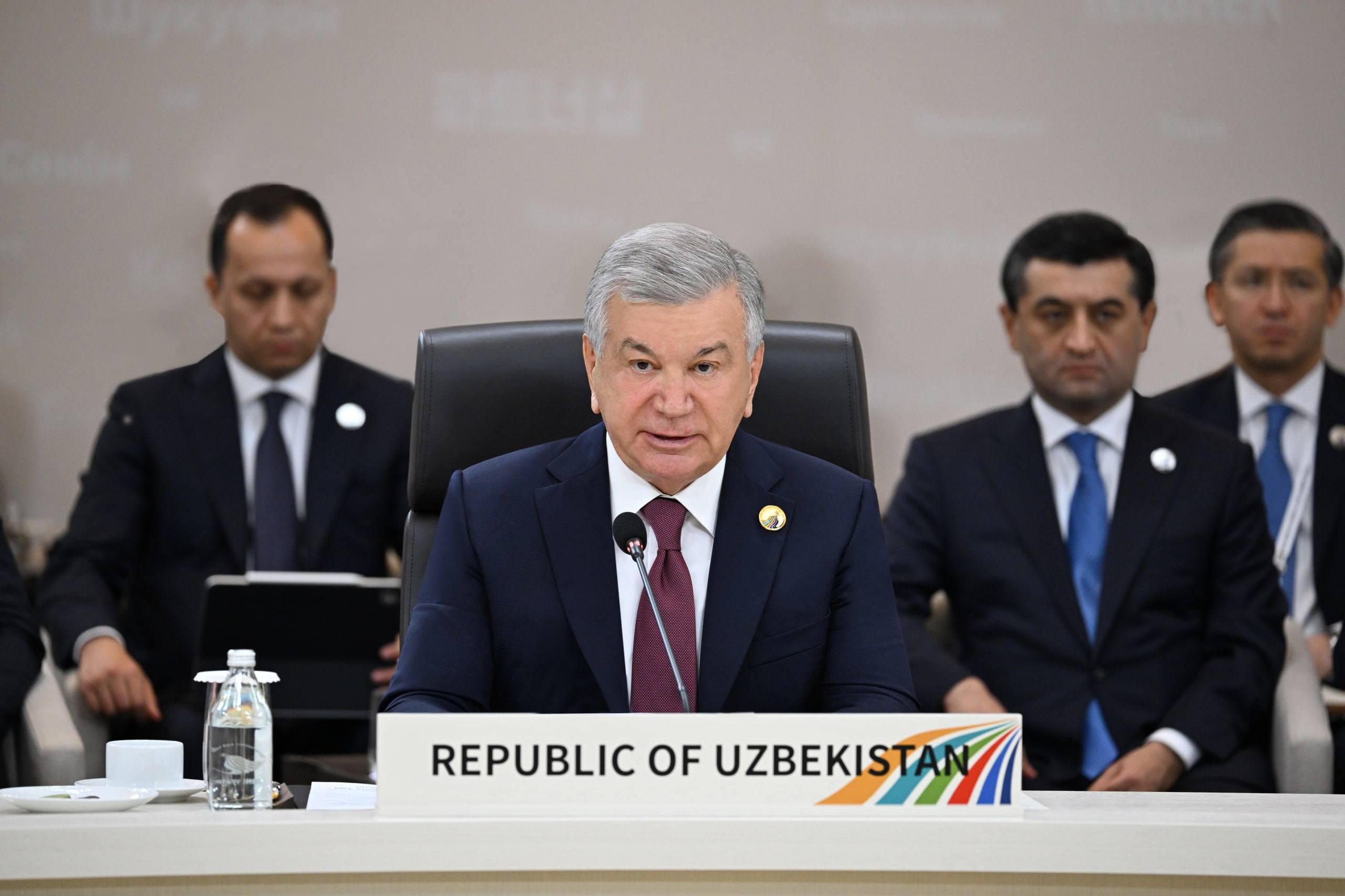
An important milestone in this process was the 7th Consultative Meeting of the Heads of State of Central Asia, held in Tashkent in 2025. At the initiative of Uzbekistan's President Shavkat Mirziyoyev, the region's heads of state made the historic decision to admit Azerbaijan to the format as a full participant.
Azerbaijan's inclusion in this format reflects a new geography of cooperation, within which Central Asia and the South Caucasus have begun to shape a unified space of political trust, economic interdependence, and transport connectivity.
Transport Corridors as the Foundation of Regional Connectivity
Transport integration has become central to the agenda of Central Asia–Azerbaijan rapprochement. The development of modern transport corridors has turned the geographic proximity of these states into a significant economic resource, substantially changing the region's role in the system of Eurasian trade.
In this context, the Middle Corridor has taken on particular importance, becoming the material foundation of a new stage of regional engagement. This route forms an alternative axis of transcontinental trade between Asia and Europe, connecting production and consumption centers through the Caspian region and the South Caucasus.
For the participating countries, the Middle Corridor creates complementary advantages. Kazakhstan, Azerbaijan, and Turkmenistan are strengthening their roles as key Eurasian transit hubs, while Kyrgyzstan, Tajikistan, and Uzbekistan are gaining new opportunities to diversify their foreign trade routes and expand access to global markets.
Over a relatively short period, cargo volumes along the Middle Corridor have grown significantly, while delivery times have been substantially reduced. According to Boston Consulting Group estimates, cargo volumes over the past five years have grown from roughly 1 million tons in 2021 to 4.5 million tons in 2025.
However, further unlocking the potential of this route depends largely on the development of a unified transport architecture across the South Caucasus. In this context, the opening of the Zangezur Corridor takes on particular significance, as it could become an additional element of Eurasia's new transport configuration.
Its launch would increase the efficiency of the Middle Corridor, shorten cargo delivery times, and provide closer links between Central Asia and Turkish and European markets. In this way, a new system of transport connectivity is taking shape, uniting Central Asia and the South Caucasus.
An Economic Belt of Connectivity: From Trade Turnover to Joint Production
Strengthened transport connectivity has spurred growth in mutual trade, rising investment activity, and the development of industrial cooperation. As a result, infrastructure projects are beginning to serve a broader function — becoming a platform for shaping a unified economic space in the region.
Azerbaijan's total trade turnover with the Central Asian states nearly doubled in 2025, reaching $1.76 billion compared to $936 million a year earlier. Mutual trade with Kazakhstan rose to $670 million, with Uzbekistan to $795 million, with Turkmenistan to $208 million, with Kyrgyzstan to $77 million, and with Tajikistan to $13 million.
The parties' strategic goal is to further increase mutual trade turnover to $20 billion. Achieving this, however, requires not only an expansion of trade but a shift toward deeper forms of economic cooperation — establishing joint production facilities, developing regional value chains, and promoting products in external markets.
In this context, the Concept for establishing joint production platforms under the "Made in Central Asia" brand takes on particular importance. Its implementation is aimed at manufacturing higher value-added products, developing industrial cooperation, and strengthening the region's competitiveness in the global economy.
The next stage of economic rapprochement is the formation of mechanisms for joint investment. Today, a network of bilateral investment institutions has been established between Azerbaijan and the Central Asian states, including the Kazakh-Azerbaijani Investment Fund with $300 million in capital, the Uzbek-Azerbaijani Investment Fund with $500 million in capital, and the Kyrgyz-Azerbaijani Development Fund with $25 million in capital.
These mechanisms are aimed at financing joint projects in industry, agriculture, transport, energy, and high-tech sectors. Their creation reflects a qualitative transformation of regional engagement: cooperation is gradually moving beyond trade and taking on the character of a long-term investment partnership.
Building a Shared "Green" Energy Space
Alongside the development of transport and economic integration, Central Asia and Azerbaijan are consistently building a new architecture of energy cooperation. In this model, "green" energy is becoming not only a tool of decarbonization but also one of the key factors in the region's geo-economic rapprochement.
Whereas energy cooperation was previously limited mostly to individual projects, it is now taking on a systemic character. Cooperation now includes the development of renewable generation, the creation of cross-border electricity transmission infrastructure, the integration of national energy systems, and the formation of a common approach to developing the region's energy space.
A key step in institutionalizing this process was the signing, on the sidelines of COP29 in Baku, of an intergovernmental agreement on strategic partnership in the development and transmission of "green" energy between Azerbaijan, Kazakhstan, and Uzbekistan.
This document marked a shift from political declarations to the practical implementation of long-term infrastructure projects. The agreement provides for integrating the energy systems of the three countries, developing cross-border networks, and creating conditions for exporting electricity generated from renewable sources.
This is laying the groundwork for a new energy space capable of supplying "green" electricity to external markets and enhancing the region's role in shaping a sustainable energy architecture for Eurasia.
A practical continuation of these agreements was the establishment, in July 2025, of the joint venture Yasil Dehliz Birliyi, which has been assigned a coordinating role in implementing the "Green Energy Corridor: Central Asia–Azerbaijan" project.
This involves shaping a unified energy contour for the Caspian region, based on integrating the energy infrastructure of Azerbaijan, Kazakhstan, and Uzbekistan. Within this model, Azerbaijan serves as a connecting link between Central Asia's substantial renewable energy potential and European electricity markets.
Creating such a route opens opportunities for diversifying export directions, strengthening the region's energy connectivity, and enhancing the role of Central Asia and the South Caucasus in ensuring Europe's energy security.
Digital Infrastructure – A Contour of Regional Connectivity
Contemporary processes of regional integration can no longer be viewed solely through the lens of transport and energy infrastructure. Digital connectivity is gaining ever greater importance, becoming one of the key conditions for sustainable economic development and enhanced regional competitiveness.
Digital infrastructure underpins the efficiency of modern transport corridors, the growth of e-commerce, the acceleration of financial transactions, and the integration of national economic systems.
In this context, the trans-Caspian "Digital Silk Way" project takes on particular strategic significance, involving the laying of the Baku–Aktau submarine cable with onward access to European networks via Georgia. The project was first initiated in Baku in 2018, when Azerbaijan's AzerTelecom, with government support, signed a trilateral memorandum with Kazakhstan's Transtelecom and KazTransCom companies on establishing a trans-Caspian digital corridor. At the 7th Consultative Meeting, President of Azerbaijan Ilham Aliyev presented this project as an element of the broader digital cooperation agenda with Central Asia.
Its implementation will create an alternative data transmission route between the two largest economic spaces, enhance the resilience of telecommunications networks, and open new opportunities for developing the region's digital economy.
In this way, transport routes, energy systems, and digital networks are gradually converging into a unified contour of regional connectivity. Their development reflects a shift from individual infrastructure projects toward a comprehensive model of cooperation grounded in long-term economic interdependence.
Shared Civilizational Heritage as a Foundation for Strategic Rapprochement
The sustainability of any integration process is determined not only by economic indicators and infrastructure projects. Its long-term effectiveness depends significantly on the depth of humanitarian ties, the historical closeness of peoples, and the capacity to build a shared space of trust.
Central Asia and Azerbaijan share a centuries-old civilizational heritage, formed at the crossroads of Eurasia's most important cultural and trade routes. During the Islamic Golden Age, this region was one of the world's leading centers of science, education, and culture, exerting a significant influence on the development of world civilization.
Outstanding scholars, thinkers, and writers lived and worked here – Al-Farabi, Ibn Sina, Al-Biruni, Imam al-Bukhari, Mirzo Ulugbek, Alisher Navoi, Abai Kunanbaev, Chokan Valikhanov, Kanysh Satpaev, Chinghiz Aitmatov, Kasym Tynystanov, Isa Akhunbaev, Sadriddin Aini, Muhammad Osimi, Magtymguly Pyragy, Veli Muhatov, Nizami Ganjavi, Muhammad Fuzuli, and many others. Over the centuries, their works in mathematics, astronomy, medicine, philosophy, theology, literature, and music shaped the development of world scientific and cultural thought.
Today, this shared intellectual heritage is becoming not only an object of preservation but also an important resource for strengthening regional identity and humanitarian connectivity. Cultural and educational initiatives are gradually becoming an additional tool for building sustainable partnership between states.
This trend is also reflected in current regional projects. In May 2026, Azerbaijan took part for the first time as a partner country in the Dialogue of Women Leaders of Central Asia, held in Bukhara, which resulted in the establishment of the "SheScience Central Asia" network.
A New Model of Regionalism: Central Asia and Azerbaijan as a Unified Geo-Economic Space
More broadly, the engagement between Central Asia and Azerbaijan reflects the emergence of a new model of regionalism in Eurasia. Unlike traditional integration formats built on complex supranational institutions, this approach develops primarily through the implementation of concrete, mutually beneficial projects.
Ultimately, the development of partnership between Central Asia and Azerbaijan represents not merely an expansion of bilateral ties but the formation of a new strategic configuration, in which the Caspian region becomes an important bridge between East and West, between Asia's production centers and Europe's markets.
It is precisely the combination of political trust, infrastructural connectivity, energy potential, and shared historical and cultural heritage that lays the foundation for turning Central Asia and Azerbaijan into one of the key nodes in the emerging architecture of a New Central Asia.
Leading Research Fellow, Abbosbek Mashrapov