Over the past few years, the Organization of Turkic States (OTS) has undergone a remarkable transformation.
Once perceived primarily as a platform for promoting common historical, cultural and linguistic ties, the Organization has evolved into a mechanism for results-oriented cooperation across trade, transport, investment, digital transformation and regional connectivity.
At a time when traditional international institutions face growing geopolitical constraints, OTS offers its member states a pragmatic framework for addressing shared challenges through dialogue, coordinated policies and joint projects.
Today, OTS operates through a multi-level institutional structure comprising the Council of Heads of State, the Council of Foreign Ministers, the Committee of Senior Officials, the Council of Elders, and the Secretariat.
This architecture has enhanced policy coordination, ensured greater continuity between summit decisions and their implementation, and created conditions for deeper cooperation across an expanding range of sectors.
A decisive milestone in this evolution was the adoption of the strategy titled “Turkic World Vision–2040” in 2021. The strategy provided the Organization with a long-term strategic direction, clear priorities, and a shared understanding of its future development. It also laid the conceptual foundation for translating long-term strategic objectives into coordinated policies and concrete initiatives.
The implementation of this vision has also been supported by the active contributions of individual member states, particularly Uzbekistan. As Daria Isachenko of the German Institute for International and Security Affairs (SWP) argues, Uzbekistan has played an important role shaping a more pragmatic OTS agenda centered on regional connectivity and functional integration.
This shift towards a more substantive agenda was clearly reflected at the 2022 Samarkand Summit, where one of the most significant achievements was the establishment of the Turkic Investment Fund. As the Organization’s first dedicated financial institution, the Fund provides a practical mechanism for financing joint projects, reflecting OTS’s growing emphasis on delivering substantive economic outcomes.
Uzbekistan has played a more proactive role in this transformation. Since joining OTS, President Shavkat Mirziyoyev has consistently advocated strengthening the Organization’s operational agenda by promoting transport connectivity, trade facilitation, industrial cooperation, digital transformation, and investment partnerships. These initiatives have contributed to broadening OTS’s agenda and reinforcing its role as a platform for effective regional cooperation.
This view is echoed by Aidana Baktybek Kyzy of the Ankara Center for Crisis and Policy Studies, who argues that Uzbekistan’s accession to OTS has enhanced the Organization’s regional appeal and created new opportunities for expanding policy-oriented cooperation among the Turkic states.
The rapid development of Uzbekistan-Türkiye relations reflects this broader strategic approach. Guided by the strong political commitment of Uzbek President Shavkat Mirziyoyev and Turkish President Recep Tayyip Erdoğan, bilateral ties have reached the level of a comprehensive strategic partnership. The 4th meeting of the High-Level Strategic Cooperation Council, held in Ankara in January 2026, reaffirmed both countries’ determination to deepen bilateral cooperation while advancing the broader objectives of OTS.
Economic cooperation has become one of the Organization’s defining features. Today, OTS comprises countries with a combined population of around 178 million people, a nominal GDP exceeding $1.8 trillion, and a total foreign trade turnover of more than $1.1 trillion, underscoring its emergence as a major economic actor across Eurasia.
This potential is increasingly reflected in the Organization’s internal economic dynamics. According to the OTS Secretariat, intra-regional trade has reached approximately $22-23 billion, nearly doubling compared to the beginning of the decade.
The experience of Uzbekistan provides a good illustration of these broader trends. Its trade with OTS member states exceeded $9 billion in 2025, up from around $4.2 billion in 2019, highlighting the growing intensity of economic ties within OTS.
More than 2,000 enterprises with Turkish capital currently operate in Uzbekistan, while the portfolio of joint investment projects exceeds $5 billion. Concentrated in sectors such as textiles, construction materials, electrical engineering, and food processing, these projects illustrate how economic cooperation within OTS is fostering industrial partnerships, technology transfer and long-term investment rather than being limited to trade alone.
The Organization’s strategic value is also shaped by geography. Stretching across Central Asia, the South Caucasus, and Türkiye, OTS occupies a pivotal position along emerging Eurasian transport routes linking East Asia with European markets. This geographic advantage has elevated transport connectivity from a purely logistical issue to a strategic priority for regional economic integration and supply chain resilience.
The Middle Corridor has emerged as OTS’s flagship connectivity initiative. Cargo volumes along the route increased from less than one million tons in 2021 to more than 4.5 million tons in 2025, reflecting its growing role in Eurasian trade. At the same time, coordinated investments in transport infrastructure and the modernization of customs procedures have significantly improved the corridor’s efficiency, making it an increasingly competitive alternative for trade between Asia and Europe.
The corridor’s competitiveness has been reinforced by improvements in both physical and digital infrastructure. The modernization of the Port of Baku, the introduction of electronic freight documentation (e-CMR) and the harmonization of customs procedures have reduced delivery times between China and European countries from 40-50 days to approximately 18-23 days. These gains demonstrate that the success of regional connectivity depends not only on new infrastructure but also on more efficient cross-border governance.
Alongside physical connectivity, digital integration has become another strategic priority for OTS. This shift was clearly reflected at the Informal Summit held in Turkistan in May 2026, where artificial intelligence and digitalization featured prominently on the agenda. The discussions underscored a growing recognition among member states that future economic resilience will depend not only on infrastructure but also on technological capacity, digital governance and innovation.
These broader digital ambitions are already being reflected in Uzbekistan’s domestic transformation. In 2025, the country’s IT services exports exceeded $1 billion—almost five times higher than in 2020. Supported by a rapidly expanding network of IT parks and technology companies serving international markets, Uzbekistan is also promoting closer cooperation within OTS through the development of interoperable digital services, innovation partnerships, and joint programmes for training highly qualified specialists.
Beyond economics, OTS benefits from a unique advantage rooted in shared history, linguistic affinity, and cultural ties. This common heritage facilitates cooperation in education, science and people-to-people exchanges through institutions such as the International Turkic Academy, TÜRKSOY, and the Union of Turkic Universities.
Educational cooperation has emerged as one of the most tangible outcomes of this process. Today, an estimated 91,000 students from Central Asian countries are studying at Turkish universities, while more than 26,000 government scholarships have been awarded under the Türkiye Bursları programme over the past two decades.
Looking ahead, the Organization’s next stage of development will depend less on expanding its membership than on deepening functional cooperation among existing members. Further progress should also include addressing structural bottlenecks that continue to constrain regional connectivity, including railway interoperability, the modernization of the Caspian transport corridor and the environmental challenges associated with the declining water level of the Caspian Sea.
Greater harmonization of tariffs, customs procedures and technical regulations, together with broader use of “Central Asia+” and “OTS+” formats, could further strengthen cooperation with external partners, including the Gulf states, the European Union, and China.
Success in these areas will determine whether OTS can consolidate its position as one of Eurasia’s most dynamic regional platforms.
The experience of OTS demonstrates that regional cooperation is most effective when it combines shared identity with practical implementation.
In an increasingly fragmented international environment, OTS is well positioned not only to strengthen cooperation among its members but also to establish itself as one of Eurasia’s leading platforms for regional integration in the years ahead.
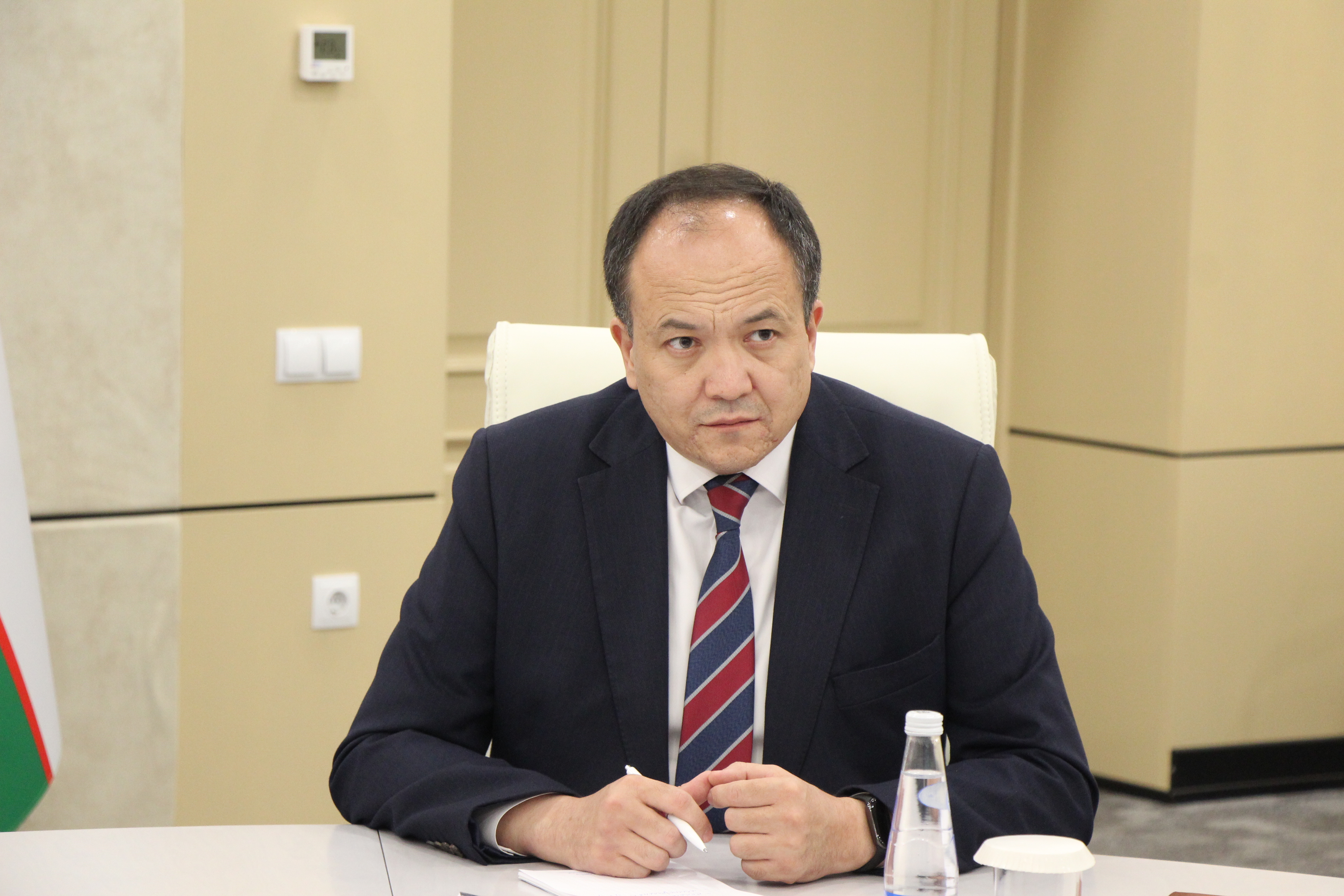
Dr. Nizomiddin Ziyamov
Chief Research Fellow, International Institute for Central Asia (IICA)