The report was prepared by the International Institute for Central Asia (IICA) based on the outcomes of the inaugural U.S.-Central Asia Think Tank Forum, held in Tashkent on October 1, 2025.
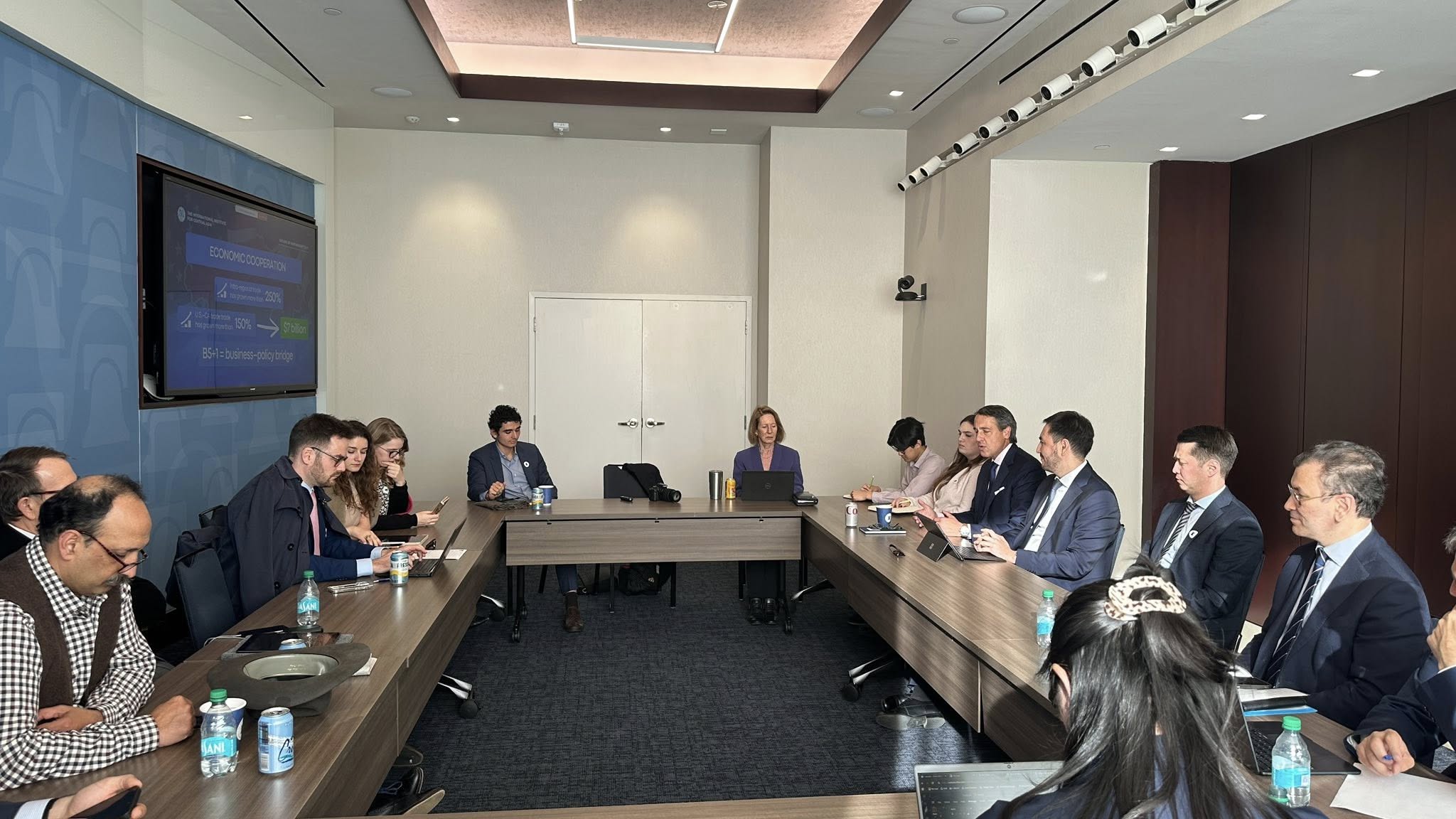
The presentation brought together leaders and experts from leading U.S. governmental and non-governmental think tanks, as well as representatives from political and business circles.

During the event, IICA Director Javlon Vakhabov outlined the key areas for further cooperation within the C5+1 framework, including trade and investment, transport and logistics, security, critical minerals, and humanitarian exchanges.
It was noted that C5+1 cooperation has already yielded tangible results: from 2015 to 2024, trade with the U.S. increased by 147%. The platform also supports initiatives in digital trade, intellectual property protection, and the development of small and medium-sized enterprises. According to Javlon Vakhabov, active private-sector engagement through C5+1 drives business initiatives, strengthens regional economic integration, and attracts foreign investment.

In the energy and critical minerals sector, Javlon Vakhabov highlighted that C5+1 opens new opportunities for technological advancement in Central Asia. Initiatives such as the Critical Minerals Dialogue and the establishment of joint processing facilities help the region transition from raw-material dependency to sustainable industrial and innovative development.
Regarding security, he emphasized programs such as the State Partnership Program, which links each Central Asian country to a specific U.S. state, fostering trade, investment, and humanitarian connections. For example, Uzbekistan partners with Mississippi, Turkmenistan and Kyrgyzstan with Montana, Kazakhstan with Arizona, and Tajikistan with Virginia.
Following the presentation, participants engaged in a discussion on the current state and future prospects of C5+1 cooperation.

James Carafano, Senior Advisor to the President of the Heritage Foundation, noted that the C5+1 summit in Washington, D.C. demonstrates that the U.S. is strengthening ties with Central Asia across multiple areas, including business partnerships, transport corridors, and rare-earth resource development.
Eric Hontz, Director of the Center for Accountable Investment at the Center for International Private Enterprise (CIPE), emphasized that the U.S. is ready to actively cooperate with Central Asia, support transparent investment, strengthen regional economic security, and create new opportunities for business, science, and technology.
In conclusion, commenting on the C5+1 summit in Washington, D.C., which brought together the presidents of Central Asian countries and the United States, Javlon Vakhabov noted that this was the first summit of its kind held at the White House at the initiative of the U.S. President, marking a historic milestone in the development of C5+1 relations.
According to him, the C5+1 format is becoming a genuine driver of economic, technological, and humanitarian convergence between Central Asia and the U.S., reflecting the growing significance of this partnership within the context of the region’s multivector foreign policy.