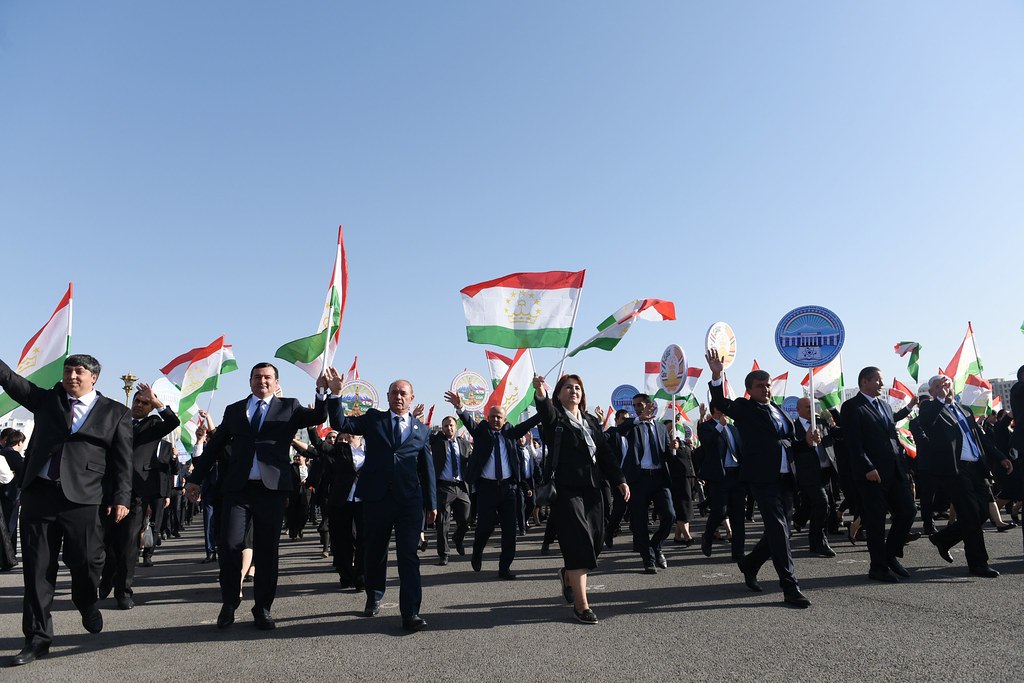
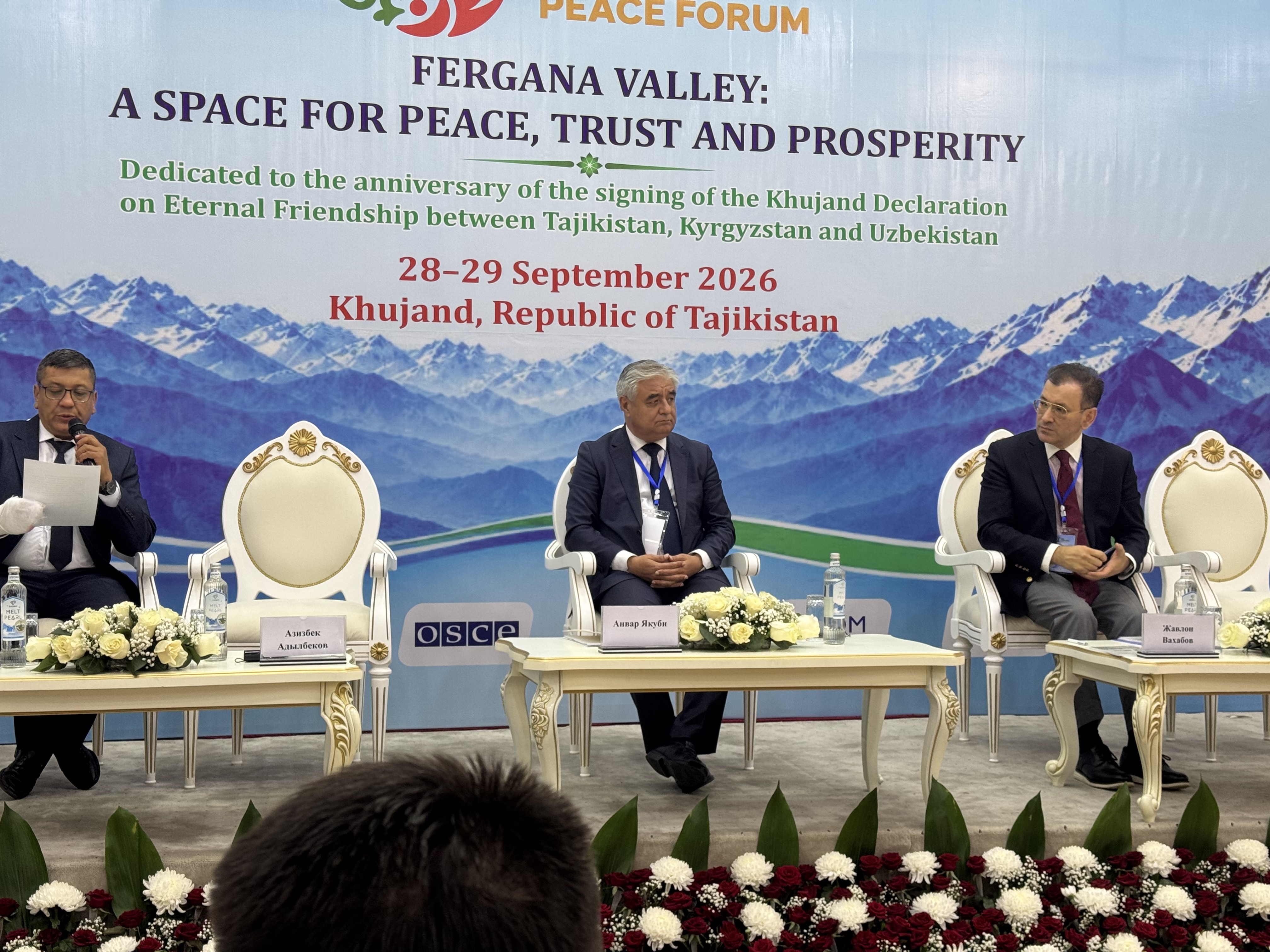
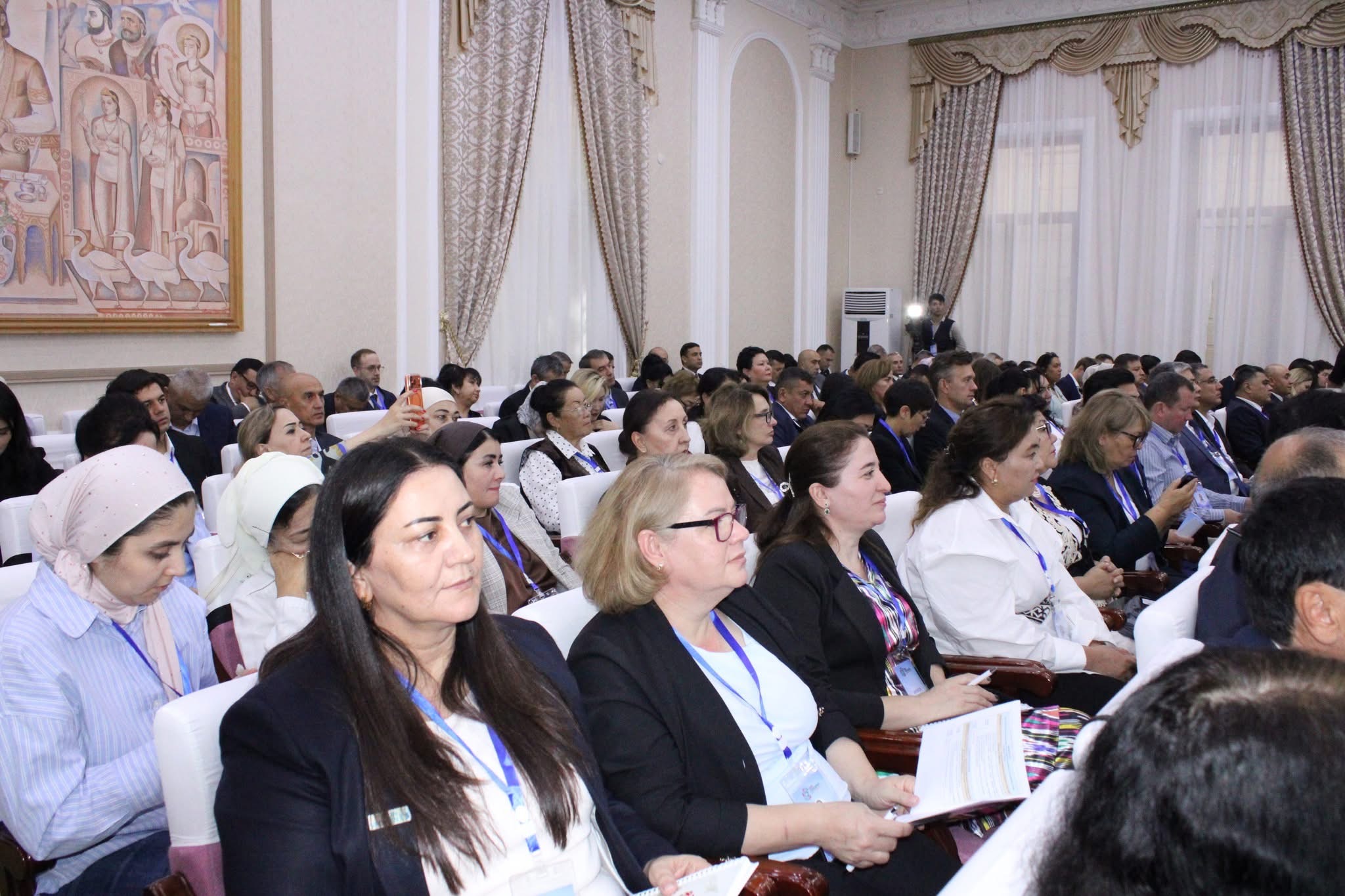
Established at the initiative of President of the Republic of Uzbekistan Shavkat Mirziyoyev, the Forum has, for the second consecutive year, brought together representatives of government institutions, the expert community, academia and civil society from Uzbekistan, Kyrgyzstan and Tajikistan. The event was organized by the Center for Strategic Research under the President of the Republic of Tajikistan and the Executive Body of State Authority of Sughd Region.
The Forum brought together the heads of border regions of the three countries, as well as representatives of the United Nations, the European Union, the OSCE, the International Organization for Migration and other international organizations.
The discussions focused on further strengthening the centuries-old ties of friendship and good-neighborliness among Tajikistan, Kyrgyzstan and Uzbekistan, ensuring peace and stability in the Fergana Valley, and expanding practical interregional cooperation.
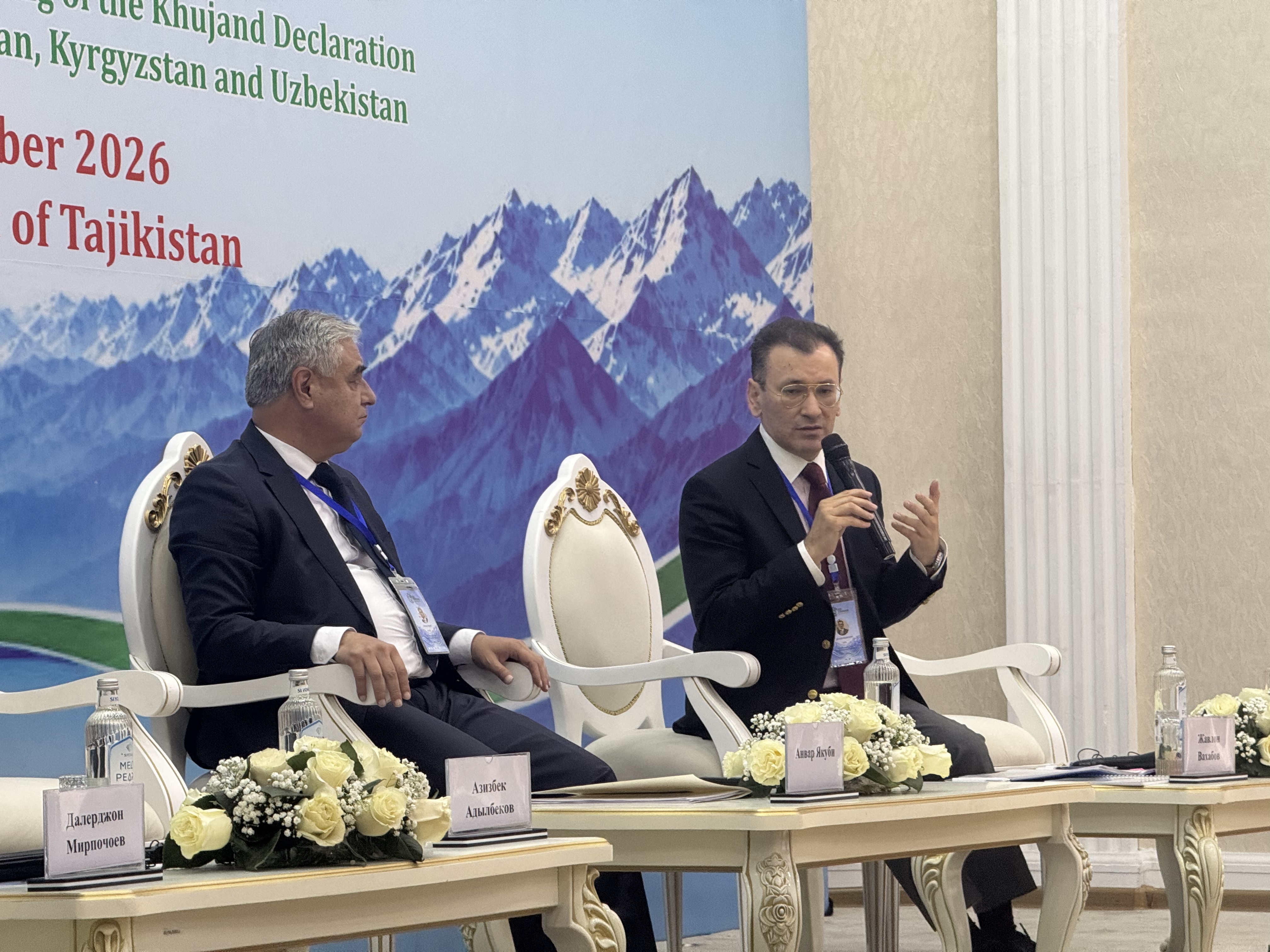
Speaking at the session “Strategic Vision for the Economic and Industrial Development of the Fergana Valley,” IICA Director Javlon Vakhabov outlined the practical dimension of cooperation and the opportunities for implementing it directly at the level of the Valley’s regions.
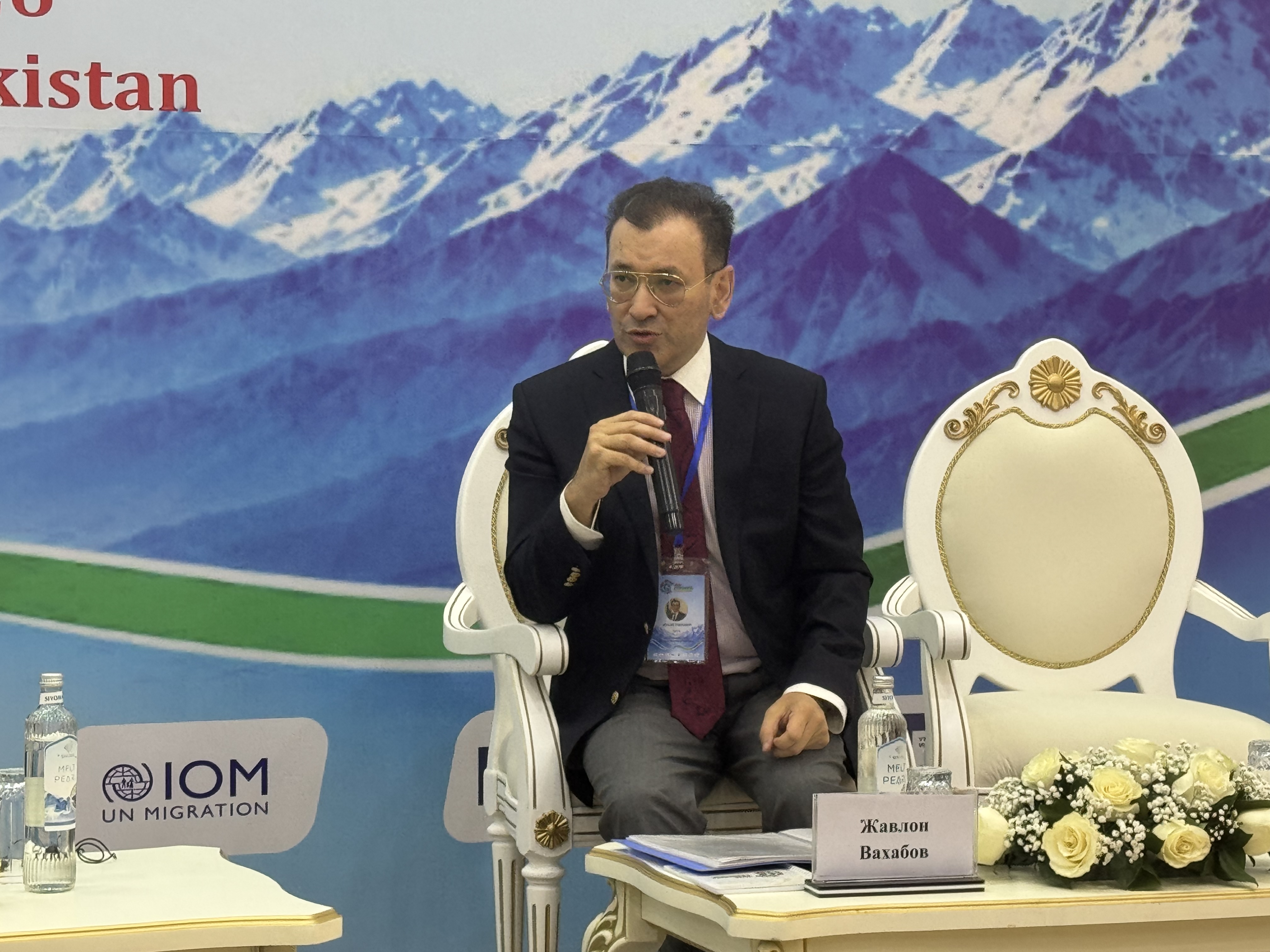
According to him, 2026 provides an opportunity to assess the scale of the changes that have taken place over the past decade, during which not only political relations among the countries of the region have transformed, but so too has the economic geography of Central Asia itself. The key question now is the extent to which the growth of mutual trade is being accompanied by the emergence of sustainable production linkages, greater specialization, and increasing complementarity among the economies of neighboring regions.
The IICA Director noted that the Fergana Valley brings together seven regions across three countries and constitutes an economic space of nearly 18 million people. Yet the size of the market alone does not necessarily translate into high economic efficiency. The three Uzbek regions of the Valley, for example, account for around 29% of the country’s population, while generating approximately 16.5% of its GDP.
According to J. Vakhabov, the key untapped potential lies in higher productivity, deeper specialization and the ability of neighboring regions to complement one another economically. Andijan has strong capabilities in mechanical engineering and industrial engineering; Namangan has a well-developed textile base; Fergana Region has strengths in the chemical and processing industries; Sughd Region possesses significant agricultural and raw-material potential; Osh serves as a trade and services hub; Jalal-Abad combines energy and transport potential; while Batken has strong competitive advantages in horticulture.
For cooperation to become more targeted and effective, the IICA Director stressed the importance of examining linkages at the level of individual regions, understanding the commodity flows between them, and identifying areas where production capacities are complementary. Such an interregional perspective would make it possible to move from a broad assessment of potential toward more targeted economic policies.
Against this backdrop, a number of areas were identified where a qualitative breakthrough is already possible.
In the agro-industrial sector, J. Vakhabov proposed viewing the Valley as a single distributed cluster. One practical model could be cross-border contract farming, under which processing companies in one region enter into long-term agreements with farms in neighboring regions, providing technology and guaranteed off-take, while the land and income remain with local producers.
Over time, products should cross borders not merely as raw materials, but as the first stage of an integrated value chain encompassing storage, processing, packaging and export.
Water issues were also addressed separately. In the view of the IICA Director, the discussion on water should gradually shift from the question of “who gets how much” to the question of how much value is generated by each cubic meter of water.
Within this approach, water becomes closely linked with energy and industry: the hydropower potential of one part of the region, equipment manufacturing capacity in another, and service expertise in a third can complement one another rather than duplicate the same functions.
Particular attention was given to the China–Kyrgyzstan–Uzbekistan railway. According to J. Vakhabov, its economic impact begins already at the construction stage, driven by demand for building materials, metal products, food supplies and services. Andijan and Jalal-Abad regions were proposed as a complementary industrial and logistics belt, while a unified registry of certified suppliers across the Valley could be established to meet the needs of the project.
A more ambitious objective could be to explore the establishment of a trilateral special economic zone consisting of interconnected national segments specializing in construction materials, agro-processing, textiles, electrical engineering, and railway infrastructure maintenance and services.
In the textile sector, the IICA Director noted that integration will acquire genuine practical meaning when a company in Namangan is able to select a partner in Sughd or Jalal-Abad on much the same commercial basis as it would within its own region. Rather than compiling an extensive list of industries, he proposed identifying 10–15 specific cross-border value chains – for example, from cotton fiber to finished garments, or from hydropower equipment to installation and maintenance services.
Tourism also featured prominently in the address. In 2025, citizens of Kyrgyzstan and Tajikistan accounted for around half of all inbound tourist arrivals to Uzbekistan, while nearly 87% of medical tourists came from these two countries.
According to J. Vakhabov, the next task is to increase both the duration of visits and their economic impact on the regions. Proposed measures included developing short 48–72-hour cross-border itineraries, such as Khujand–Kokand–Fergana and Osh–Andijan–Namangan, expanding a regional market for medical services, and leveraging Uzbekistan’s aviation infrastructure as an air gateway for travelers from Europe, the Gulf states and East Asia seeking to explore the Fergana Valley as a whole.
Education was highlighted as an undervalued component of the regional economy and an equally important area of services exports. Over the past decade, the number of foreign universities operating in Uzbekistan has risen from seven to 30, giving people from neighboring countries access to international education close to home.
As the IICA Director emphasized, students also become carriers of professional ties between national economies. In this context, it was proposed to develop joint training programs for the regions of the Fergana Valley in such fields as agricultural technologies, water resource management, hydropower, logistics, textiles, tourism and medicine.
Concluding his remarks, J. Vakhabov noted that for decades, the economy of the Fergana Valley had largely been viewed through the prism of how three countries shared a common space and its resources. Today, he said, the focus should shift toward how they can jointly create value within that shared space.
If the first stage of the new era of regional cooperation was about opening borders, the next should be about building interconnected production and value chains. In this way, stability would rest not only on the political will of governments, but also on thousands of businesses, joint investments, jobs and the tangible interests of millions of people.
“If yesterday the key task was to secure peace in the Fergana Valley, today we must build the economic foundations of a lasting peace architecture,” the IICA Director stressed, expressing confidence that an economically interconnected Fergana region could become one of the most compelling success stories of the New Central Asia.