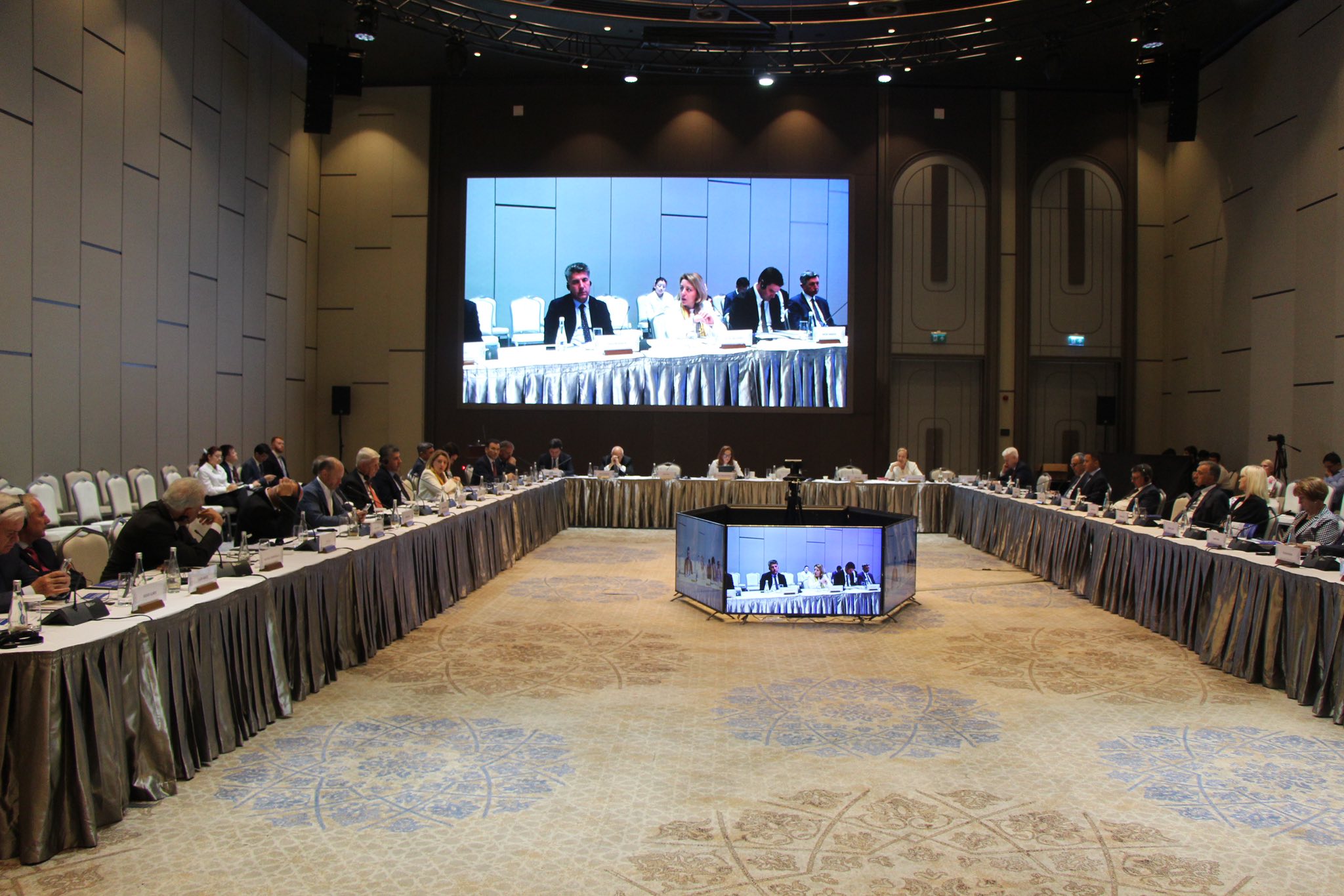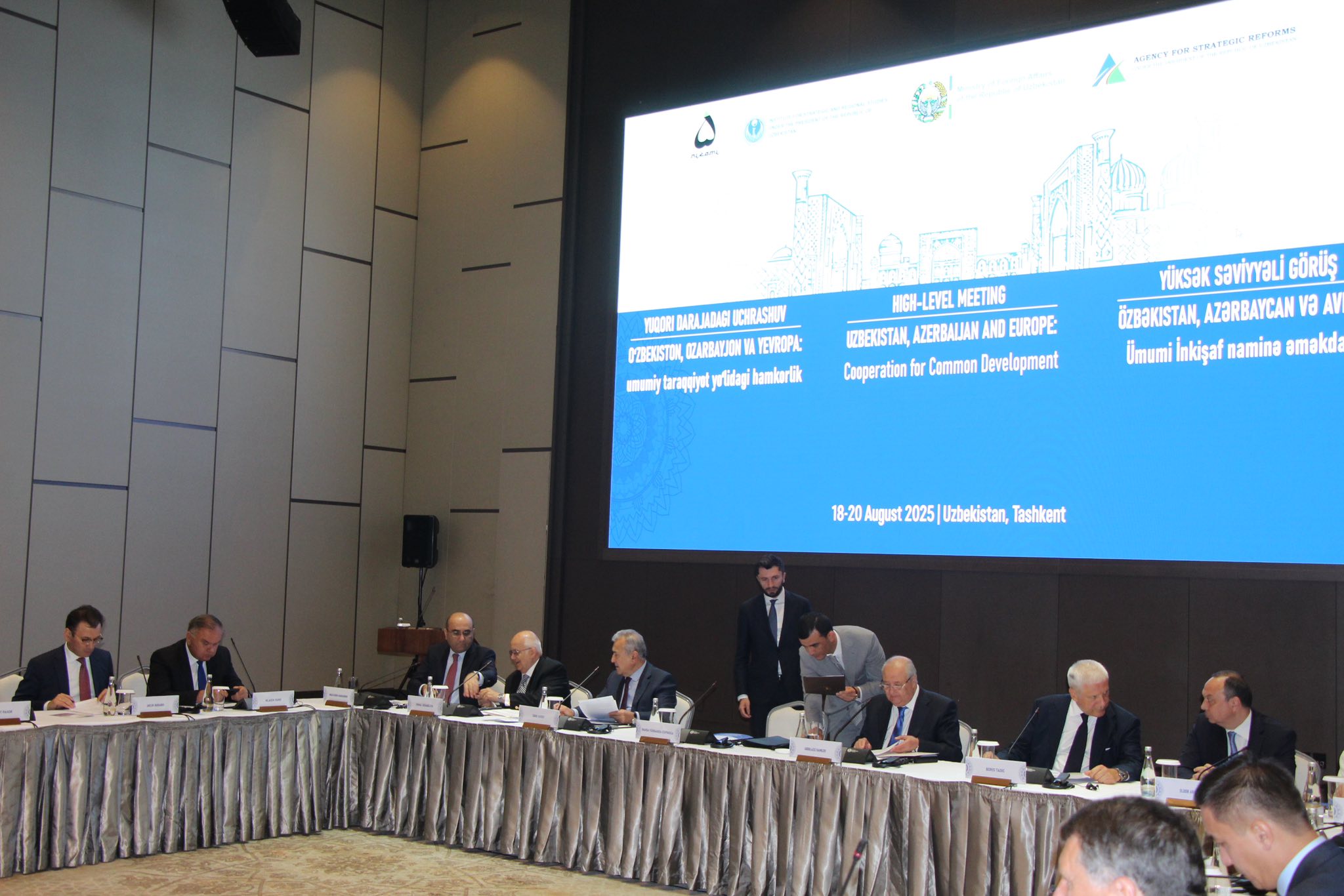
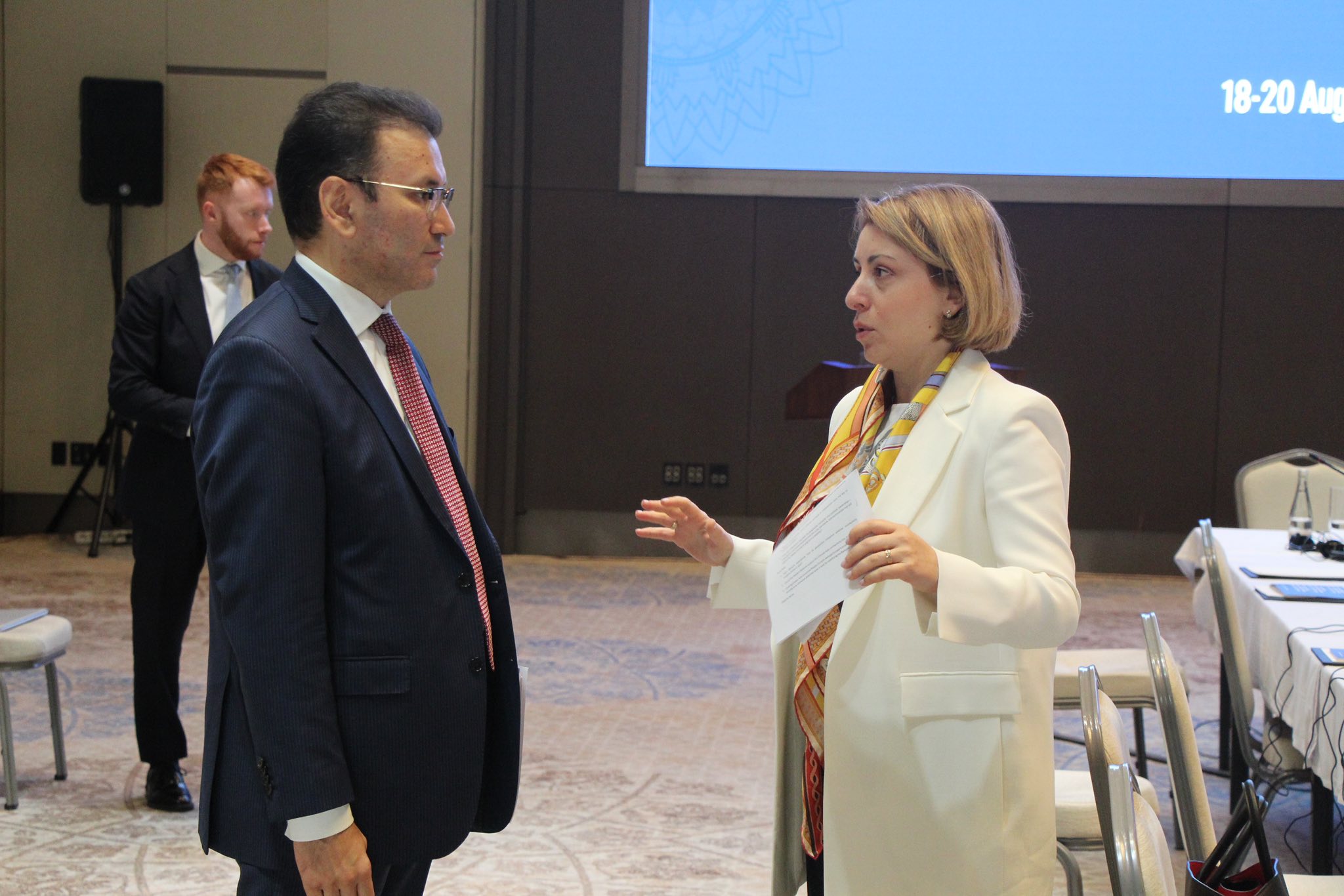
The meeting has brought together representatives of government agencies and parliaments, former heads of state and international organizations, EU delegations, the diplomatic corps, as well as leading think tanks and academia from Central Asia and the South Caucasus.
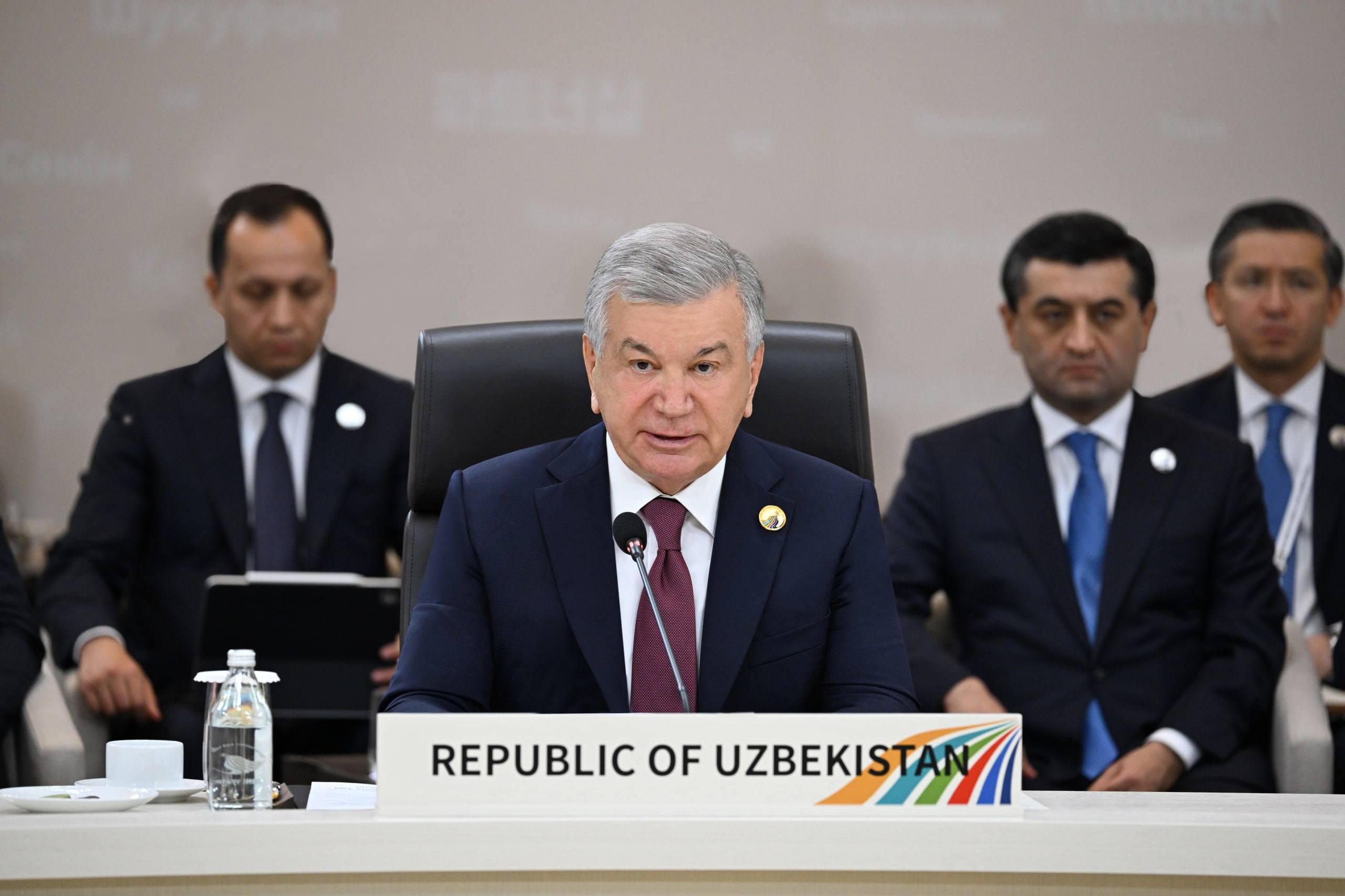
The proceedings opened with welcome remarks from the President of the Republic of Uzbekistan, Shavkat Mirziyoyev, delivered by foreign policy adviser, Abdulaziz Kamilov. The message underscored the Nizami Ganjavi International Center’s role as a reputable dialogue platform, the enduring relevance of Nizami’s ideas on harmony and justice, and the priorities of deepening inter-regional connectivity between Central Asia and the South Caucasus and their partnership with Europe.
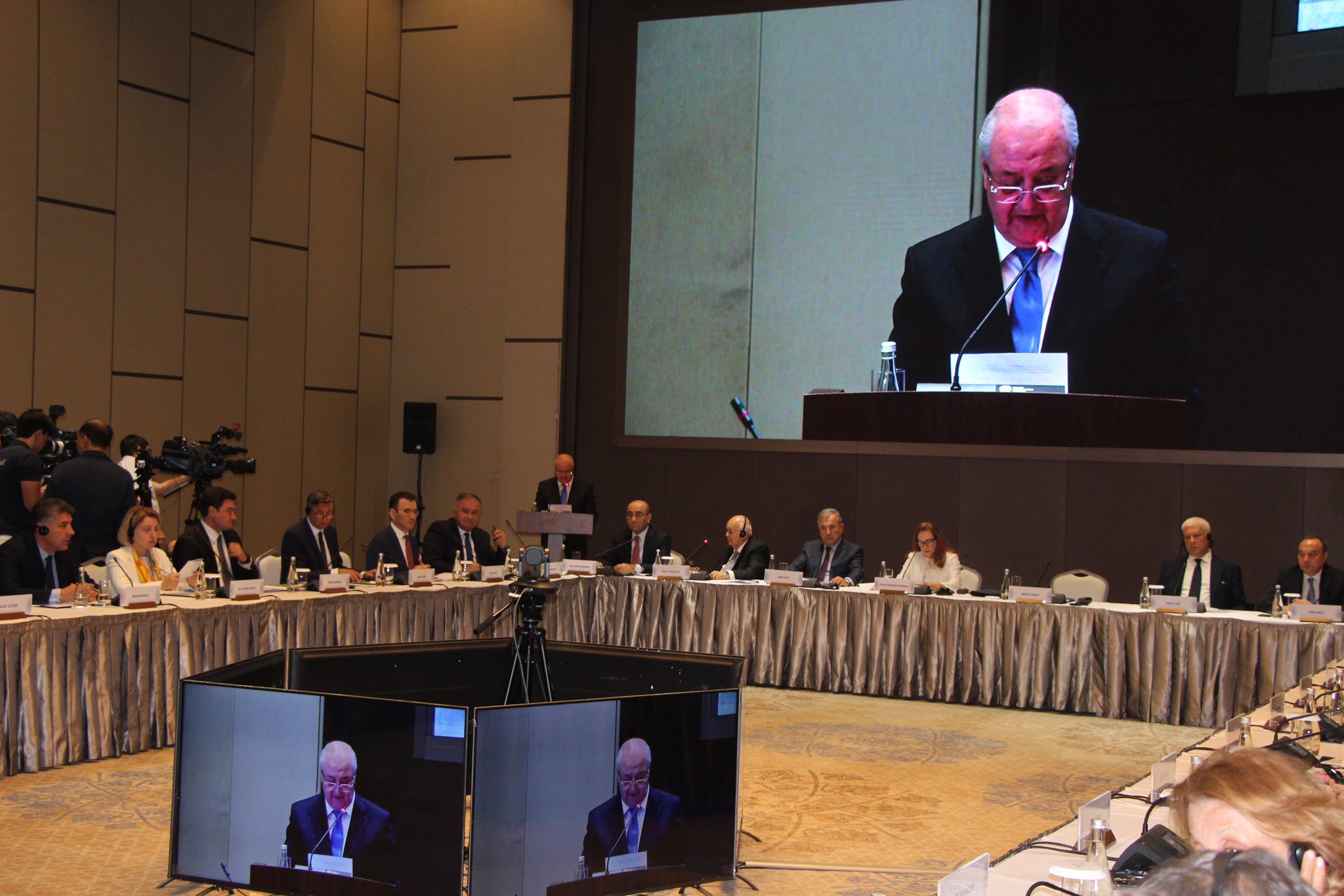
Special emphasis was placed on the new phase in relations with the European Union, the practical follow-up to the “Central Asia – European Union” summit, and the development of transport, logistics and energy corridors that reinforce the region’s role as a key hub between West and East.
Progress in Uzbekistan–Azerbaijan relations was highlighted separately, along with Azerbaijan’s function as a strategic bridge linking Central Asia and Europe and Baku’s contribution to closer interaction between the South Caucasus and Central Asia.
In his remarks, IICA Director Javlon Vakhabov stressed that the Middle Corridor is emerging as a pivotal transport and logistics artery capable of reliably connecting China, Central Asia and Europe. He noted that this route shortens the journey by almost 2,500 kilometers and enables delivery in 15–20 days, making it the most efficient option amid disruptions to traditional pathways.
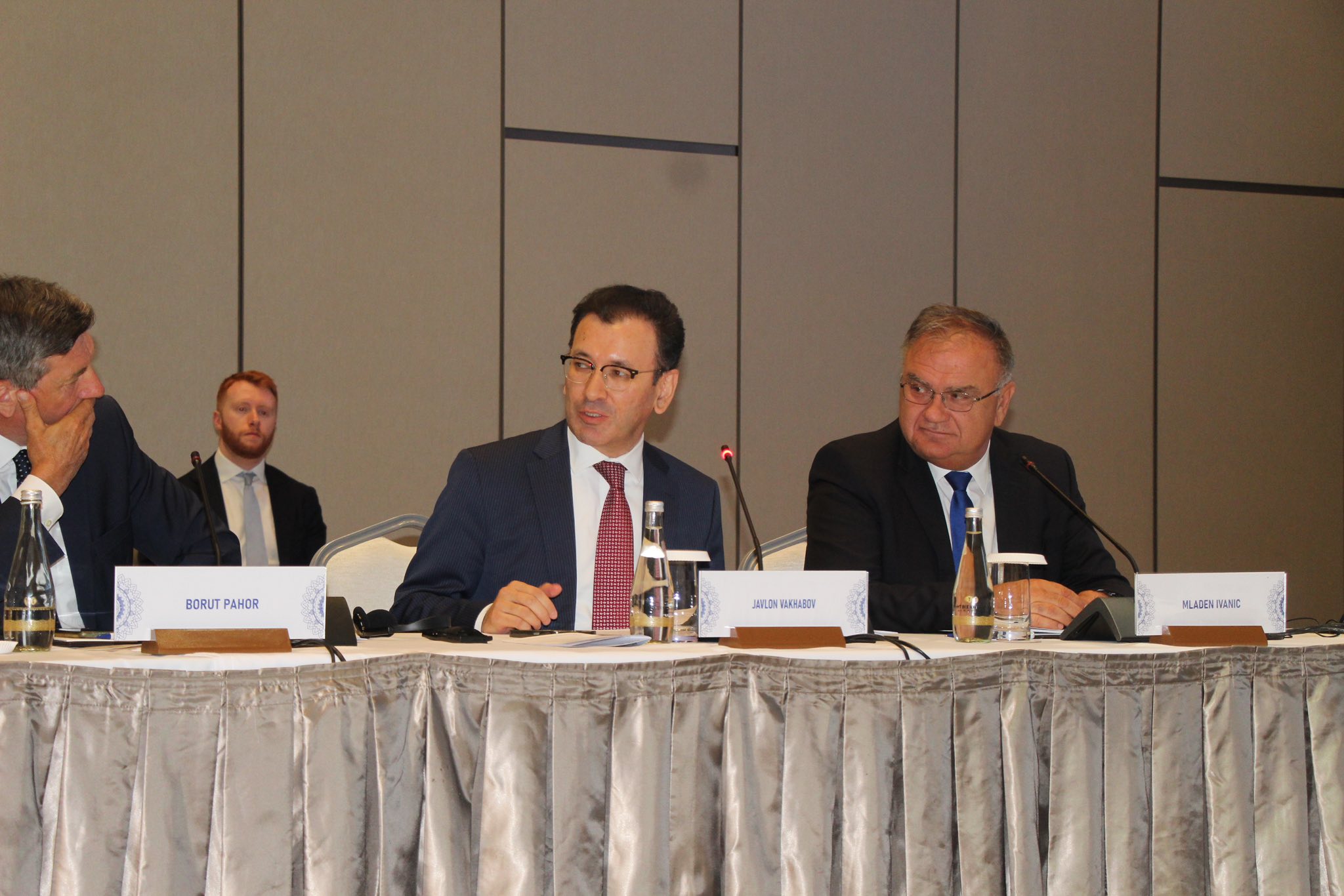
Javlon Vakhabov also emphasized that a lasting peace between Azerbaijan and Armenia would further enhance the corridor’s importance, while the Zangezur segment and construction of the China–Kyrgyzstan–Uzbekistan (CKU) railway will form strategic links in a resilient East–West infrastructure.
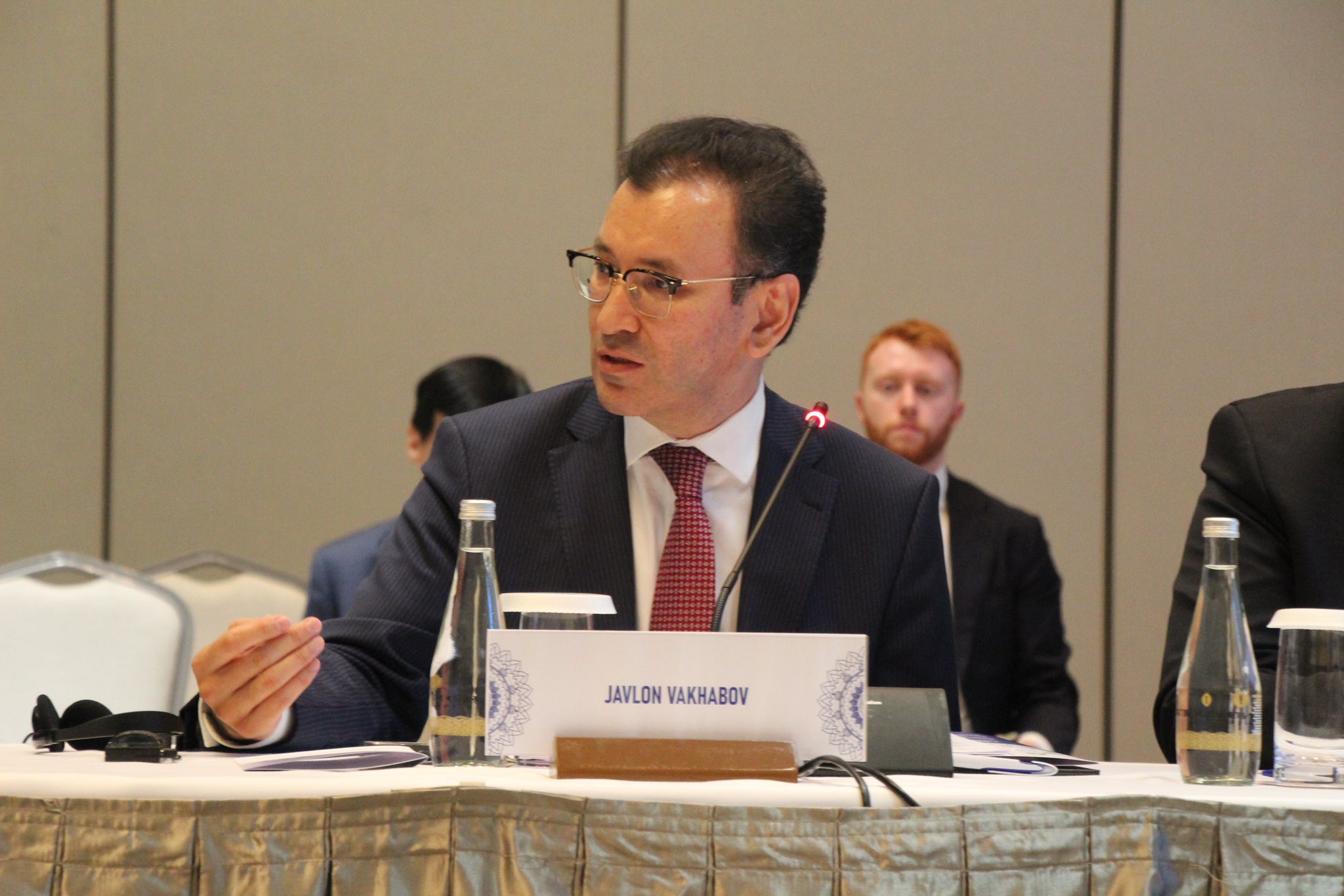
Javlon Vakhabov added that countries across Asia, the Middle East and Europe are actively engaging with the Middle Corridor as a vital means of strengthening inter-regional ties. The EU, in particular, confirmed at the Samarkand summit its support for sustainable transport connectivity with the region and announced a €12 billion investment package that includes corridor development.
In conclusion, Javlon Vakhabov noted that the Middle Corridor’s dynamic growth requires coordinated efforts: aligning infrastructure projects with the EU’s Global Gateway initiative, harmonizing transit rules and tariffs, mobilizing flexible investment (up to $40 billion annually, including EBRD and EIB participation in the CKU project), and accelerating logistics digitalization with the support of European institutions.