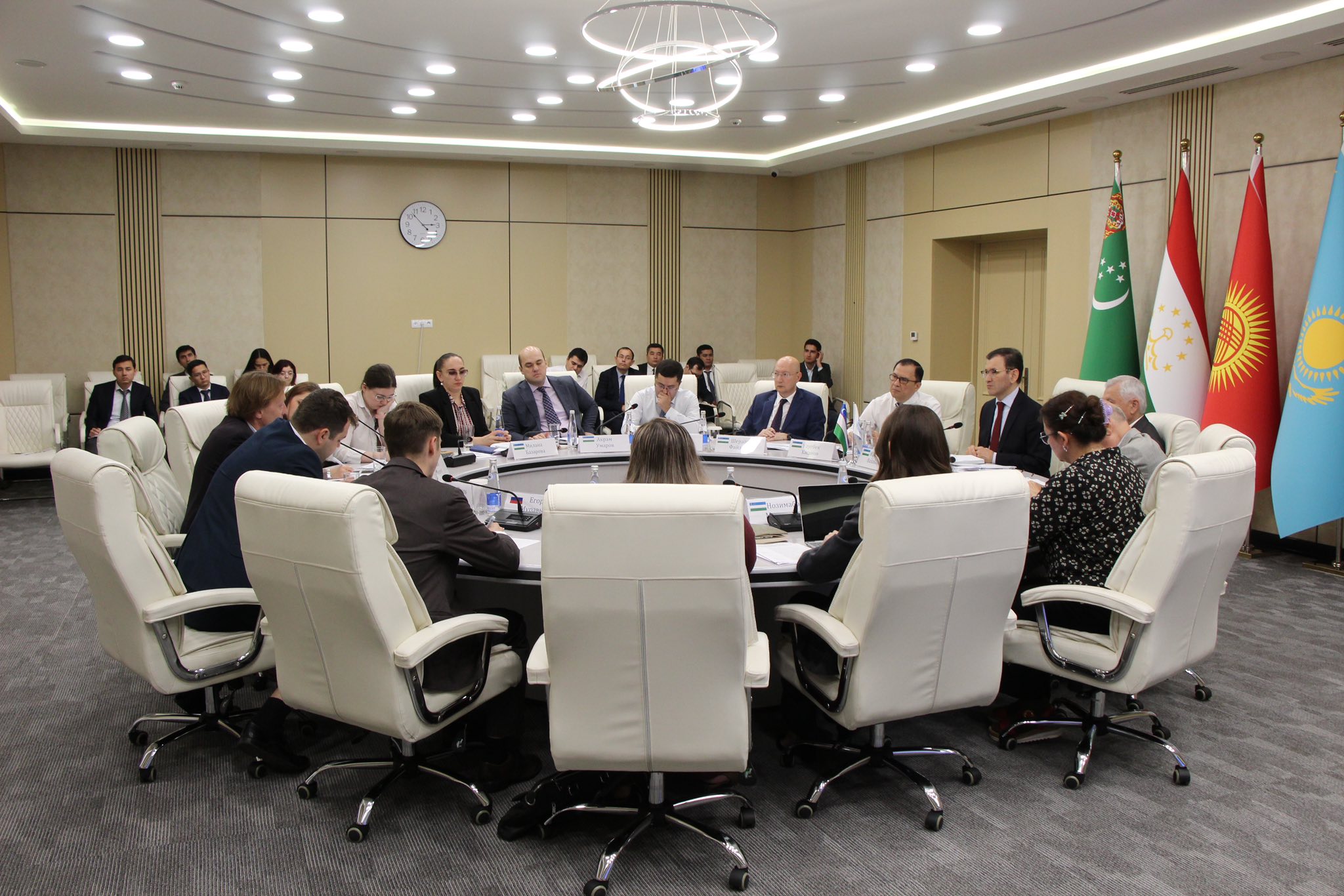
Participants included experts from IICA and HSE University, as well as representatives from the Institute for Strategic and Regional Studies under the President of the Republic of Uzbekistan, the University of World Economy and Diplomacy, the Institute for Advanced International Studies, and a group of young researchers and students from HSE University currently in Uzbekistan as part of a field research program.
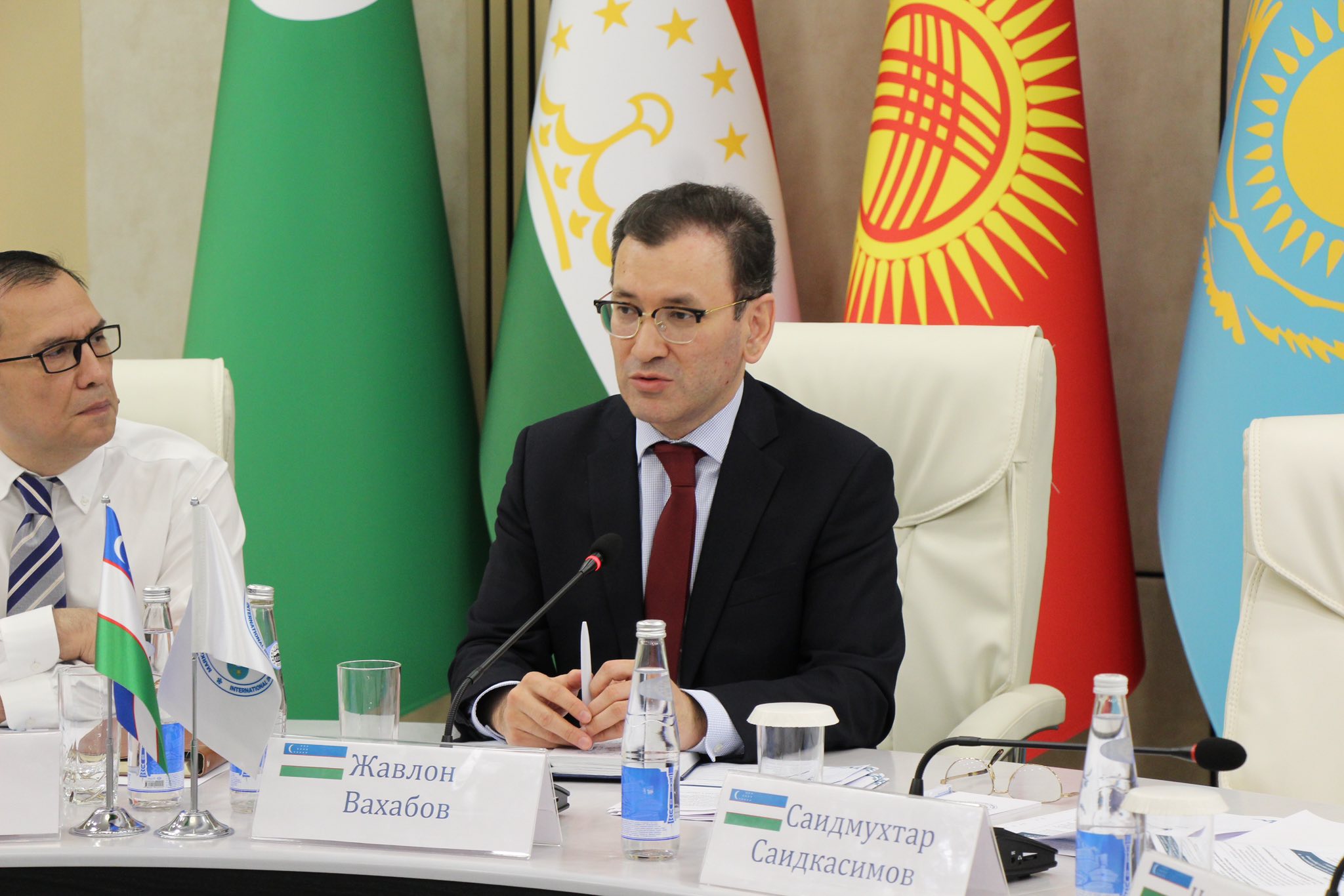
During the discussions, IICA Director Javlon Vakhabov emphasized that Central Asian countries are actively seeking optimal models of regional cooperation, guided by their own priorities while thoroughly examining international best practices. Building on this point, IICA’s Chief Research Fellow Nozimabonu Mansurova underscored the significance of Uzbekistan’s chairmanship of the Consultative Meeting of Central Asian Heads of State, highlighting key areas that foster closer ties and resilience among regional states.
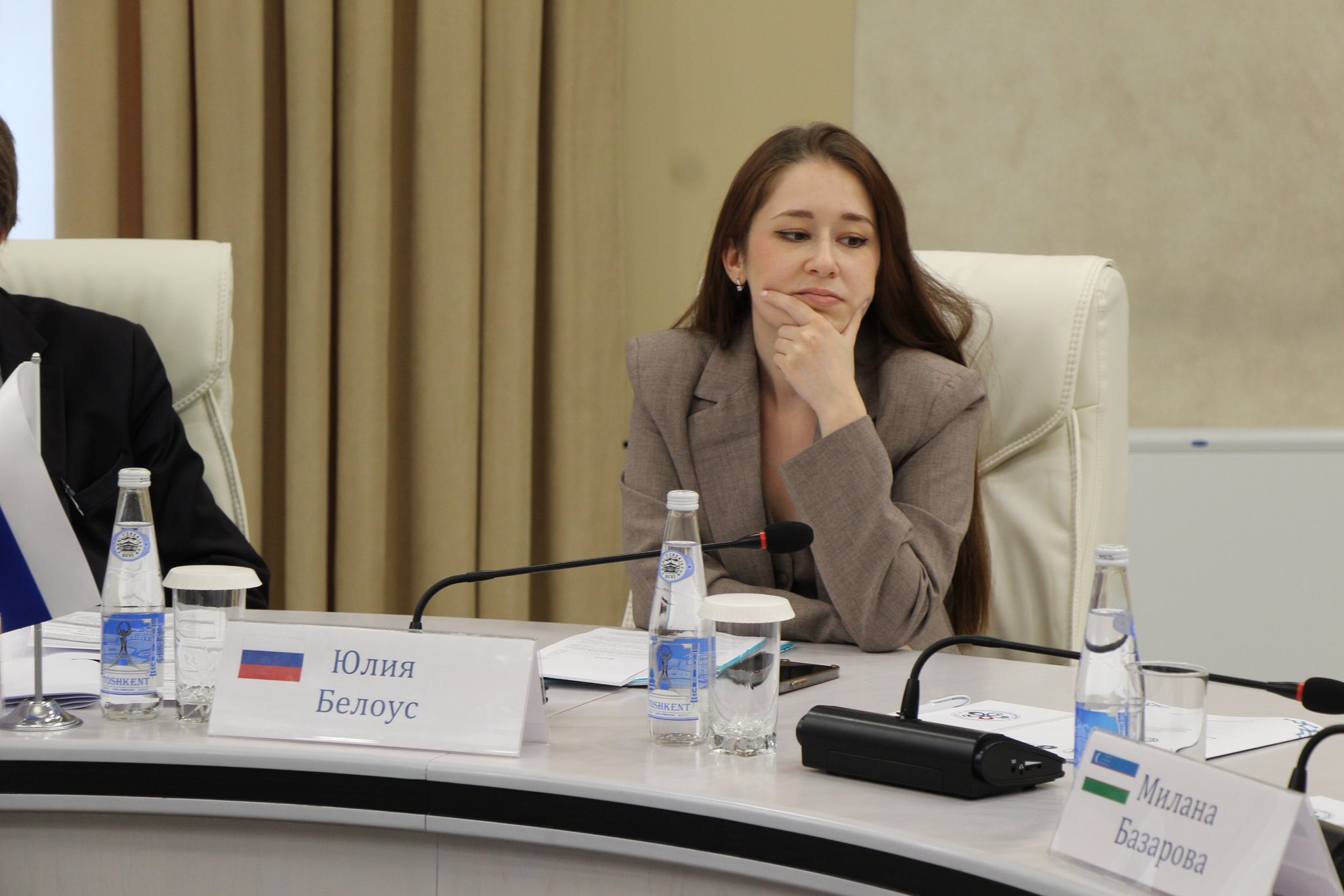
Expanding on the topic of integration, CCEIS Deputy Director Yulia Belous drew attention to the importance of institutional convergence for effective economic integration, particularly noting Uzbekistan’s flexible approach to engagement with the Eurasian Economic Union (EAEU).
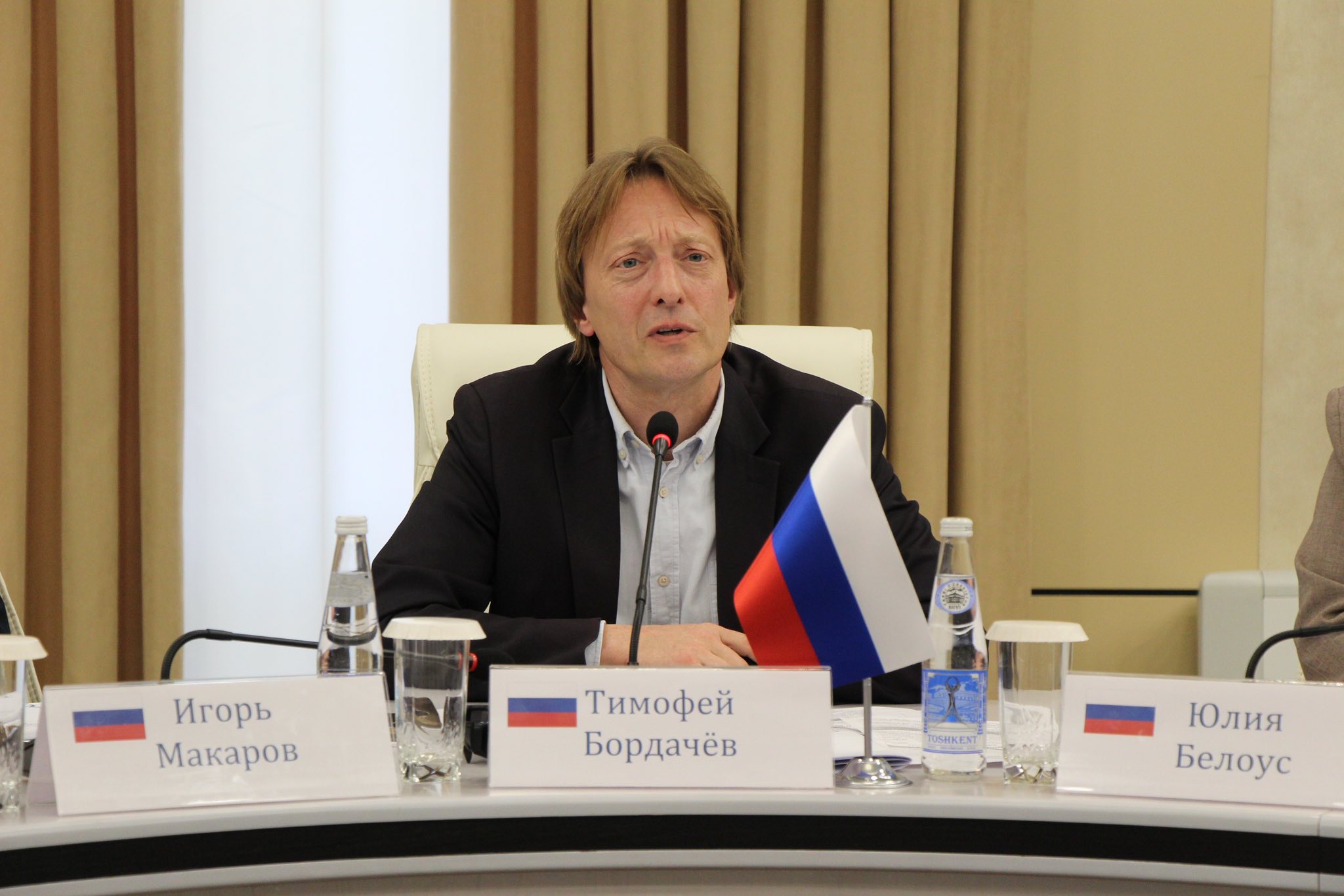
In turn, HSE University Professor Timofei Bordachev, drawing on his analysis of Eurasian processes, highlighted the potential of “Central Asia+” formats and stressed the region’s ability to formulate an independent and coherent regional agenda.
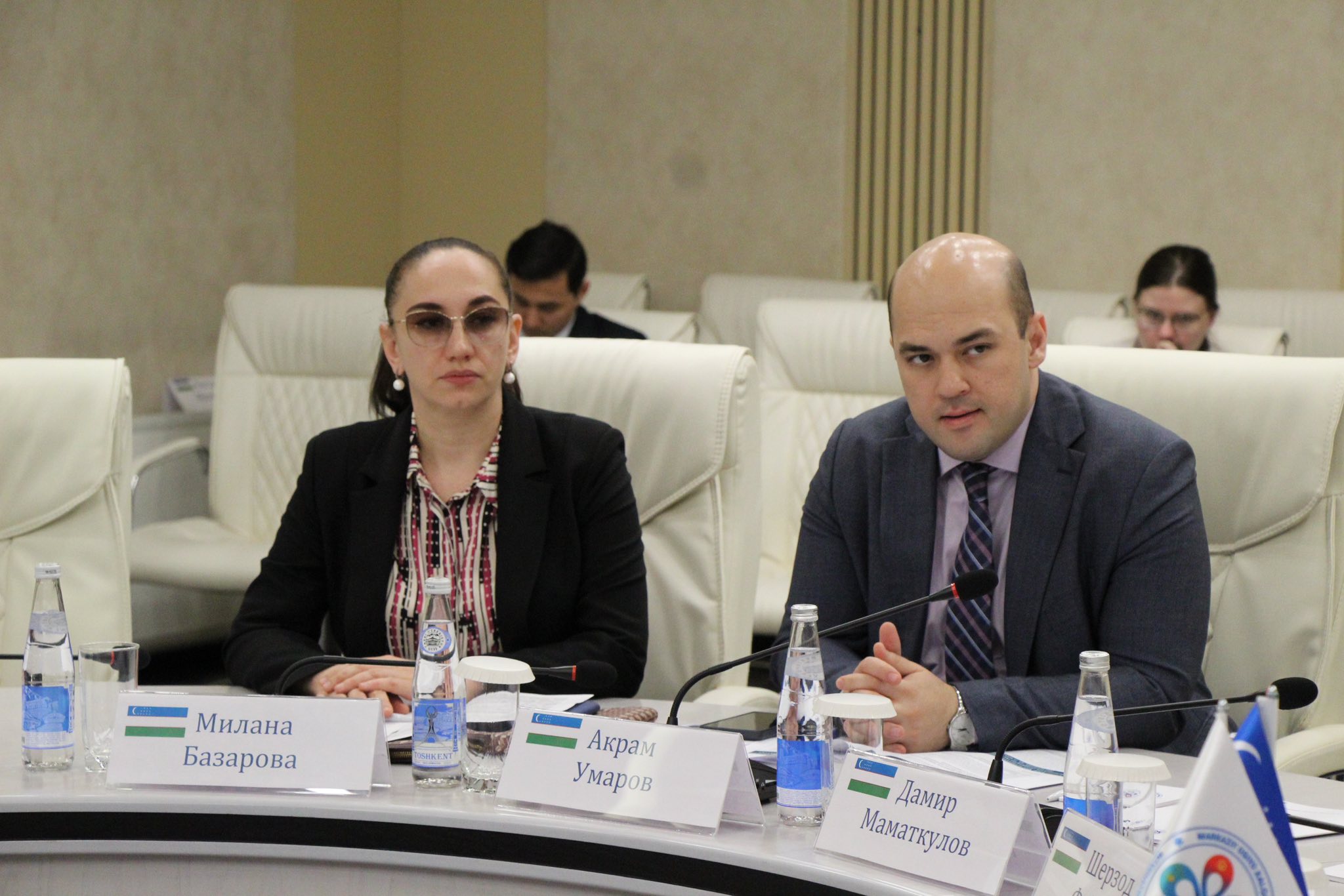
Continuing the discussion on multilateral mechanisms, Akram Umarov, Director of the Institute for Advanced International Studies, observed that Central Asia today benefits from a broad range of stable regional formats involving international partners, and emphasized the necessity of more actively engaging Afghanistan to ensure regional stability.
The topic of human capital and education was further developed by Milana Bazarova, Head of the CIS and Russia Department at the Institute for Strategic and Interregional Studies, who drew attention to the evolving demands of youth and the need to modernize educational programs for successful integration and the development of regional talent.
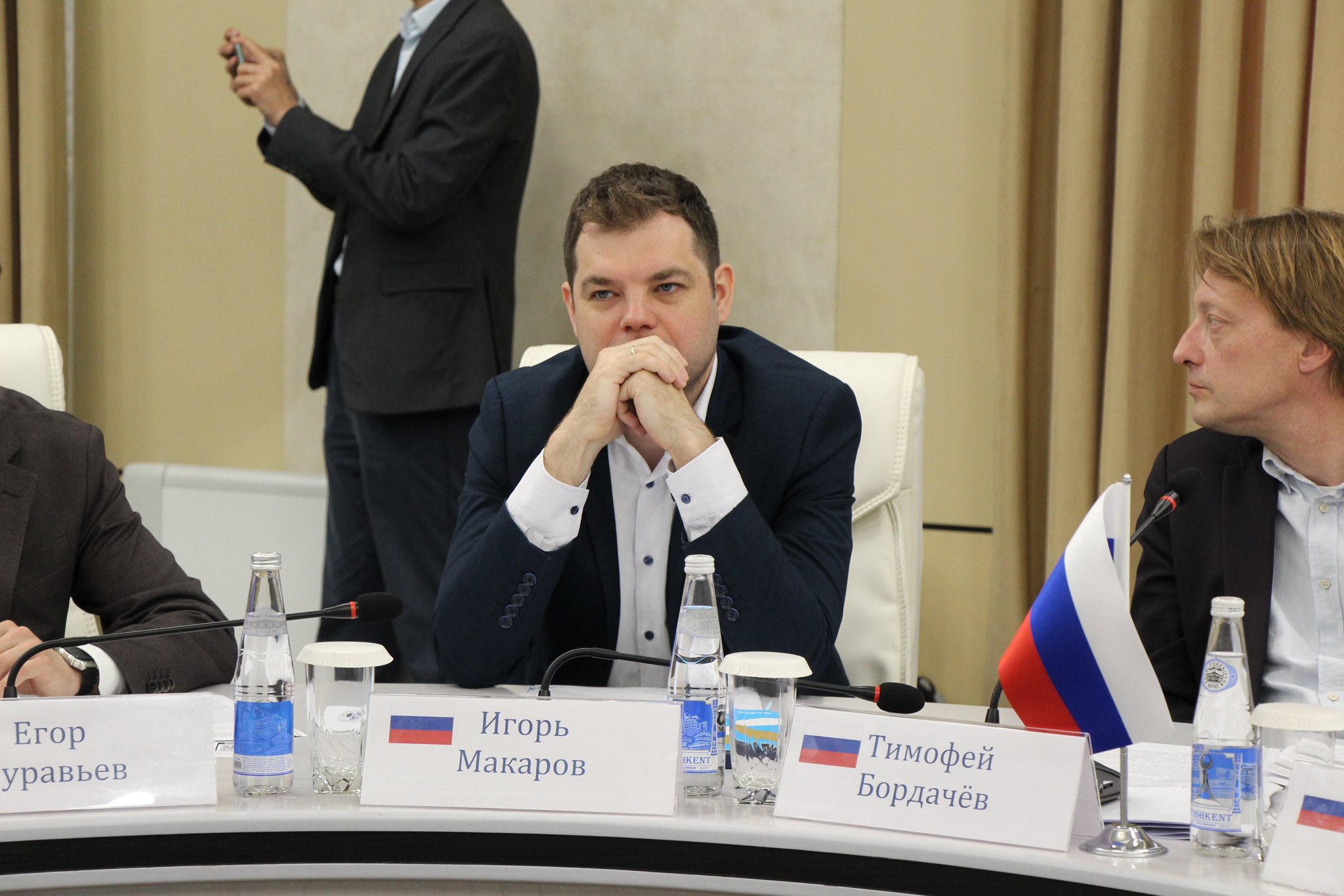
Concluding the expert interventions, Igor Makarov, Head of Department and Associate Professor at the Faculty of World Economy and International Affairs at HSE University, provided an assessment of current climate and energy challenges in Central Asia, proposing the adoption of climate and transitional finance instruments to support the region’s sustainable development.
Experts further emphasized the need to expand the format of professional consultations and institutionalize expert mechanisms to ensure high-quality analytical support at both bilateral and regional levels.
At the conclusion of the roundtable, the participants reaffirmed their mutual interest in continuing regular dialogue and implementing joint initiatives aimed at strengthening analytical capacity, supporting reforms, and advancing cooperation between Central Asia and Russia within the “Central Asia+” platform.