Distinguished guests, esteemed colleagues,
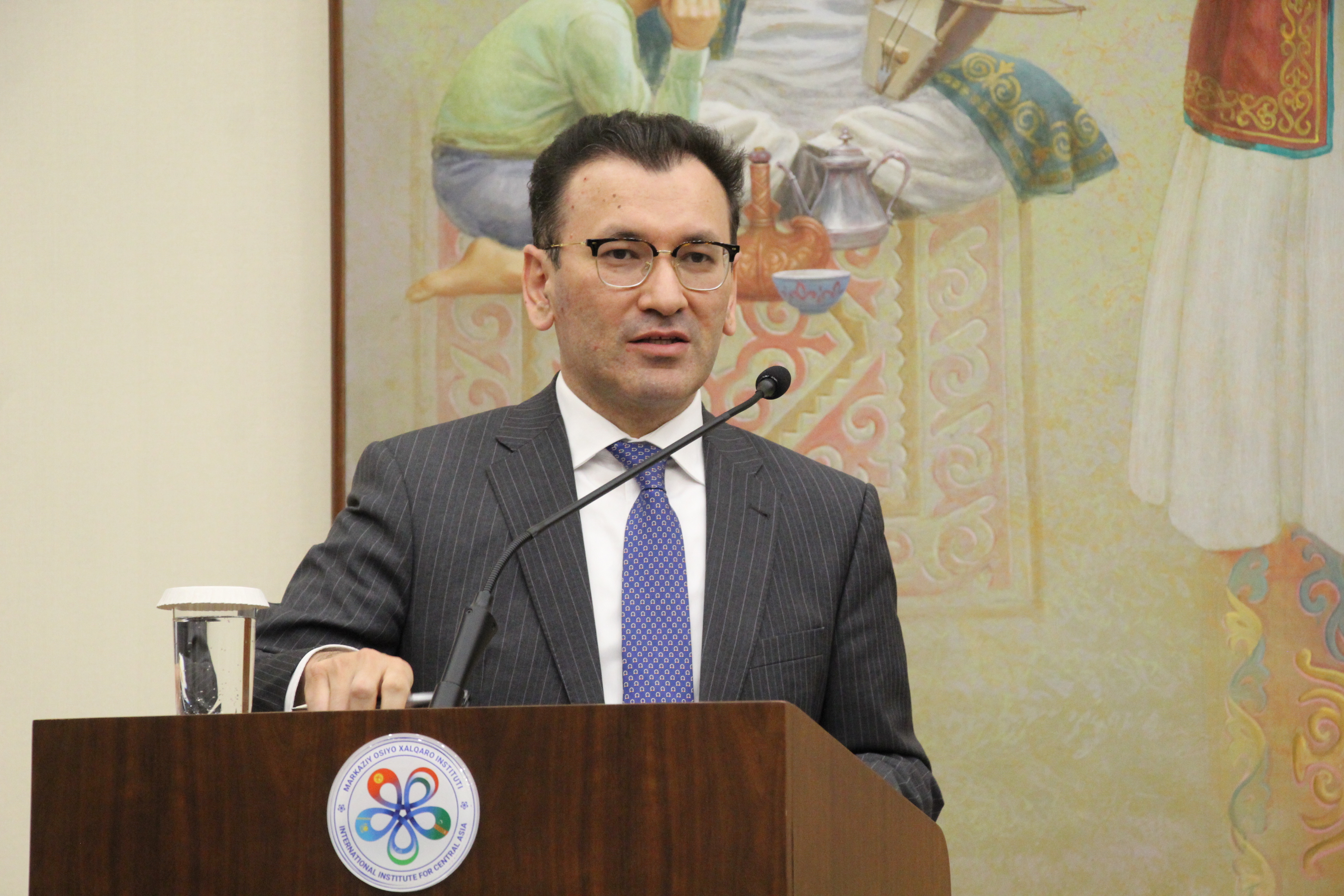
I am delighted to welcome you all to the International Institute for Central Asia, a public research organization established in 2021 at the initiative of Uzbekistan’s President Shavkat Mirziyoyev. Since then, the Institute has played a key role in regional studies, providing valuable insights and shaping policies that contribute to a stronger, more connected, and united Central Asia.
And, it is my pleasure to address the EU–Central Asia Think Tank Forum in Tashkent, especially as we celebrate Navruz this week, a festival of renewal and unity. This first-of-its-kind event has brought together leading European and Central Asian experts on the eve of the historic EU–Central Asia Summit in Samarkand, set to take place in just two weeks.
I am grateful to all participants – government officials, policymakers, businesspeople, scholars, and think tank representatives – who have traveled from near and far to engage in this timely and crucial dialogue.
Your presence is a testament to our shared commitment to deepening cooperation and building a future based on mutual understanding and trust.
- A New Era for Central Asia
Central Asia today stands at a crossroads of transformation. The region is experiencing a new wave of openness, economic modernization, and regional integration. Long regarded as a bridge between East and West, our nations are now emerging as proactive contributors to global stability and economic growth.
In recent years, political will and collective efforts among Central Asian states have strengthened regional unity, fostered economic resilience, and enhanced connectivity.
Our region is no longer perceived as a distant frontier, but rather as a vital link in the emerging global order – one that is essential for trade, security, and sustainable development.
The upcoming Samarkand Summit also underscores the increasing recognition of Central Asia as a distinct geopolitical entity with its own regional identity and international legal personality.
- Strategic Cooperation with the European Union
The European Union has long been a valued partner of Uzbekistan and the broader Central Asian region. Our relationship is built on shared values, a common interest in regional stability, and a vision for sustainable development.
Over the past decade, the EU has played a key role in fostering economic growth and modernization in Central Asia with ever-growing trade and investments.
This highlights EU’s confidence in our economic potential and its long-term commitment and unwavering support for independence, sovereignty and territorial integrity of Central Asian countries.
We see immense opportunities for collaboration across key sectors, including political dialogue, trade and investment, transport and connectivity, green growth and renewable energy, digital transformation and artificial intelligence, education and people-to-people ties, as well as security cooperation and sustainable governance.
In an era of global uncertainties, these areas of collaboration will bolster economic resilience and create new opportunities for sustainable development of entire region.
- The Tashkent Platform as a Permanent Mechanism for Expert Dialogue
Today's forum is not just a one-time event – it has potential to evolve into permanent platform for dialogue and policy coordination between the EU and Central Asia.
As the world faces growing geopolitical turbulence – ranging from conflicts and supply chain disruptions to new dynamics in the traditional alliance systems – our ability to engage in proactive cooperation becomes even more crucial.
This platform will serve as a neutral and dynamic venue for thought leaders, policymakers, and experts to formulate actionable recommendations and shape the trajectory of EU–Central Asia relations.
- Looking Ahead: A Call for Action
As we embark on this dialogue, I call on all participants to use this forum to engage in constructive, solution-oriented discussions. Our dialogue has to deliver concrete policy proposals to be presented at the Samarkand Summit.
Working together, we can:
- strengthen institutional ties between European and Central Asian think tanks;
- develop targeted policy recommendations for multifaceted interregional cooperation;
- foster a deeper understanding of regional challenges and shared opportunities.
- Conclusion
Uzbekistan and the broader Central Asian region are committed to building enduring bridges with Europe.
Our geography, history, and shared aspirations make us natural partners in an increasingly interconnected world.
Today’s event reaffirms that we are open to constructive dialogue.
I hope that your valuable insights and proposals will help further strengthen EU–Central Asia relations.
Wishing you all productive discussions and open, candid exchanges on our shared priorities for EU–Central Asia Dialogue.
Let me conclude by wishing a Happy Navruz to everyone celebrating in Uzbekistan and around the world!
Thank you for your attention.