Distinguished participants of the conference,
First and foremost, I would like to express my sincere gratitude to our colleagues from the Institute for Strategic and Regional Studies and other co-organizers for the kind invitation and the opportunity to address this expert segment of the inaugural session of the Termez Dialogue on Regional Connectivity. It is a great honor to exchange views in such a representative and intellectually vibrant gathering.
Throughout history – whether in the East or the West – the presence of well-developed road networks has always been synonymous with prosperity and progress. As a well-known Chinese proverb says, “If you want to be rich, build a road.”
In his seminal 1776 work The Wealth of Nations, Adam Smith underscored this notion by writing that “good roads, canals and navigable rivers, by diminishing the expense of carriage, put the remote parts of the country more nearly upon a level with those in the neighborhood of the town. They are upon that account the greatest of all improvements.”
The peoples of Central Asia, with their rich and at times turbulent history, have experienced both the flourishing of regional and global interconnectedness—most prominently through the ancient Silk Road – and prolonged periods of isolation from the world’s major trade arteries, leading to disconnection from global processes of political and economic modernization.
Today, thanks to growing consolidation across the region since 2017, the issue of regional and interregional connectivity has become a key strategic priority for all Central Asian nations and the regional five as a whole.
Afghanistan’s role as a bridge linking Central and South Asia is indispensable in the implementation of initiatives aimed at enhancing interregional cooperation.
President Mirziyoyev has emphasized that Afghanistan constitutes one of the central pillars of practical connectivity between Central and South Asia, and that fostering interregional partnerships will be key to securing peace, stability, and economic revival in Afghanistan—opening up new opportunities for its integration into broader regional processes.
In recent years, the countries of Central Asia have stepped up their cooperation with Afghanistan. Uzbekistan and Turkmenistan were among the first to engage actively, launching bilateral trade and infrastructure initiatives. Kazakhstan and Kyrgyzstan have established diplomatic ties with Kabul, removed the Taliban from their lists of terrorist organizations, and are developing trade, economic, and humanitarian collaboration. Tajikistan, for its part, has maintained its trade ties and continued supplying electricity to Afghanistan.
The nations of Central Asia attach great importance to the vast geoeconomic potential of South Asia as a whole, particularly its role in shaping the global landscape of transport connectivity.
Since 2021, countries from both regions have made meaningful strides in expanding interregional trade and investment. There is a growing mutual interest in strengthening win-win partnerships. While the vast potential for broader cooperation remains largely untapped, a strong foundation is now being laid for the continued growth of trade flows between the regions.
Imports from South Asia into Central Asia have demonstrated a stable structure and a high degree of diversification in recent years. A considerable share includes pharmaceuticals as well as high-tech goods—ranging from equipment and machinery to electronics—highlighting a strong regional aspiration toward economic modernization and technological renewal.
Meanwhile, energy resources – particularly uranium, other mineral fuels, and their derivatives – form the core of Central Asian exports from Kazakhstan and Uzbekistan to India and Pakistan, underscoring the strategic role of Central Asia in helping to meet South Asia’s growing energy demands.
India has also shown increasing interest in importing rare earth elements from the region, as evidenced by the 2024 India–Central Asia Rare Earths Forum (ICAREF), held in New Delhi.
Complementing this export portfolio is agricultural produce – especially vegetables, tubers, and root crops – as well as chemical industry goods, including raw materials in demand across various industrial sectors. These exports reflect the natural resource wealth of Central Asia and the region’s growing relevance within global production and supply chains.
A fundamental condition for the successful development of interregional trade and investment ties is a radical improvement in transport connectivity, along with the facilitation of transit and the simplification of customs and border procedures.
Significant work has been undertaken to advance the project for the construction of the Uzbekistan-Afghanistan-Pakistan railway, which will establish the shortest route accessing the markets of Pakistan, India, and other South Asian countries, as well as the Pakistani ports on the Arabian Sea.
A key mechanism for implementing these plans will be the trilateral commission for promotion of this project, which is being established in accordance with the agreement reached in February this year during the visit of Pakistani Prime Minister Shahbaz Sharif to Uzbekistan.
Earlier this year, I had the opportunity to visit the Port of Karachi. What I witnessed confirmed its enormous potential — not only for Pakistan but for the entire region. Thanks to modern container terminals, extensive warehousing facilities, and well-integrated internal transport networks, Karachi is poised to become a key maritime gateway for Central Asian countries.
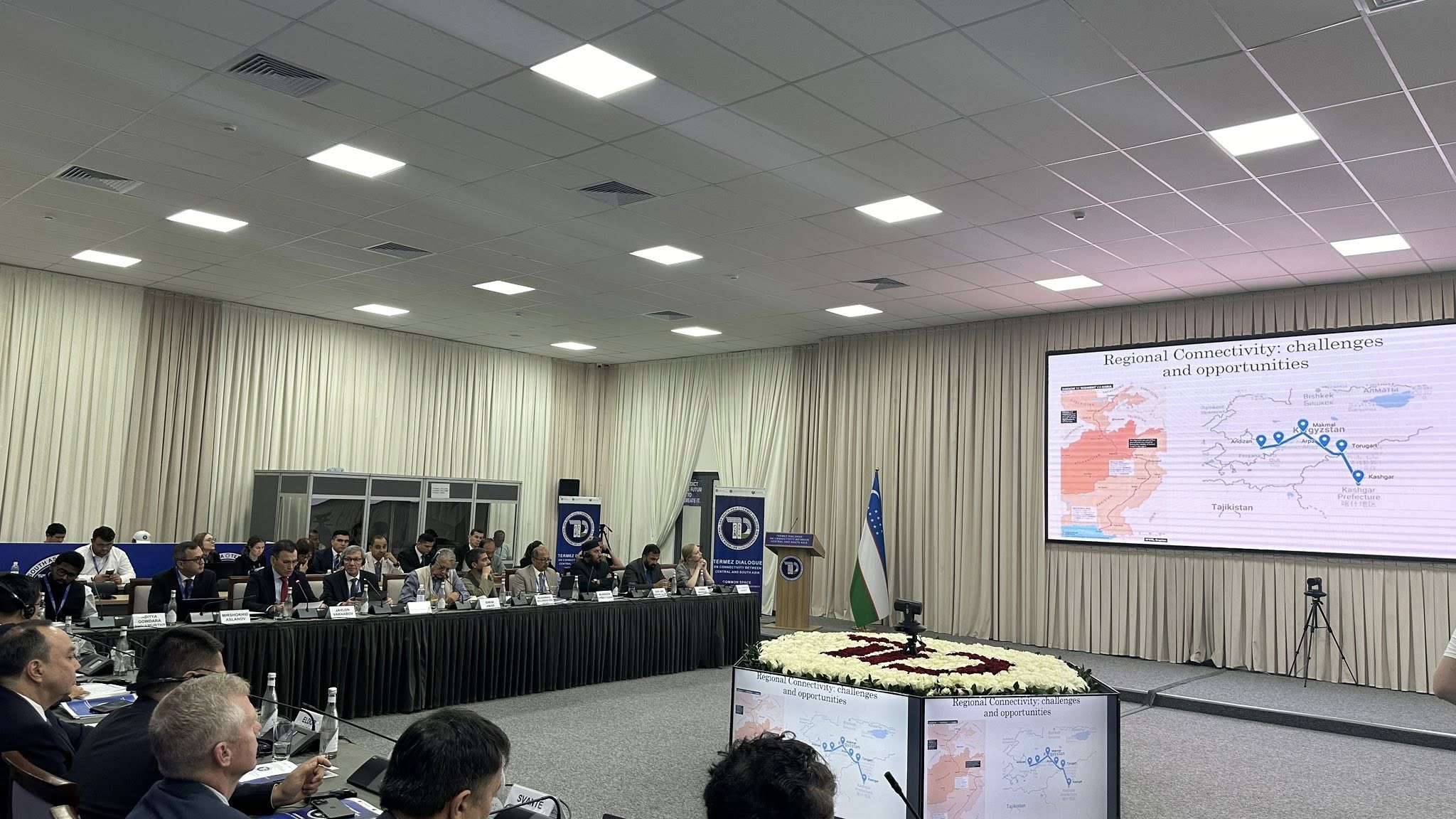
The prospects for this project are further enhanced by the launch of the China-Kyrgyzstan-Uzbekistan railway construction, which will serve as a vital transport artery within the China-Central Asia Economic Corridor, connecting to South Asia, West Asia, and Europe. The transit of goods from China, Mongolia, and other East Asian countries will substantially increase the freight volume on the Uzbekistan-Afghanistan-Pakistan railway. Our country, with its growing population, economy, and foreign trade, will also be a significant contributor to freight generation.
At the same time, given the rapidly changing geopolitical and economic landscape, Central Asia is actively promoting a multi-vector strategy in transport and logistics connectivity.
The region aims to create a flexible, resilient, and multidimensional transport corridor architecture that ensures reliable access to global markets and enhances the competitiveness of regional economies. In particular, Turkmenistan and Kazakhstan are actively developing energy and transport communications through Afghanistan. Turkmenistan is already constructing the TAPI gas pipeline within Afghan territory. Together with Kazakhstan, it plans to build a railway passing through Herat and Kandahar to Pakistan.
Concurrently, one of the key directions in this diversification strategy is the development of transit corridors via southern Iranian ports.
There are significant opportunities related to the active promotion of the transport route through the Iranian port of Chabahar. Uzbekistan considers this route one of the top priorities and supports constructive dialogue with India and Iran to develop freight transportation via Chabahar. This port is seen as a key part of the sustainable transport and logistics network in our broader region.
Support from other Central Asian countries further underscores the significance of this project: during the virtual summit of Central Asia 5 + India, the heads of state expressed their interest in advancing the Chabahar initiative, including through the establishment of a joint working group for its development. This reflects a collective political consensus and an understanding of the strategic importance of the route for the entire region.
An important component of this project is the construction of the Chabahar-Zahedan railway line, aimed at its further connection with the International North–South Transport Corridor (INSTC).
Today, we observe a strengthening of connectivity between Western, Central, and South Asia, opening up prospects for the formation of a unified macro-regional space for trade, economic, and transport cooperation. Key seaports in the region, including those along the Persian Gulf coast, serve as strategic hubs, providing access to international trade routes.
Alongside concrete infrastructure projects, countries in the region demonstrate active engagement within the framework of international multilateral agreements in the fields of transport and logistics.
Of particular importance in this regard is the Ashgabat Agreement, aimed at creating an international transport and transit corridor connecting Central Asia with the Persian Gulf and South Asia. The participation of countries such as Uzbekistan, Kazakhstan, Turkmenistan, Iran, Oman, and India in this agreement enables the establishment of efficient multimodal routes combining maritime, rail, and road transport.
Certain progress in the legal and regulatory framework for transport connectivity has also been achieved within the Economic Cooperation Organization. In 2006, the ECO Framework Agreement on Transit Transport Facilitation (ECO TTFA) entered into force, ratified by Azerbaijan, Afghanistan, Iran, Kazakhstan, Kyrgyzstan, Pakistan, Tajikistan, and Turkey. The agreement aims to reduce costs and expedite transport services through the harmonization and modernization of transit operations in the region.
Currently, within the framework of the Central Asia Regional Economic Cooperation Program (CAREC), a Partnership Agreement on Trade and Investment Facilitation (CARTIF) is being developed. Its conclusion and implementation could create more favorable conditions for cooperation among countries in the region in transport and logistics.
Despite expanding opportunities for closer integration, cooperation between Central and South Asia still faces a number of systemic challenges that limit the realization of its full potential.
Political and geopolitical risks, a deficit of trust, and insufficient coordination between states present serious obstacles to effective interregional interaction. Differences in levels of economic development and legal systems, complicate the establishment of sustainable and mutually beneficial cooperation mechanisms.
The geography of Central Asia is both our strategic advantage and a longstanding constraint. As landlocked states situated at the heart of the Eurasian continent, we possess enormous potential to facilitate transit and trade along East-West and North-South axes. Today’s rapidly changing realities — characterized by new security challenges, sanctions, and logistical vulnerabilities — call for a fundamental reassessment of our transport and trade connectivity strategies.
In this context, the diversification of trade corridors is a strategic imperative for building a more resilient and future-oriented economy. A crucial condition for realizing this vision is the strengthening of mutual trust, conflict resolution, dialogue, and cooperation.
Further advancement of interregional connectivity requires addressing the expansion of cooperation areas, alongside the establishment of institutional mechanisms and a robust legal framework for interaction.
First, there is a need for more active support to transform Afghanistan not only into an effectively functioning bridge between the two regions but also into a full-fledged, autonomous partner. A significant step forward could be the revival of multilateral frameworks aimed at Afghanistan’s development, such as the Regional Economic Cooperation Conference on Afghanistan (RECCA) or the Istanbul Process;
Second, it is necessary to create a network of business councils and interregional forums to foster deeper trade and investment ties, promote increased regional cooperation in support of transboundary business-to-business connections and people-to-people exchanges;
Third, we need to enhance energy sector connectivity and performance by expanding and effectively integrating renewable energy sources into national and regional energy systems. This will help make energy more reliable, reduce reliance on fossil fuels, and create a stronger, more efficient energy network;
Fourth, it is crucial to establish a dedicated platform for coordinating transport and logistics to streamline operations, reduce delays, and boost efficiency—drawing on proven models like the EU’s Middle Corridor initiative. Such a platform will foster stronger cooperation among stakeholders, enhance trade connectivity, and drive economic growth across the region.
Fifth, enhancing regional digital connectivity in Central and South Asia is essential because digital transformation drives sustainable growth by enabling greener technologies, strengthening resilience against economic and environmental shocks, and promoting inclusive access to opportunities for all communities. Without robust digital networks, these regions risk falling behind in development and missing critical chances to build a sustainable and equitable future.
Sixth, Expert collaboration and the formulation of balanced strategic decisions could be greatly facilitated by establishing a permanent dialogue platform—an annual Central and South Asia Think Tank Forum. These convenings will foster meaningful exchanges of ideas, promote mutual understanding, and enable the development of coordinated policies that address shared challenges.
In conclusion, I would like to emphasize that developing transport infrastructure in Central and South Asia is not merely about constructing roads and railways. It is a bridge to mutual understanding, partnership, and prosperity. Only by uniting our efforts can we unlock the full potential of our region, create new opportunities for business, improve living standards, and strengthen peace.