Your Excellency Ambassador Yu Jun,
Dear President Chen Dongxiao,
Distinguished colleagues, ladies and gentlemen,
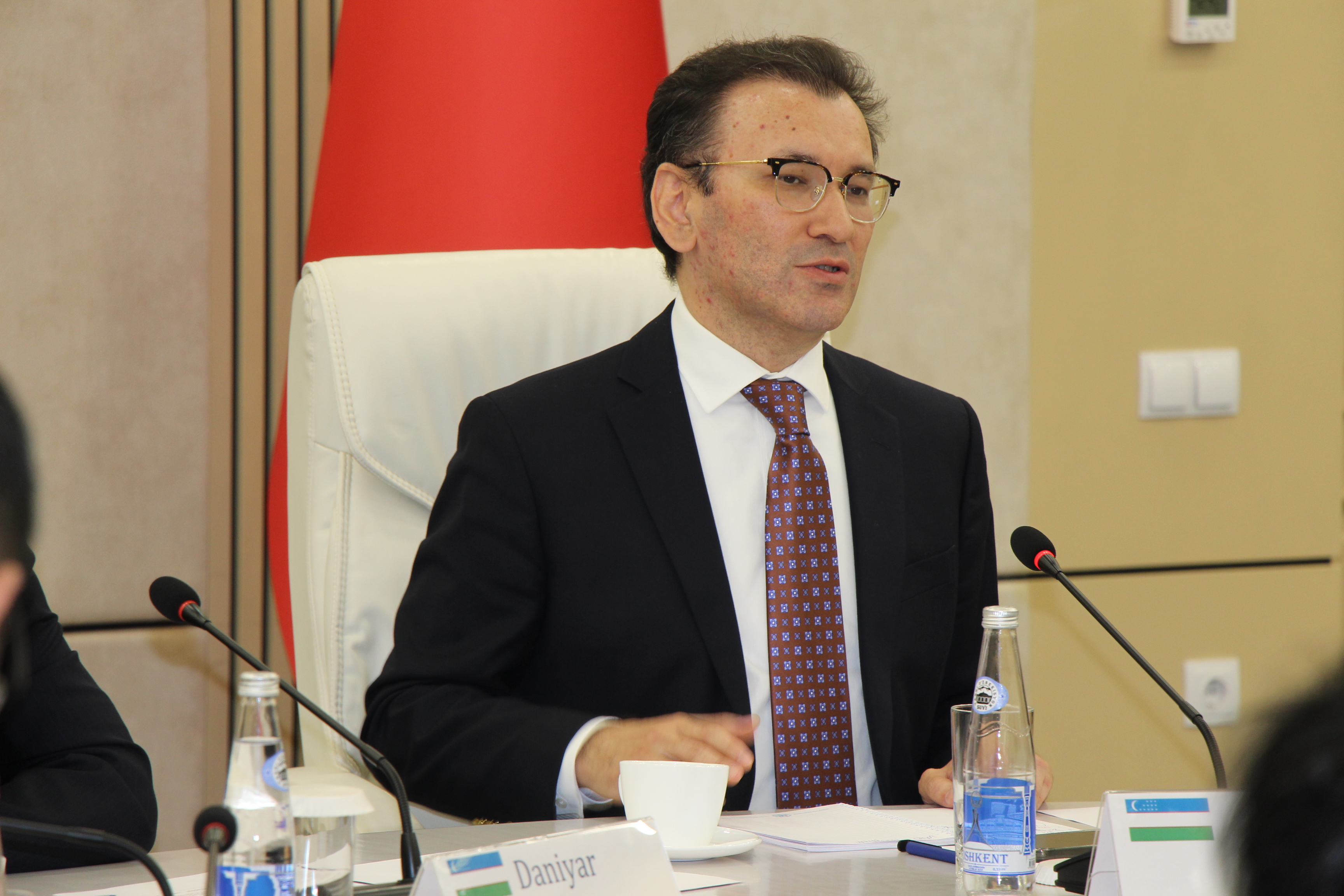
It is a great honor and privilege to welcome President Chen and the distinguished delegation of the Shanghai Institutes for International Studies to Tashkent. We are grateful to Ambassador Yu Jun, as well as to other participants for attending our event.
First of all, let me congratulate my Chinese colleagues on the 80th anniversary of the victory in the Chinese People's War of Resistance and World War II, the successful holding of the SCO summit in Tianjin and the grand military Victory Parade in Beijing. All this has once again demonstrated to the world the greatness of China, its potential and key role in ensuring global peace and development.
We are delighted to host today’s roundtable, organized jointly by the IICA and SIIS, which provides us with an opportunity to exchange views on the current state and future prospects of Uzbekistan–China cooperation.
SIIS is widely recognized as one of China’s leading research centers in the field of international relations. With its broad expertise and longstanding commitment to policy-oriented research, SIIS has earned an excellent reputation both within China and internationally. We deeply value the opportunity to establish and strengthen direct cooperation between our institutions, which will serve to enrich the academic and policy dialogue between Uzbekistan and China.
This year we have already concluded online our cooperation agreement with SIIS, the 1st one with Shanghai’s think tanks, and have just taken advantage of the opportunity to sign it, as well as adopt joint action plan, which includes specific joint projects and activities. I am confident that this will ensure the practical intensification of our cooperation.
Dear colleagues,
The relations between Uzbekistan and China in recent years have entered a qualitatively new and unprecedented stage. A landmark event was the state visit of President Shavkat Mirziyoyev to China in January 2024. Together with President Xi Jinping, our leaders elevated bilateral relations to the level of an all-weather comprehensive strategic partnership for a new era.
Since that historic moment, the dynamics of cooperation have become even more impressive. In the sphere of trade and investment, our results speak for themselves. Since 2017, bilateral trade has tripled, reaching 14 billion US dollars, and we have set the ambitious but achievable goal of raising this figure to 20 billion in the near future. At the same time, cumulative Chinese investments in Uzbekistan now exceed 24.6 billion US dollars, supporting strategic projects in energy, manufacturing, infrastructure, and advanced technologies.
Equally significant is the humanitarian dimension of our partnership. The Confucius Institutes in Tashkent and Samarkand have become important centers of language study and cultural exchange, nurturing a new generation of Sinologists and specialists with deep knowledge of China.
In June 2025, the introduction of a mutual visa-free regime between our countries opened new opportunities for direct contacts between our peoples, facilitating business cooperation, tourism, and academic exchanges.
The recent official visit to China by President of Uzbekistan Shavkat Mirziyoyev, during which he participated in the SCO summit in Tianjin and held talks with President of the People's Republic of China Xi Jinping, contributed to the further deepening of the Uzbek-Chinese partnership.
Dear colleagues,
This dynamic progress would not have been possible without the strategic vision and tireless efforts of both President Shavkat Mirziyoyev and President Xi Jinping, whose joint commitment and personal leadership have elevated Uzbek–Chinese relations to an unprecedented level of trust, partnership, and shared development.
Cooperation with China is becoming an important factor in economic modernization, and sustainable development of Uzbekistan and other Central Asian countries. Uzbekistan, for its part, firmly adheres to the one-China principle and highly values China’s consistent support for our regional initiatives, including the promotion of the “Central Asian partnership spirit”.
In this context, today’s roundtable holds particular importance. Its agenda has been carefully designed to reflect the most pressing priorities of regional cooperation and to facilitate a structured dialogue on both bilateral and multilateral progress.
The first session will focus on the outcomes of the second “Central Asia–China” Summit in Astana.
This new platform has already demonstrated its relevance as a mechanism for aligning development strategies, strengthening transport and energy connectivity, and expanding cooperation in trade, innovation, and cultural exchange.
In this regard, the President of Uzbekistan made a number of important cooperation initiatives at the summit. Having emphasized the historical significance of the Treaty on Eternal Good-Neighborliness, Friendship and Cooperation adopted during the summit, Shavkat Mirziyoyev proposed to draft and adopt a Concept of Long-Term Partnership, which should include specific mechanisms and projects.
Today’s discussion will not only highlight the opportunities that this format creates but also examine the challenges that need to be addressed to ensure that the ambitious initiatives of our leaders
are transformed into practical, mutually beneficial projects.
The second session will be dedicated to analyzing the results of the 25th Meeting of the Council of Heads of State of the Shanghai Cooperation Organization in Tianjin. This important milestone reaffirmed the value of multilateral dialogue in addressing shared security challenges, promoting economic growth, and enhancing cultural and humanitarian ties.
The leader of Uzbekistan supported the global governance initiative put forward by Chairman Xi Jinping at the SCO summit and also proposed adopting a Declaration on Nuclear Safety, resuming the Meetings of Ministers of Internal Affairs, and intensifying the work of the SCO-Afghanistan Contact Group.
Taken together, these two sessions provide a timely opportunity to review the progress already achieved, assess the lessons learned, and outline new pathways for bilateral and regional collaboration. They will allow us to translate political commitments into concrete action and to ensure that the partnership between Uzbekistan, China, and the countries of Central Asia continues to evolve as a model of pragmatism, balance, and long-term vision.
Dear friends,
In the article by the President of Uzbekistan on the SCO summit, published in the Chinese media, it was noted that Uzbekistan–China cooperation becomes a model of pragmatic and balanced partnership that contributes to regional stability, prosperity, and sustainable growth. By aligning our national strategies and working together in both bilateral and multilateral formats, we are helping to build a secure and prosperous region.
I am confident that today’s roundtable will provide valuable insights and practical recommendations. It will not only deepen mutual understanding between our institutions but also contribute to the further strengthening of Uzbekistan–China strategic partnership and the consolidation of regional cooperation.
In conclusion, let me once again extend my sincere gratitude to President Chen Dongxiao and all colleagues from SIIS for their participation in this event. I look forward to our continued cooperation and to the development of joint initiatives that will serve the interests of our countries and our region.
Thank you for your attention.