Dear Alexey Vladimirovich,
Dear colleagues,
It is my absolute delight to welcome all the participants and guests of today’s roundtable and to express our gratitude to our Russian colleagues for their support in organizing this event.
Our meeting marks an important anniversary. Exactly 20 years ago, a treaty on allied relations between the Republic of Uzbekistan and the Russian Federation was signed in Moscow. The signing of this treaty was a significant milestone, opening a new era of cooperation between the two countries.
For the past two decades, this Treaty has served as a solid foundation for the development of Uzbek-Russian relations in areas such as security, economy, energy, transport infrastructure, science, information technology, and humanitarian field.
Thanks to this, we can confidently note real and tangible achievements in our bilateral relations, which have reached a substantially new level.
I would like to draw particular attention to the high intensity of political dialogue between the leaders of our two countries. President Shavkat Mirziyoyev’s visits to Kazan and Moscow in October 2023, and President Vladimir Putin’s visit to Tashkent in May 2024, during which meetings, when our leaders reaffirmed the immutability of the key provisions of the alliance treaty that underpin our bilateral cooperation.
The commitment of our countries to deepen partnership has also been reflected in the economic sphere. Russia continues to retain the role of Uzbekistan’s leading partner. Over the past 20 years, the volume of mutual trade has increased nearly sixfold – from $2 billion in 2005 to $11.6 billion in 2024.
In just January–August of 2025, trade turnover exceeded $9 billion. At the same time, nearly 70% of supplies are high value-added products. The leaders of both states have set an ambitious yet realistic goal of raising this figure to $30 billion.
I am pleased to note the growth in the number of joint ventures with Russian participation while there were around 430 such ventures two decades ago, today there are more than 3,000.
A significant milestone of a new stage in energy cooperation has been the construction of a nuclear power plant in the Jizzakh region, which broadens the range of our joint projects by combining traditional energy initiatives with the development of “green” projects. As President Shavkat Mirziyoyev noted, the NPP is “vital for the country’s future economic development and will make a strategic contribution to its energy security”.
It is also particularly rewarding to note the achievements in education. In 2005, Uzbekistan had only one branch of a Russian university — the Plekhanov Russian University of Economics (the first foreign university in independent Uzbekistan) — whereas today there are 14 branches. In the near future, the opening of a branch of Bauman Moscow State Technical University is also expected. Uzbekistan ranks first among CIS countries in terms of the number of Russian university branches, and the number of joint educational programs approaches 400.
Tourism exchange has also grown dynamically. In 2005, the total number of foreign tourists visiting Uzbekistan was 241,000. By 2024, 870,000 tourists came from Russia alone. This is further confirmed by Uzbekistan being recognized as the best tourist destination among CIS countries, winning the “Russian Traveler Awards 2024.”
We can see that over 20 years, Uzbek-Russian relations have acquired a fundamentally new scale, filled with tangible projects and real substance, which is reflected in the growing dynamics of cooperation.
It is gratifying to note that our ties are not limited to bilateral relations. Thanks to developments in Central Asia in recent years, aimed at strengthening regional cooperation and unity, new mechanisms for interaction between countries in the region and key partners are being created.
In this context, cooperation within the “Central Asia–Russia” format forms the basis for the development of regional connectivity. In October of this year, the second summit of regional leaders in this format was held in Dushanbe, serving as an important platform for discussing prospects for joint development and strengthening relations at the regional level.
During the summit, a number of initiatives were proposed to further deepen cooperation. In particular, the President of Uzbekistan suggested holding regular high-level meetings, establishing a Coordinating Council at the level of Deputy Prime Ministers, developing transport and logistics connectivity, launching the “Agroexpress Central Asia–Russia” and Industrial Engineering Hub projects, establishing a Regional Competence Center, expanding energy partnership, as well as strengthening educational, cultural, and social ties.
All of these initiatives are aimed at enhancing practical efficiency and further developing cooperation, including through multilateral formats, which serve as additional platforms for strengthening bilateral ties.
Dear guests,
Expert interaction between analytical and scientific centers plays a crucial role in strengthening Uzbek-Russian cooperation. In recent years, the IICA has established a systematic dialogue with leading Russian partners.
This year alone, the Institute’s delegation visited Moscow twice and held a series of joint events with RISS, IMEMO, Institute of China and Contemporary Asia and the Institute of Oriental Studies of the Russian Academy of Sciences, and the Gorchakov Fund. All these contacts strengthen mutual understanding and provide intellectual guidance for practical solutions.
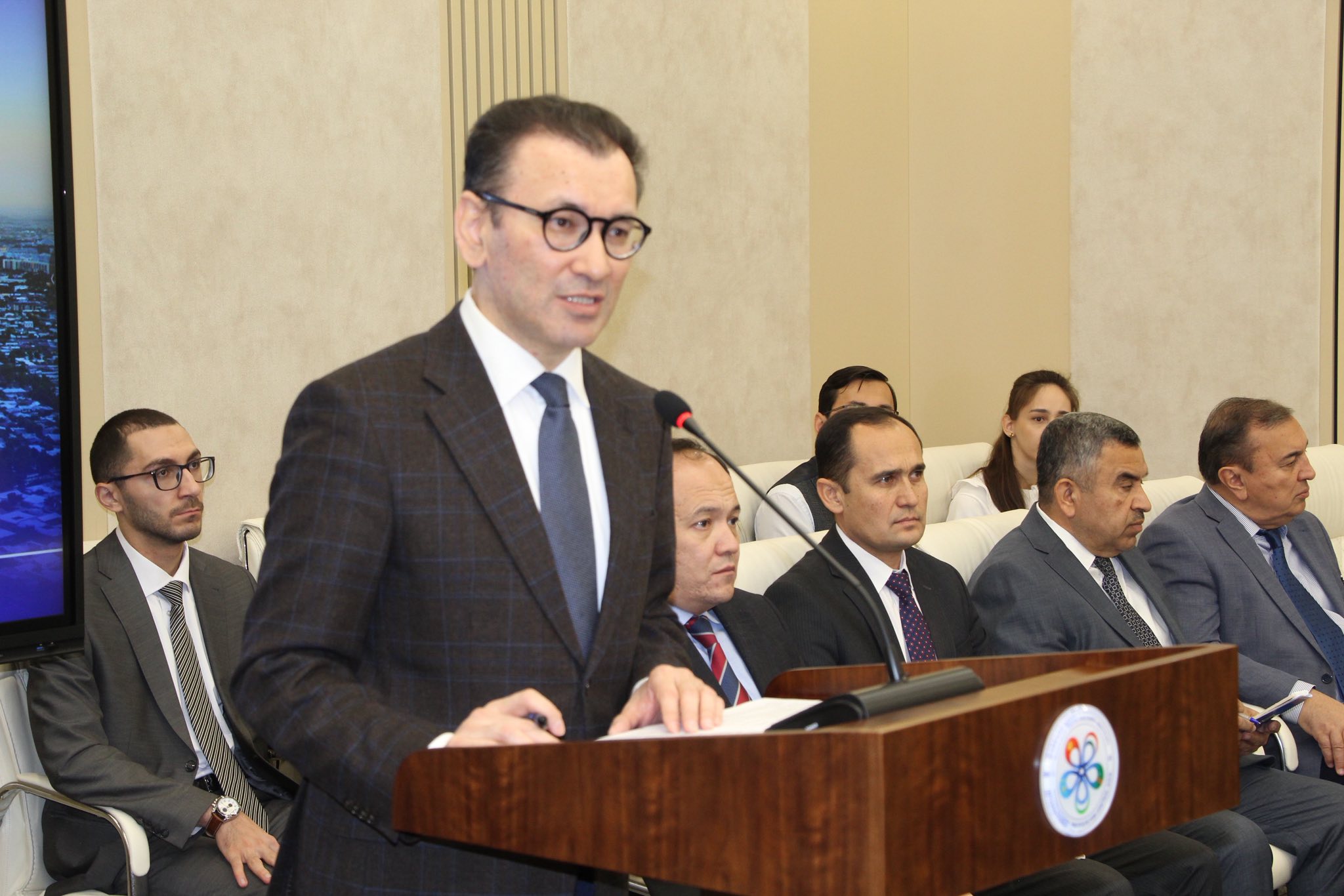
Today’s roundtable will continue this expert dialogue. We will focus on the key areas of political, economic, energy, and humanitarian cooperation, as well as on prospects for further deepening Uzbek-Russian interaction.
I am confident that our guests will elaborate on these topics in greater detail. I wish all participants productive work, substantive presentations, and constructive exchanges of views.
Thank you.