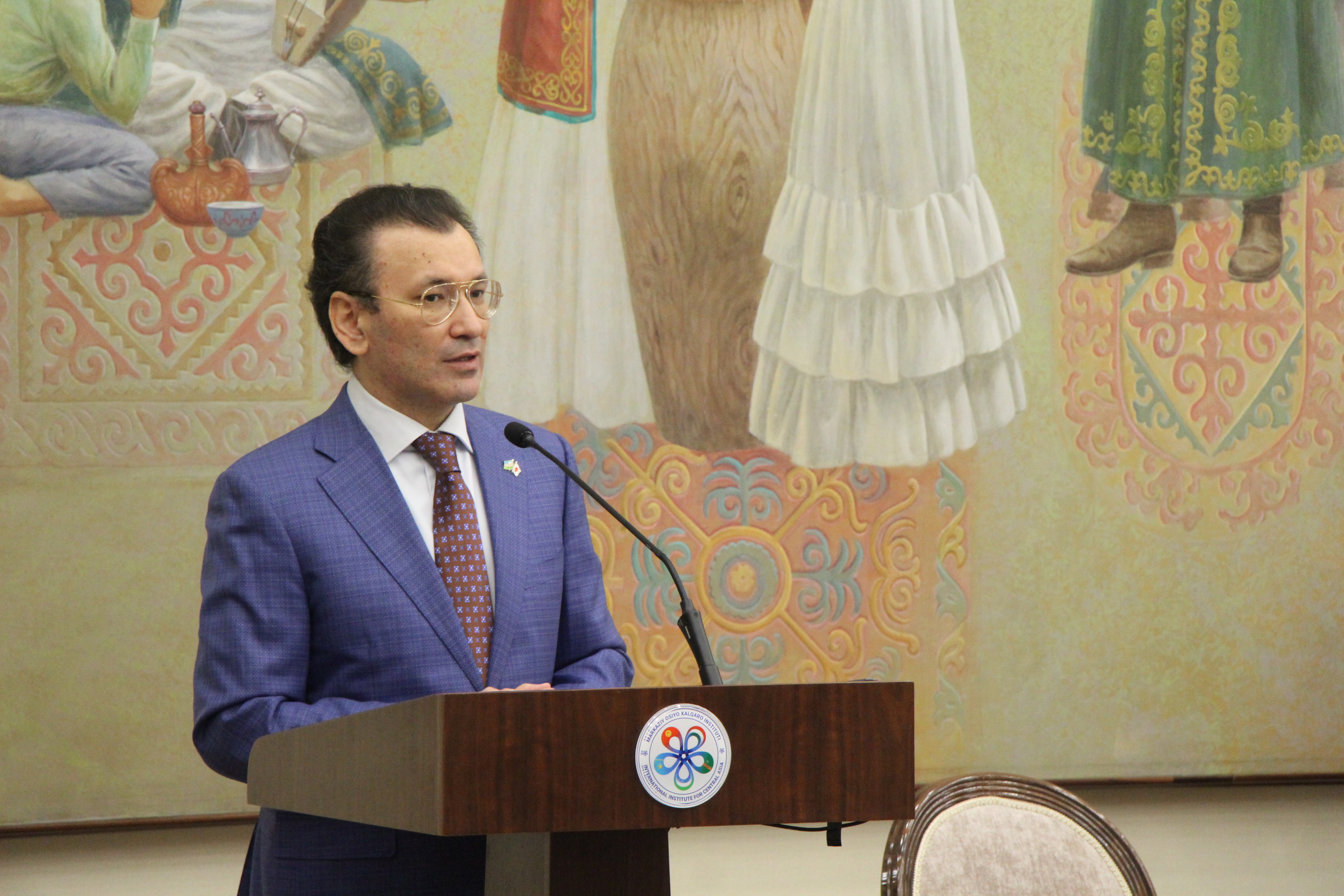
Assalomu aleykum! Minasan, ohayo gozaimas!
Dear colleagues, distinguished guests,
I would like to extend my sincere appreciation to Her Excellency Ms. Eri Arfiya, former Parliamentary Vice-Minister for Foreign Affairs of Japan, for her kind video message to this gathering. I would also like to express my particular gratitude to His Excellency Ambassador Kenji Hirata for addressing us today.
I am also delighted to welcome Professor Jin Sato, Director of the Institute for Advanced Studies on Asia at The University of Tokyo, for his close partnership and personal contribution in bringing this Forum to life.
It is a privilege to see such a distinguished group of participants in this room: leading scholars and experts, heads of research institutions, diplomats and representatives of government agencies from Japan, all five countries of Central Asia, and Azerbaijan.
I would also like to thank the University of World Economy and Diplomacy, which will host the second day of our Forum tomorrow.
There is a Japanese expression: Nanigoto mo hajime ga kanjin – “The beginning is what matters most.”
Since this is the inaugural meeting of our Forum, that places a certain responsibility on all of us today.
However, while this Forum is new, the partnership behind it is not. It rests on more than three decades of dialogue, accumulated trust and a shared belief that Central Asia and Japan can achieve more by working together.
It is therefore my great pleasure to welcome you to the inaugural Central Asia–Japan Think Tank Forum at the International Institute for Central Asia.
Dear friends,
There couldn’t be a better moment to launch this Forum.
Japan holds a special place in the history of Central Asia’s engagement with the wider world. In 2004, it became the first external partner to establish a dedicated dialogue with the five Central Asian countries as a region.
This was a forward-looking decision. Today, “Central Asia plus” formats have become one of the principal instruments through which our region engages with the world’s leading economies and international partners. But Japan was the first.
Over the past two decades, the “Central Asia plus Japan” Dialogue has developed through ministerial meetings, expert consultations, business forums, and the Tokyo Dialogue.
In December last year, this cooperation reached a new level with the first Summit of the “Central Asia plus Japan” Dialogue. The Tokyo Declaration identified three priorities: Green and Resilience, Connectivity, and Human Resource Development. Japan also announced a target of three trillion yen in business projects in Central Asia over the next five years.
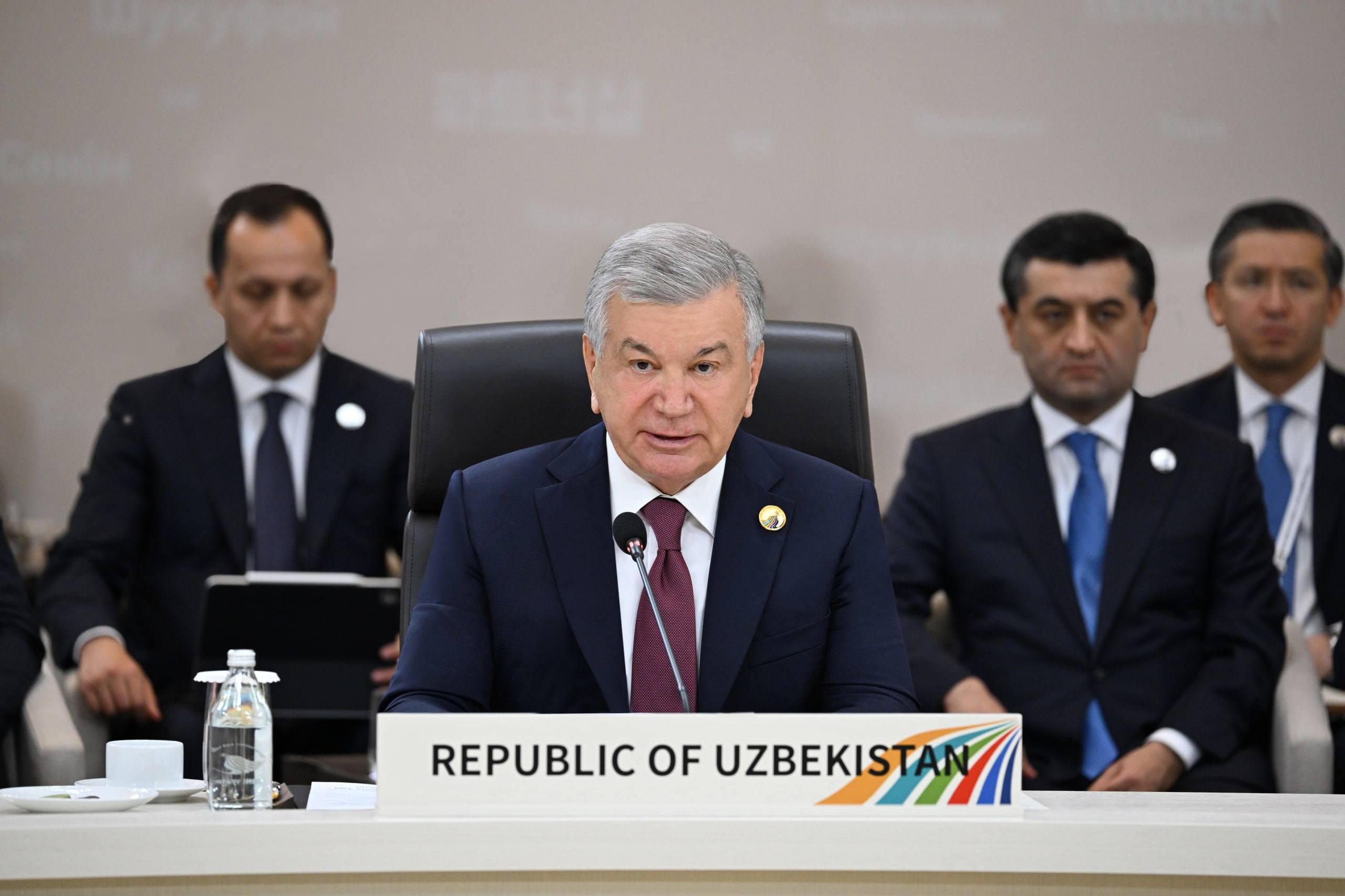
At the Summit, the President of Uzbekistan, His Excellency Shavkat Mirziyoyev, proposed establishing an Expert Forum bringing together leading think tanks from Central Asia and Japan. Today, we are putting that initiative into practice.
Distinguished participants,
The establishment of this Forum reflects a simple principle: political agreements need strong intellectual and institutional support.
Summits provide direction. Governments establish frameworks. Businesses implement projects. Think tanks connect these levels through practical proposals, fresh analysis, and independent assessment of progress.
This expert dimension is especially important because Central Asia itself has changed considerably in the last years/since 2016.
Our countries have strengthened mutual trust, established regular mechanisms for regional dialogue and expanded cooperation across trade, transportation, energy, digitalization and human capital – creating new opportunities for Japan. Today, we can increasingly develop regional initiatives that complement national priorities while producing benefits across the regions.
Japan, in turn, offers Central Asia advanced technology, high standards, long-term investment and extensive experience in human-resource development.
More importantly, we all share strong political will and a clear set of priorities. And our task is to translate them into concrete projects, institutional partnerships and measurable results.
Dear colleagues,
Over these two days, we will try to capture the full breadth of our ever-increasing partnership. Today, we will examine the foundations of “Central Asia plus Japan” Dialogue in Session 1 and then focus on sustainable development in Session 2. Tomorrow we turn to connectivity in Session 3 and conclude with humanitarian cooperation in Session 4.
But our task here is not simply to listen. I would invite you to consider several practical questions throughout the forum.
Which flagship projects could demonstrate the value of our partnership? How can we turn promising ideas into well-prepared and financially viable initiatives? And how can think tanks help monitor progress and provide governments with timely recommendations?
It is equally important to ensure that cooperation with Japan supports not only individual national projects, but also the broader processes of regional connectivity and sustainable development in Central Asia.
Distinguished guests,
We do not see this Forum as a one-time event. Our ambition is to develop it into a regular expert platform, convened alternately in Central Asia and Japan.
The results of our discussions should not disappear when we leave this hall. We intend to prepare joint research papers and a collective publication that offers practical recommendations to our governments.
I wish you productive discussions, frank exchanges, and every success in the work of our Forum.
Arigato gozaimas. Katta rahmat.