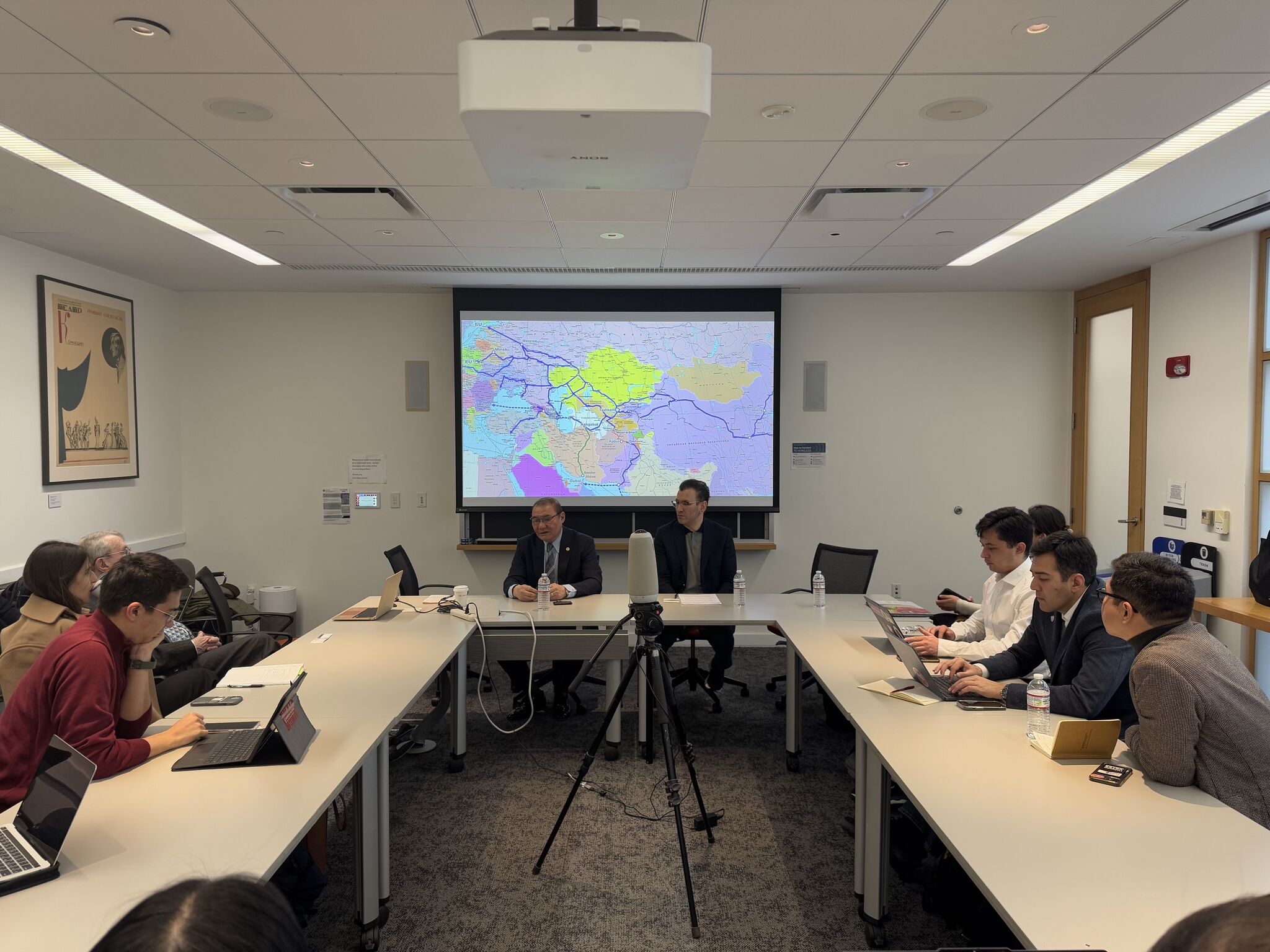
Featured speakers included Javlon Vakhabov, Director of the International Institute for Central Asia (IICA), and Dr. Avirmed Davaasuren, a prominent Mongolian economist and corresponding member of the Mongolian Academy of Sciences.
In his remarks, Javlon Vakhabov underscored the importance of diplomatic and expert-driven efforts aimed at expanding transportation and energy infrastructure, advancing trade, and strengthening academic and analytical dialogue.
Special emphasis was placed on major infrastructure initiatives such as the China–Kyrgyzstan–Uzbekistan railway and the Trans-Caspian International Transport Route. These projects are expected to significantly reduce logistics costs and improve freight efficiency between Eastern and Western Eurasia, thereby reinforcing the region’s transport and economic connectivity.
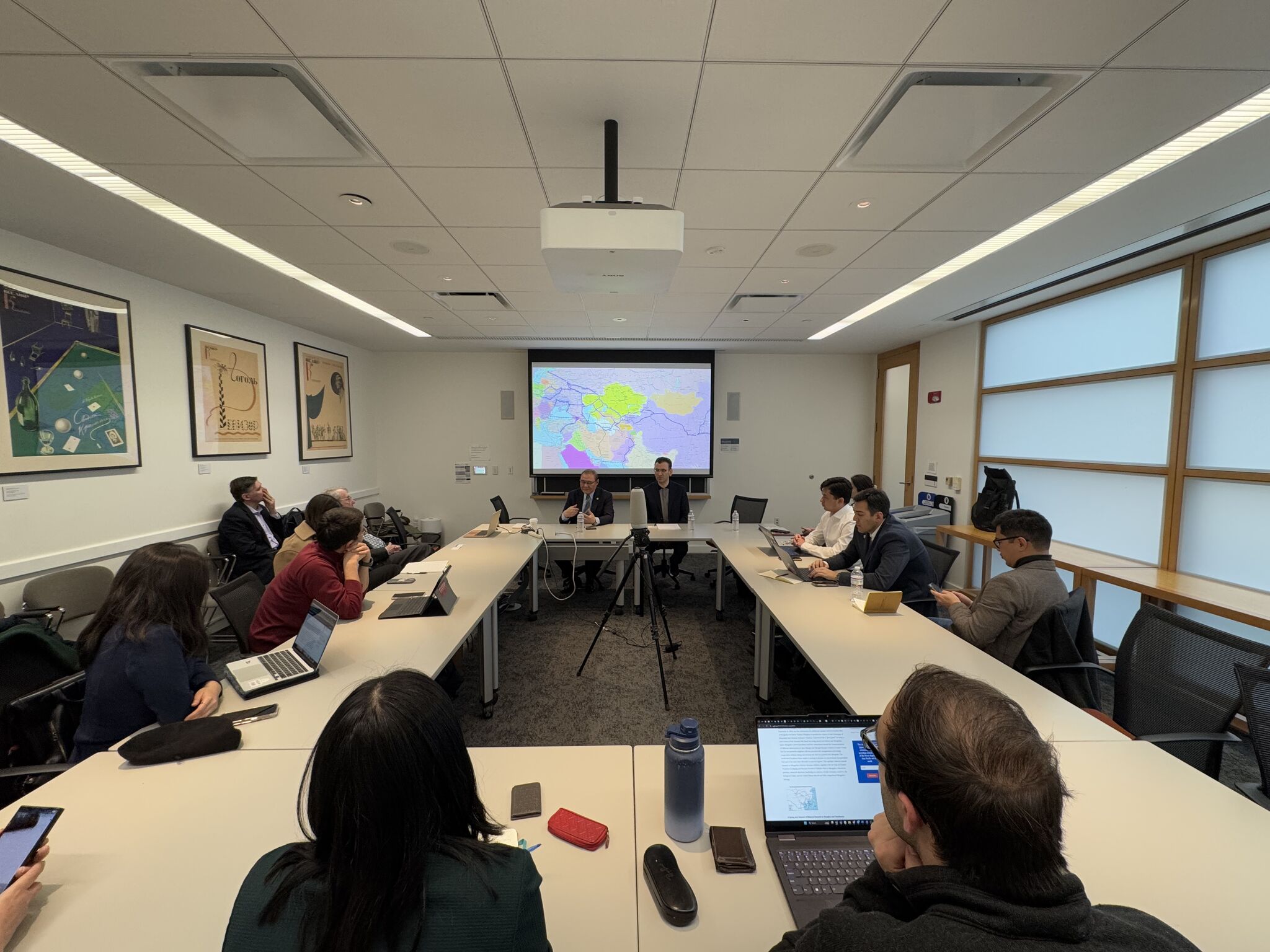
Dr. Davaasuren, in turn, highlighted Mongolia’s strategic potential as a bridge between Central and East Asia and emphasized the role of academic initiatives and coordinated efforts in promoting shared interests on the global stage.
At the conclusion of the event, participants expressed strong interest in continuing the exchange of ideas and noted that such forums play a vital role in fostering sustainable Eurasian interconnectedness.
The Davis Center for Russian and Eurasian Studies at Harvard University is a leading global academic institution specializing in the political, economic, and social dynamics of Russia, Eastern Europe, and Eurasia. The Center serves as a hub for scholarly exchange, expert dialogue, and interdisciplinary research.