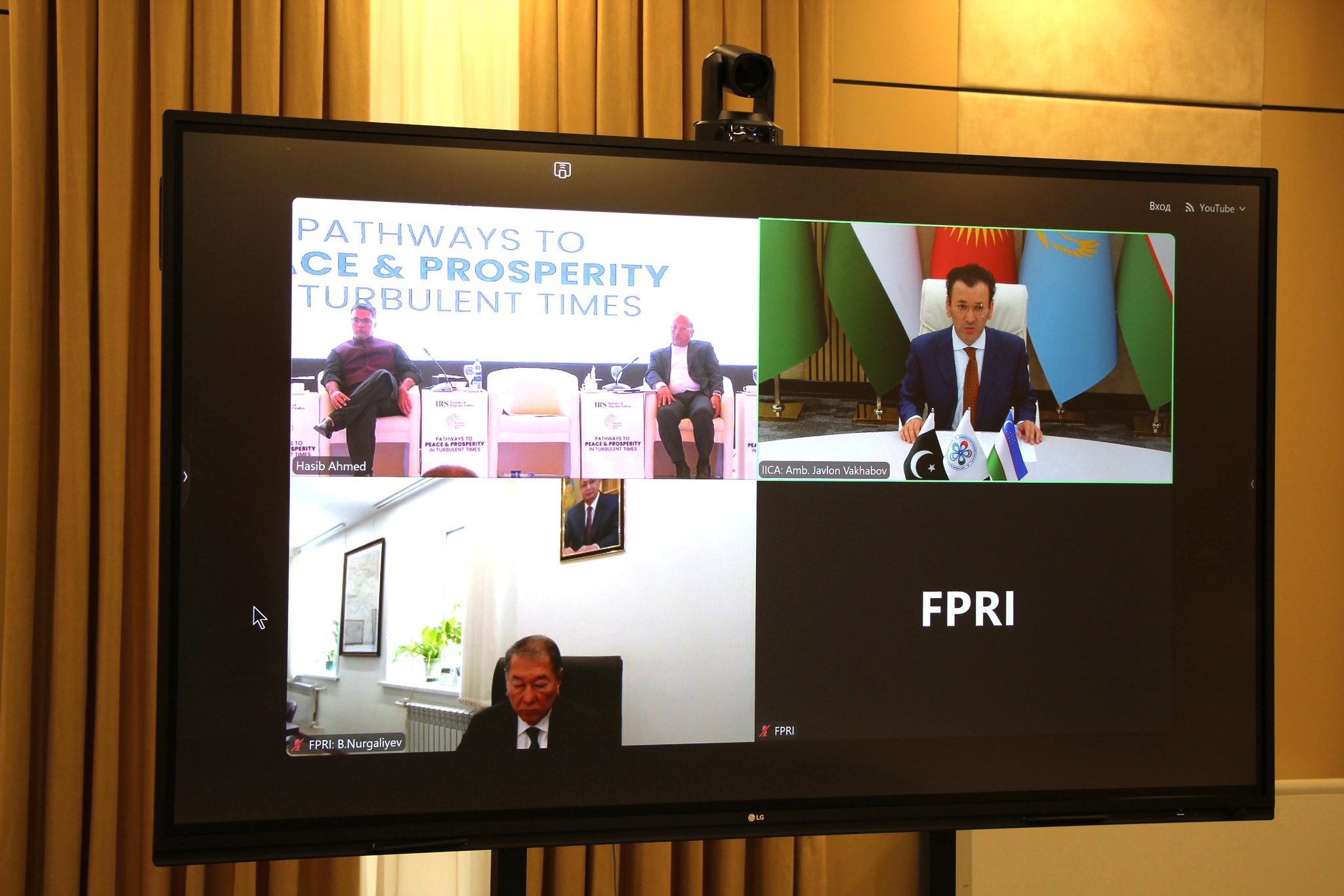
The event brought together representatives from government agencies and think tanks of Pakistan and Central Asian countries, as well as international organizations and private-sector stakeholders. Discussions underscored the strong mutual interest in practical trade and transport cooperation and highlighted the importance of sustained and constructive regional dialogue.
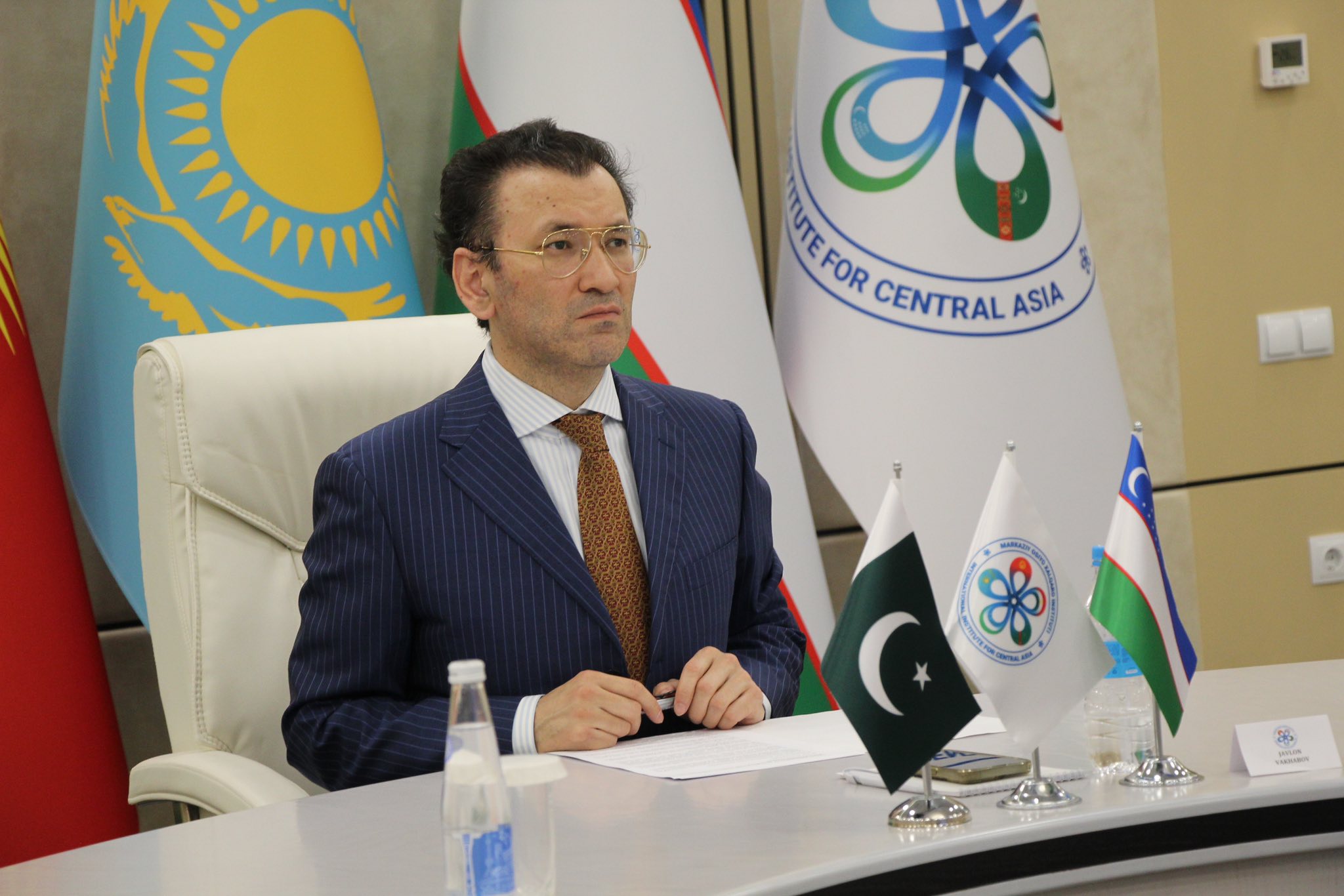
Speaking via video link, Director of the International Institute for Central Asia (IICA), Javlon Vakhabov, delivered a keynote address on the potential for strengthening regional connectivity with Pakistan and Iran, particularly in the trade and logistics domains.
He emphasized that today’s geopolitical shifts and the vulnerability of conventional routes necessitate a more flexible, forward-looking approach to building resilient and diversified logistics systems across Central Asia. According to him, the region’s geography should not be viewed as a constraint, but rather as a strategic asset—provided the southern infrastructure is developed and utilized wisely.
In this context, Vakhabov outlined three key corridors that could significantly reshape the region’s logistical landscape. He noted that the North–South corridor via Iran is already demonstrating value: since 2016, the route from Sarakhs to the port of Bandar Abbas has offered direct access to the Gulf countries. He further highlighted the need to accelerate the completion of the Sarakhs–Chabahar rail segment, emphasizing Chabahar’s potential as an alternative maritime outlet, especially given growing interest from Gulf states.
The discussion also focused on the strategic importance of the Trans-Afghan corridor. Vakhabov pointed out that the planned Termez–Peshawar railway could reduce transportation costs by nearly threefold and cut delivery times from over a month to just a few days. He cited the recent tripartite agreement between Uzbekistan, Afghanistan, and the UAE on conducting a feasibility study as a tangible step forward.
The third route underlined was the China–Kyrgyzstan–Uzbekistan railway, which was officially launched in December 2024. Rather than competing with existing corridors, Vakhabov stressed that this route complements them, enabling interconnected pathways and expanding access to markets in South Asia and China. At full capacity, he added, it could unlock trade routes to a consumer base of nearly two billion people.
Beyond physical routes, the forum also addressed the urgent need to harmonize customs procedures, promote the adoption of digital tools like e-TIR and e-CMR, and foster greater private sector involvement in logistics initiatives.
In conclusion, the IICA Director emphasized that infrastructure development should not be seen as an end in itself, but as a means of cultivating sustainable economic cooperation. He expressed confidence that deeper collaboration between Central Asia, Iran, and Pakistan could serve as a vital driver of regional integration—provided there is political will and a commitment to aligning regulatory frameworks.