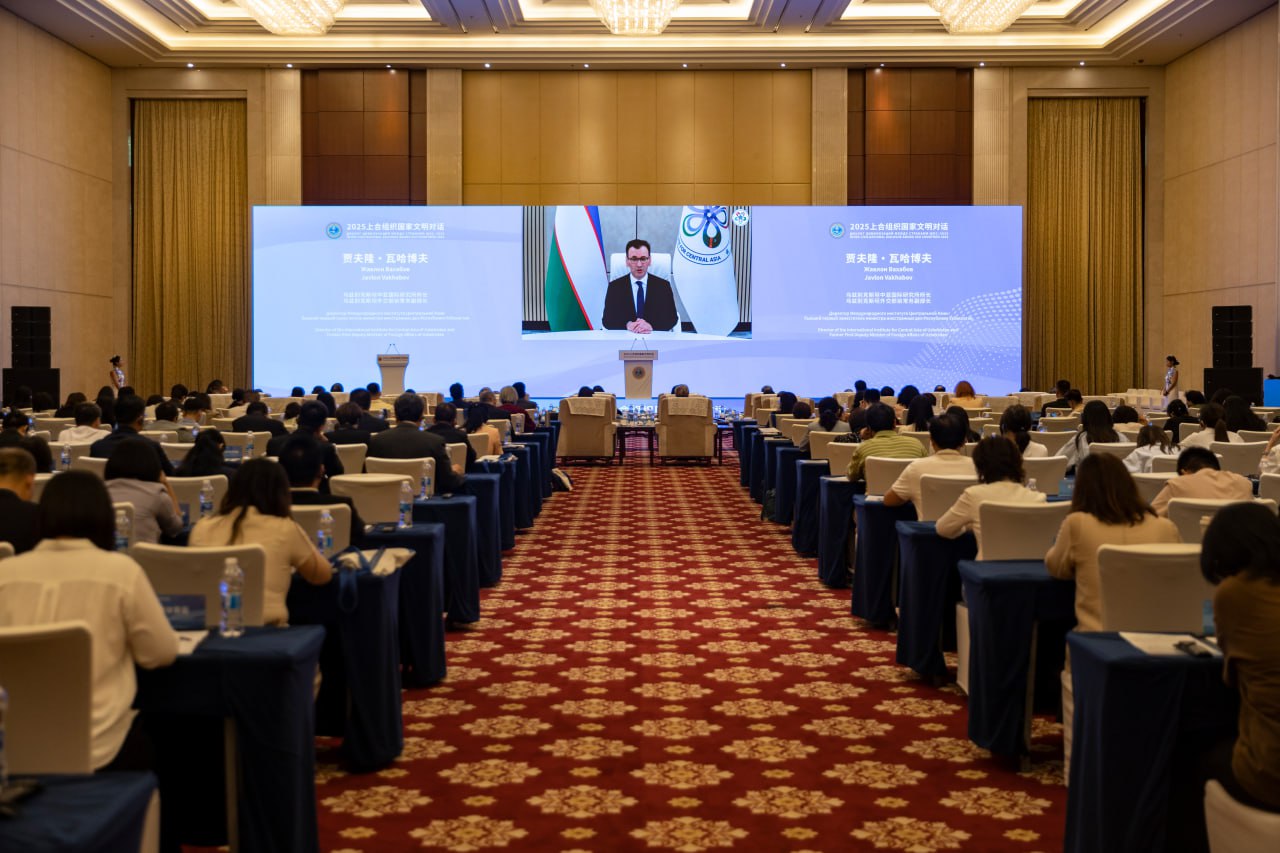
Distinguished Moderator, Ladies and Gentlemen,
On behalf of the International Institute for Central Asia, allow me to extend warm greetings to all participants of this conference and express my gratitude to the organizers for inviting me to take part in such a distinguished forum.
I am confident that today’s discussion on global civilizational exchange will make an important contribution to advancing the humanitarian dimension of SCO cooperation, strengthening mutual understanding among nations and peoples, and enriching initiatives aimed at building a fairer, safer, and more inclusive world.
- SCO countries approach the upcoming Tianjin SCO Summit at a pivotal moment of global development.
The world is facing unprecedented challenges: rising geopolitical tensions, fragmentation of the global economy, and deepening polarization of the international community. Against this backdrop, the SCO stands out as a unique platform that prioritizes not confrontation but trust, respect for sovereignty, and the right of each country to determine its own path.
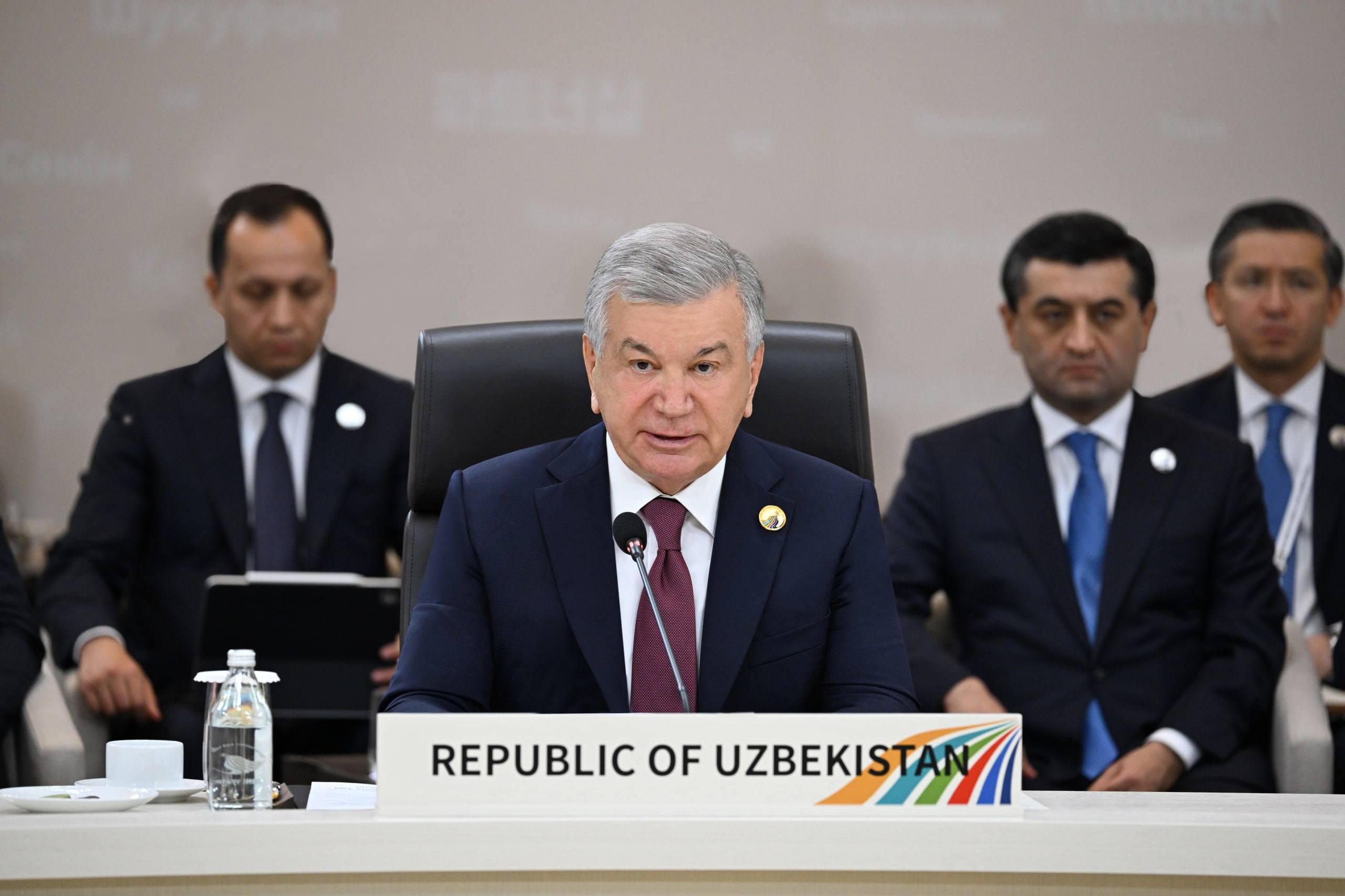
It is for this reason that, during last year’s “SCO+” Summit in Astana, the President of the Republic of Uzbekistan, Shavkat Mirziyoyev, stressed that the world has never been in greater need of restoring trust, justice, and solidarity. He called for shaping a new international agenda based on inclusiveness, mutual respect, and peaceful coexistence.
- In this context, the Global Civilization Initiative proposed by President Xi Jinping of the People’s Republic of China holds special importance.
This initiative seeks to deepen dialogue among cultures and civilizations, strengthen humanitarian bonds, and promote the principles of mutual understanding, justice, and equality.
These ideas resonate profoundly with the people of Uzbekistan and Central Asia, rooted in centuries-old cultural and civilizational ties with China. Merchants from the historic cities of Khorezm, Samarkand, and Bukhara played a crucial role along the Great Silk Road, helping to spread Chinese silk, paper, porcelain, and tea to the Middle East and Europe.
Our great ancestors—scholars, mathematicians, astronomers, and physicians from the cultural centers known in ancient China as the “Western Regions” (Siyu)—contributed significantly to the development of Chinese science.
Historical research shows that during the Tang dynasty, humanitarian exchanges between China and the major cities of our region flourished. Music, fashion, national cuisine, and other cultural elements from our region became highly popular in the Chinese capital and provinces.
These historical and civilizational ties, along with modern relations based on shared mentalities and principles of friendship, mutual respect, and trust, now serve as a strong foundation for our multifaceted cooperation.
Currently, Uzbekistan–China relations are experiencing their most positive and dynamic period in history. In 2012, our nations established a strategic partnership; in 2016, it was elevated to a comprehensive strategic partnership; and in 2024, during the state visit of President Mirziyoyev to China, our relationship was upgraded to an “all-weather comprehensive strategic partnership for a new era.”
Confucius Institutes in Tashkent and Samarkand contribute significantly to promoting the Chinese language and culture in Uzbekistan. In June of this year, a bilateral visa-free agreement came into force, creating favorable conditions for expanding mutual travel, as well as business, cultural, and tourism exchanges.
III. Uzbekistan supports the Global Civilization Initiative because many of its principles align with our foreign policy priorities, which aim to strengthen intercivilizational dialogue, humanitarian partnership, and trust among nations.
A clear example is the Samarkand Solidarity Initiative for Common Security and Prosperity, launched by Uzbekistan at the SCO Summit in 2022. Another is our active contribution to the adoption of the United Nations General Assembly resolution in June of this year proclaiming the International Day of Dialogue among Civilizations.
It is also important to highlight our shared commitment to regional and international security, adherence to the central role of the United Nations, and multilateral cooperation in overcoming global challenges and achieving the Sustainable Development Goals.
We firmly support one another on issues affecting our core national interests, including state sovereignty, territorial integrity, adherence to good-neighborly relations, respect for each nation’s development path, and the preservation of cultural and civilizational identity.
Uzbekistan and China successfully cooperate within various international organizations and formats, including the United Nations, the SCO, and the “Central Asia–China” dialogue mechanism.
The Astana Declaration, adopted at the second “Central Asia–China” Summit, affirmed the readiness of all six countries to actively engage with China’s Global Development, Global Security, and Global Civilization Initiatives and to jointly promote cultural exchange and civilizational enrichment.
Central Asian countries and China also agreed to jointly organize events under the framework of the United Nations resolution on the International Day of Dialogue among Civilizations, pooling efforts to foster intercultural understanding and cooperation.
Within the SCO, Uzbekistan places great emphasis on joint educational programs, academic exchanges, and science projects aimed at training young specialists and students from member states.
We also actively participate in humanitarian initiatives, organizing joint cultural events, scientific conferences, and other exchanges with China and other countries. These efforts aim to bring our nations closer, strengthen mutual understanding, and build lasting trust.
Particular attention should be given to China’s “Five Shared Homes” concept, which encapsulates the key directions of sustainable and peaceful development across the SCO:
- A common home of peace and security to form an indivisible, equitable, and sustainable regional security system.
- A common home of prosperity, serving as a model of inclusive economic growth and mutually complementary cooperation.
- A common home of good-neighborliness and friendship, focusing on humanitarian exchange, tourism, education, and culture.
- A common home of green development, reflecting shared responsibility for environmental sustainability.
- A common home of justice, providing a platform for advancing a fair and multipolar world order.
- As President Shavkat Mirziyoyev has aptly noted: “The SCO remains a center of attraction for many countries seeking to build broad and constructive cooperation free from political or ideological bias.”
As the Organization approaches its 25th anniversary, the time has come for strategic adaptation to modern challenges. We are convinced that strengthening the humanitarian dimension within the framework of the Global Civilization Initiative will become an important contribution to shaping a new philosophy of cooperation under the SCO.
In conclusion, I wish this important forum every success and express my hope that the outcomes of our discussions will help lay the groundwork for meaningful decisions at the Tianjin Summit aimed at deepening cultural and humanitarian ties among SCO member states.
Thank you for your attention.