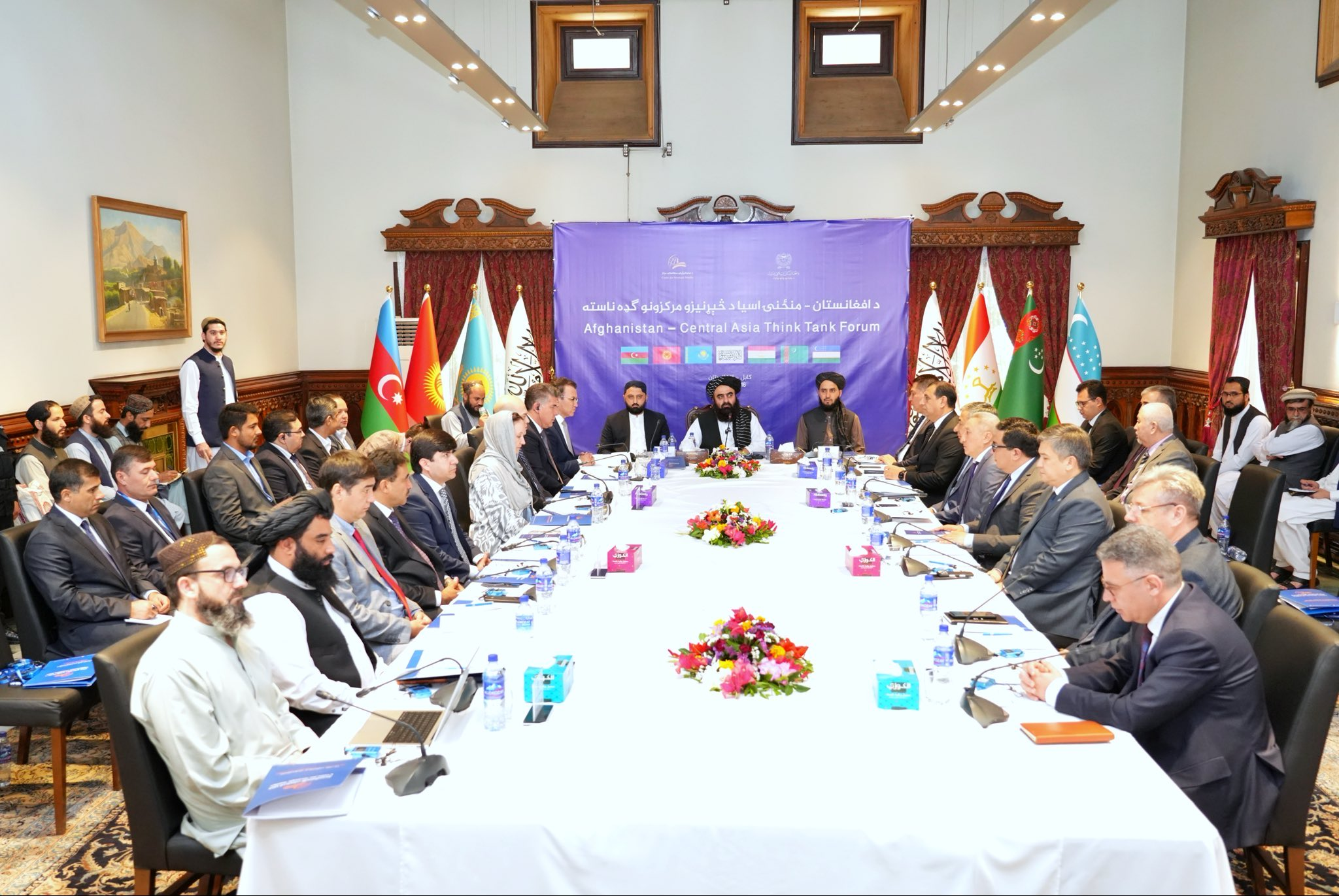
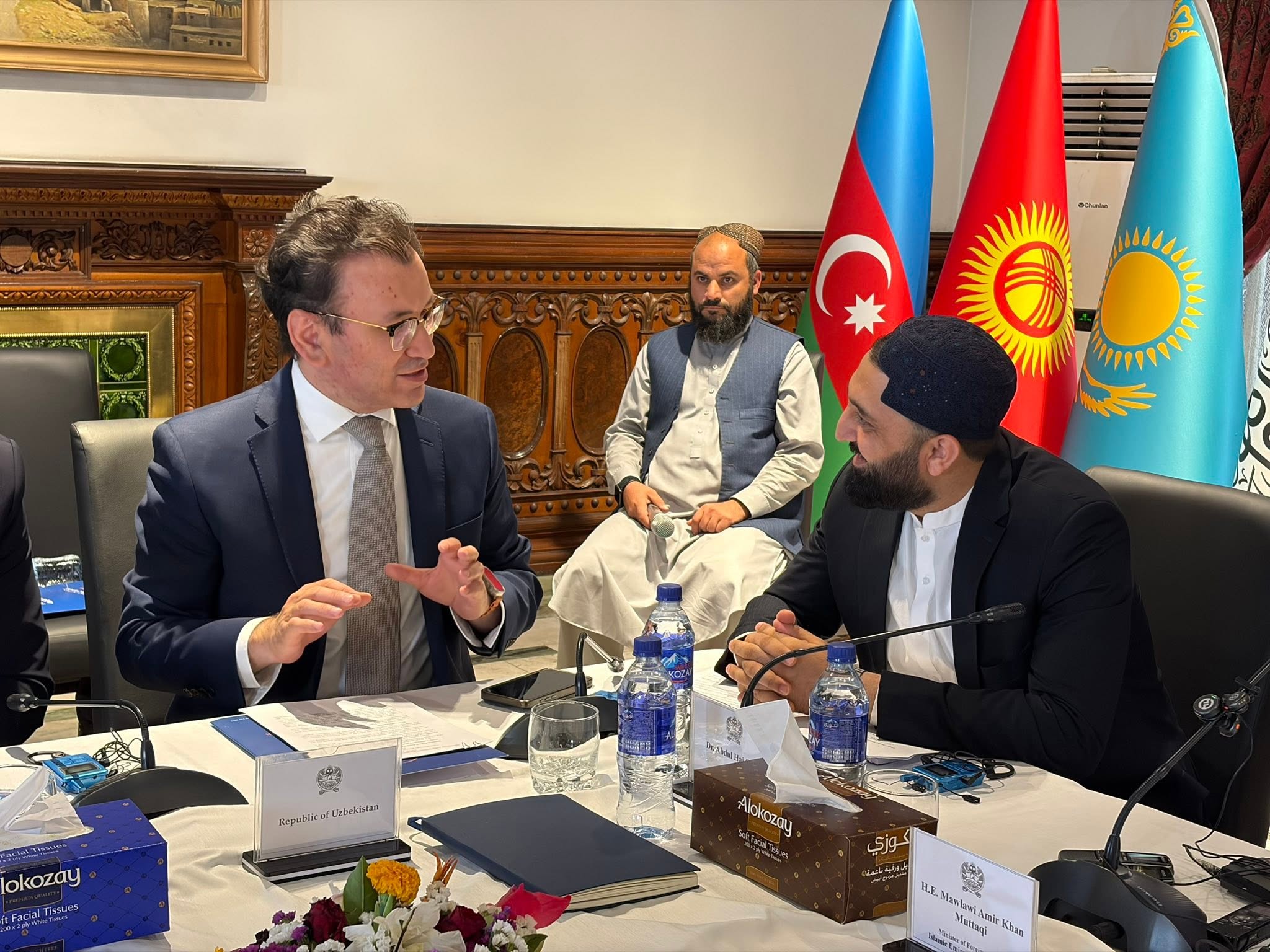
The event brought together the heads of leading think tanks, as well as representatives of the policy-shaping, research, and business communities of the countries of Central Asia, Azerbaijan, and Afghanistan.
Participants discussed strengthening political dialogue and regional stability, advancing trade and economic cooperation, transport connectivity and energy projects, as well as expanding expert and analytical engagement and cultural and humanitarian ties.
In his address, the Foreign Minister of Afghanistan, Amir Khan Muttaqi, noted that Kabul is interested in expanding practical cooperation with the countries of Central Asia and Azerbaijan, above all in the areas of trade, transport, energy, and water and food security.
He said that Afghanistan already sees itself not merely as a neighboring state, but as an active participant in regional processes in Central Asia — one that serves as a natural link between Central and South Asia and is committed to advancing transport, logistics, and energy projects.
For his part, IICA Director Javlon Vakhabov emphasized that within the emerging space of Greater Central Asia, Afghanistan should be regarded not as a periphery, but as a full-fledged participant and co-author of regional processes. In his view, the stability and economic recovery of Afghanistan are directly linked to the future development of Central Asia as a whole.
It was noted, in particular, that logistics and energy projects such as the Trans-Afghan Transport Corridor, TAPI, TAP, and CASA-1000 have the potential to transform Afghanistan from a transit space into a full participant in regional production, consumption, and industrial development.
On water and climate cooperation, the IICA Director gave particular attention to the need to build a legal and institutional framework with Afghanistan’s participation, as well as to the importance of dialogue on the Qosh Tepa Canal, of regular technical consultations, data exchange, joint monitoring, glacier studies, and the development of early warning systems on regional and international platforms.
Abdul Hai Qanit, Director of the Center for Strategic Studies under the Ministry of Foreign Affairs of Afghanistan, noted that the consistent implementation of transport and trade initiatives serves the interests of all the countries of the region and lays the foundation for a long-term and mutually beneficial partnership between Afghanistan and the states of Central Asia.
Summing up the Forum, participants underscored the importance of further advancing expert dialogue as a practical mechanism for implementing the agreements between the countries of the region, promoting joint research initiatives, and developing coordinated approaches to security, connectivity, water and climate cooperation, and sustainable development.