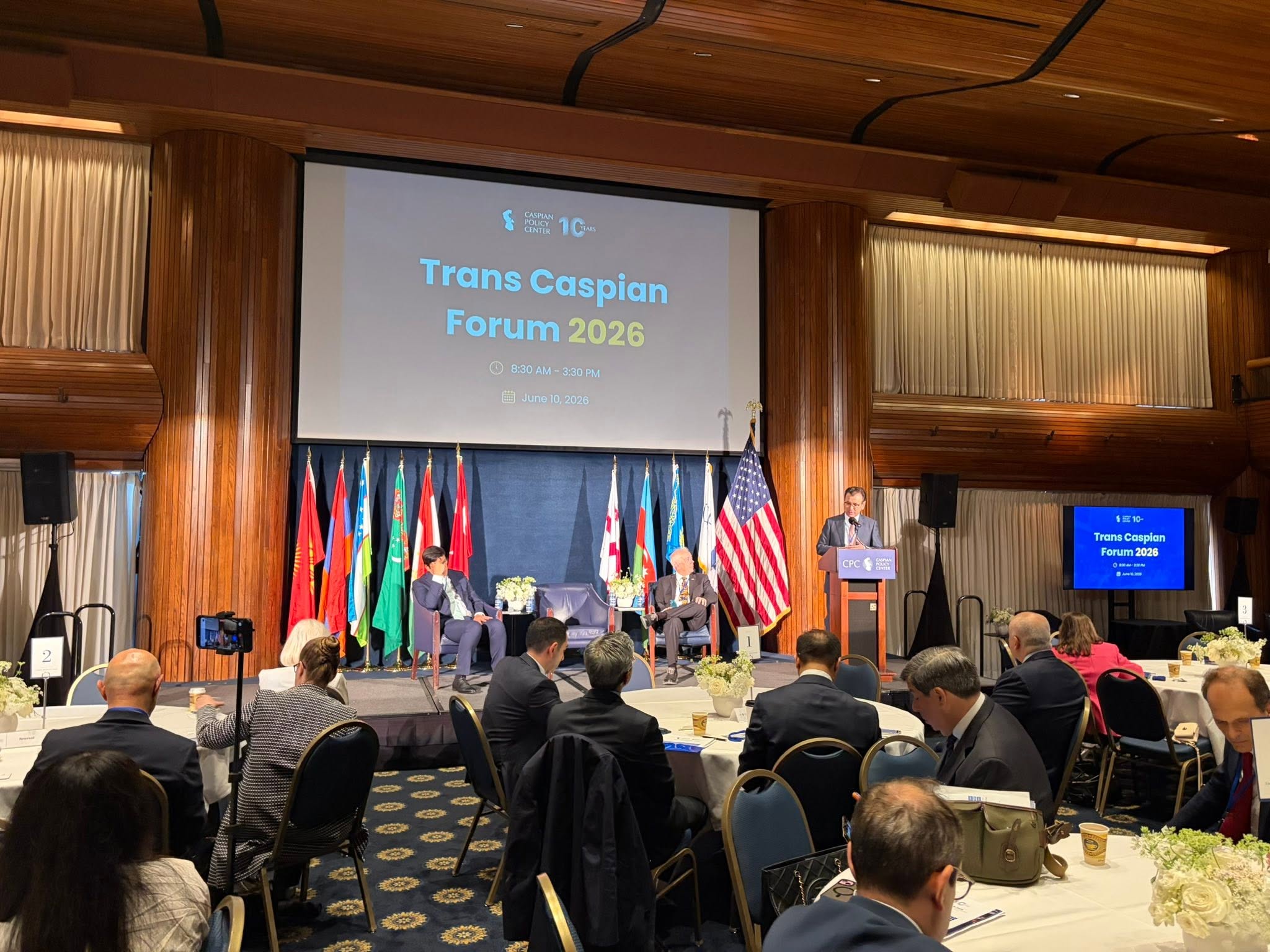
The forum brought together senior U.S. officials, representatives of Central Asia and the South Caucasus, presidential advisers and special envoys from Azerbaijan, Kazakhstan, Kyrgyzstan, and Uzbekistan, business leaders, experts, and members of leading academic and research communities.
In his opening remarks, Efgan Nifti, Chief Executive Officer of the Caspian Policy Center, noted that the Caspian region is increasingly moving to the center of the global agenda. He emphasized that the key task at this stage is to move from political agreements to their practical implementation.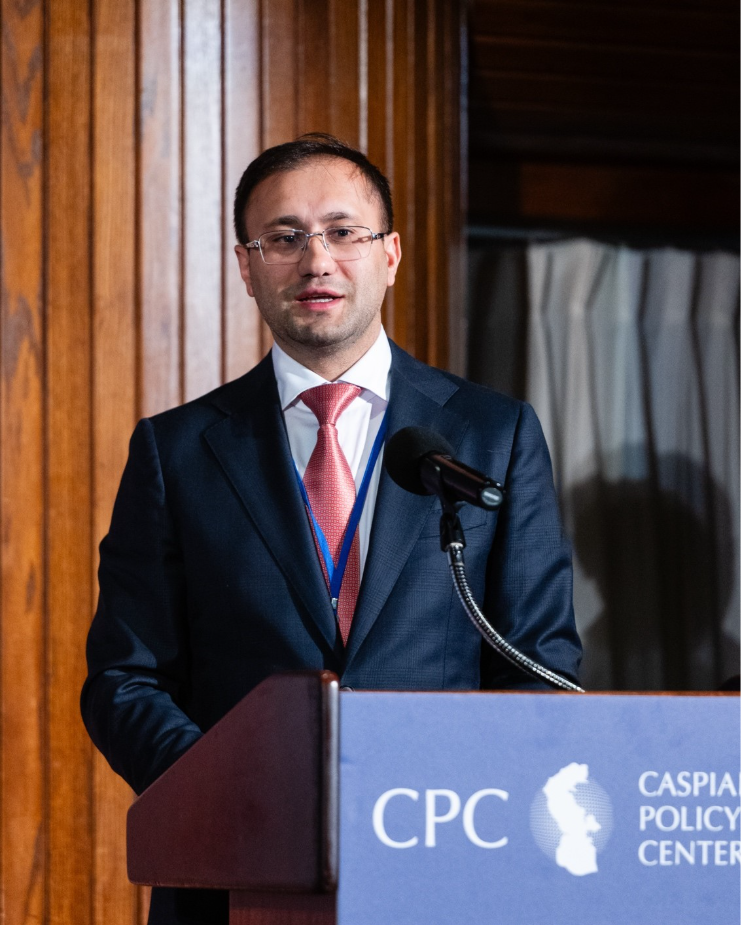
According to him, Azerbaijan’s participation in the Consultative Meetings of the Heads of State of Central Asia and the gradual emergence of a C6 format reflect a growing understanding that Central Asia and the South Caucasus are increasingly connected by shared energy flows, economic corridors, and security challenges.
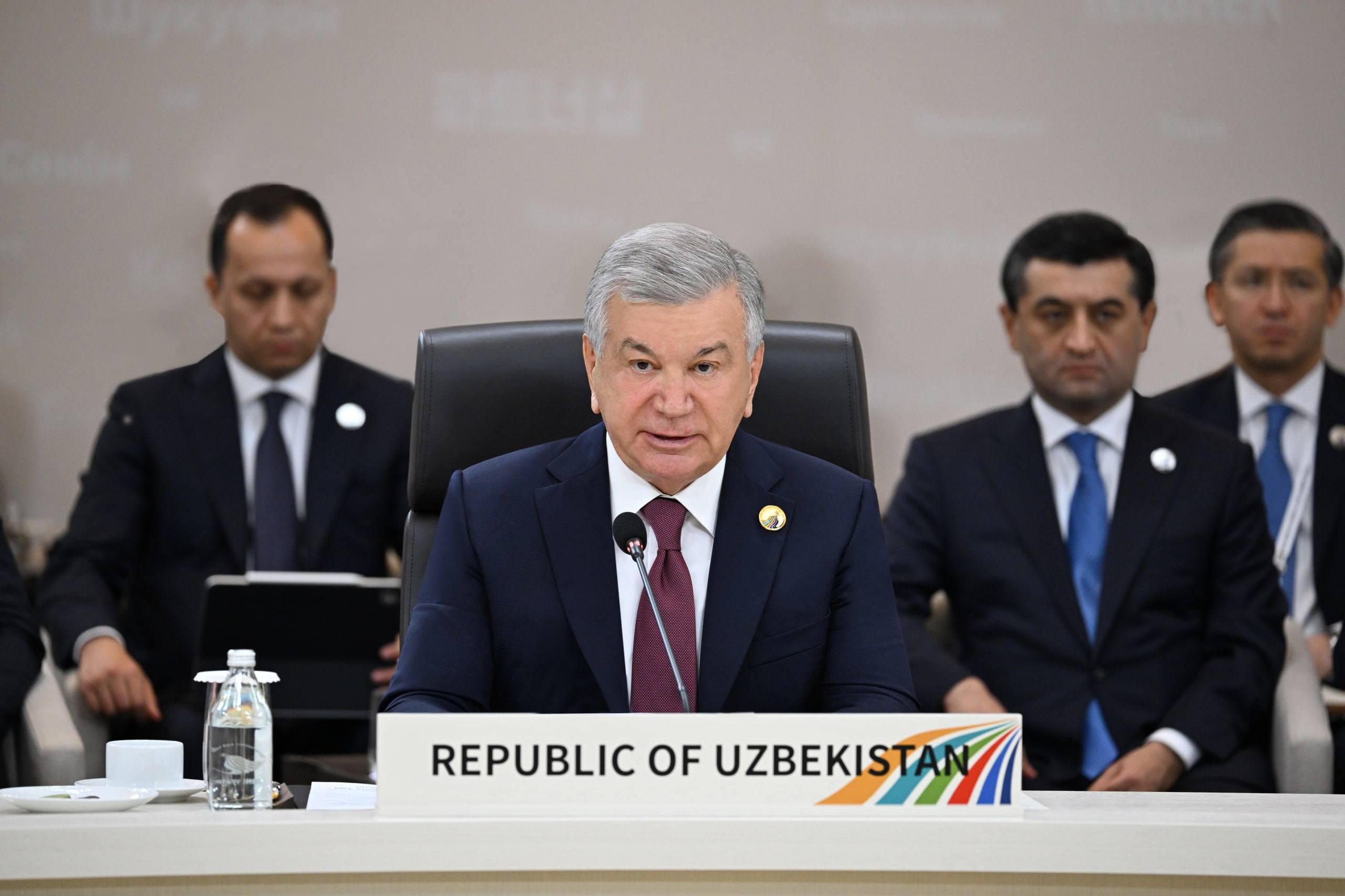
Javlon Vakhabov emphasized that, for Uzbekistan, the Middle Corridor is not only a transit route, but also a practical tool for reducing logistics costs and strengthening the competitiveness of the national economy. He noted that this issue is particularly important for a country without direct access to the sea, as Uzbekistan’s logistics costs are estimated at around $8 billion, with a significant share of these costs formed beyond the country’s borders.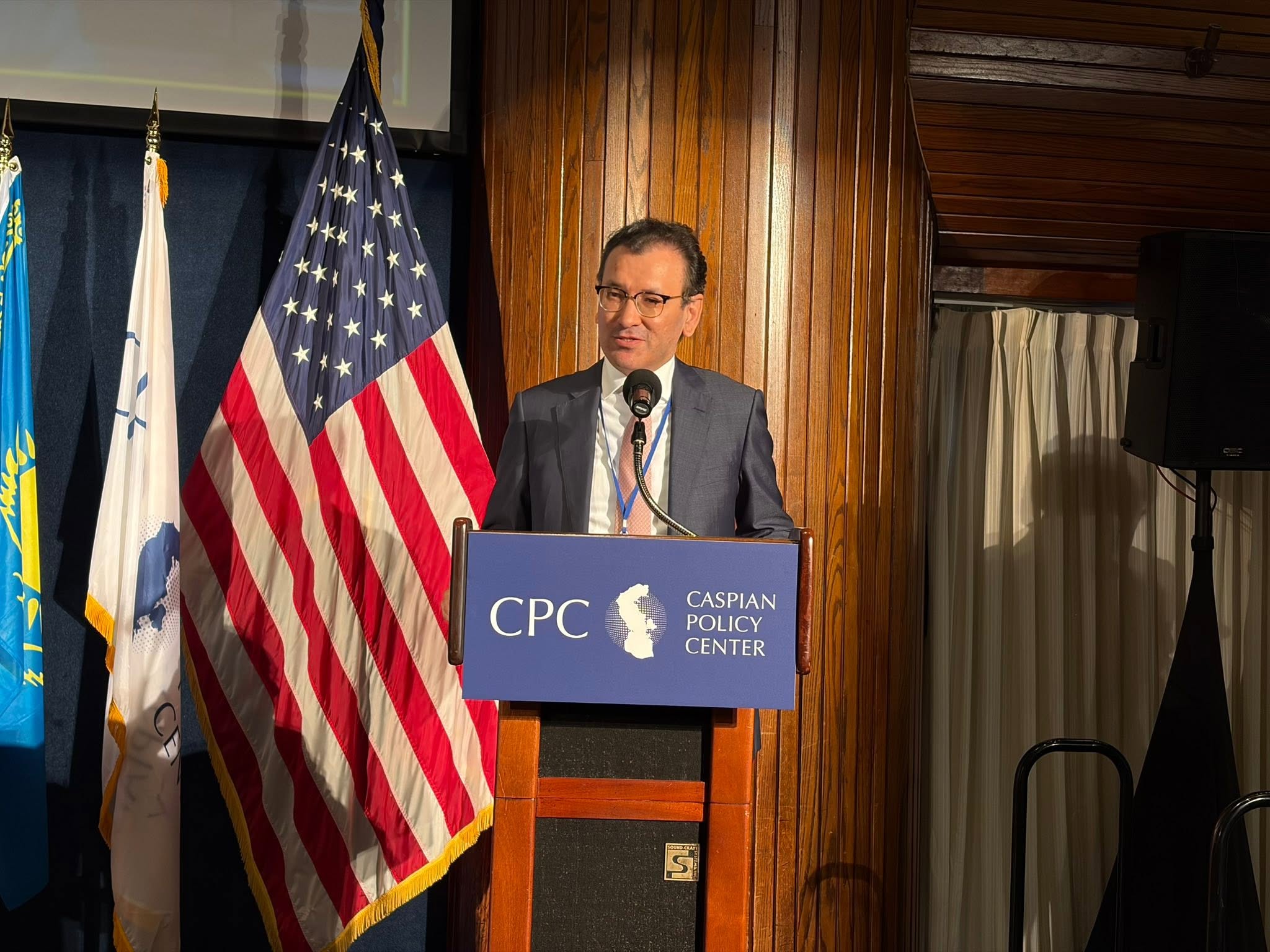
It was noted that despite its considerable potential, the Middle Corridor still faces a number of constraints. Its current capacity remains only around 6 percent of the potential of the northern route, while waiting times for ferry crossings across the Caspian Sea can reach 30 to 40 days. In this context, Javlon Vakhabov underlined the importance of developing ferry links, port and customs infrastructure, digital logistics, and cooperation with international partners, including the United States.
U.S. Senator Steve Daines of Montana, Co-Chair of the Senate Central Asia Caucus, underscored the strategic importance of the Caspian region and Central Asia for U.S. foreign policy. He noted that Washington is entering a new stage of engagement with the region, where concrete results should be the main priority, including the repeal of outdated Jackson–Vanik restrictions, infrastructure development, energy cooperation, critical minerals, and long-term investment.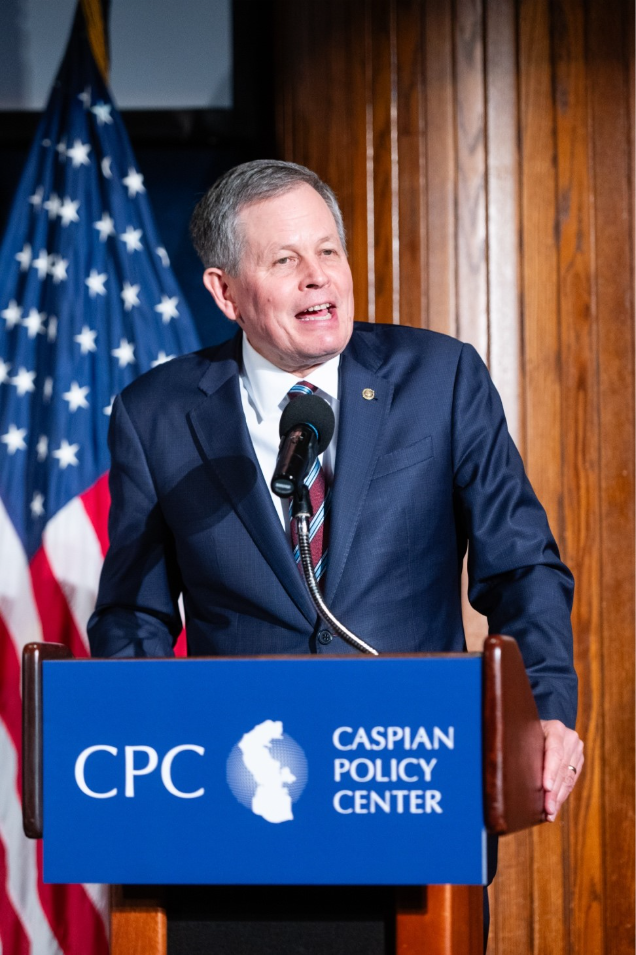
Erzhan Kazykhan, Representative of the President of Kazakhstan for Negotiations with the United States, noted that the Caspian region is becoming one of the key crossroads of the 21st century, where energy flows, transport routes, digital connectivity, critical minerals, and cooperation between Central Asia and the South Caucasus are shaping a new strategic space for engagement with the United States and other external partners.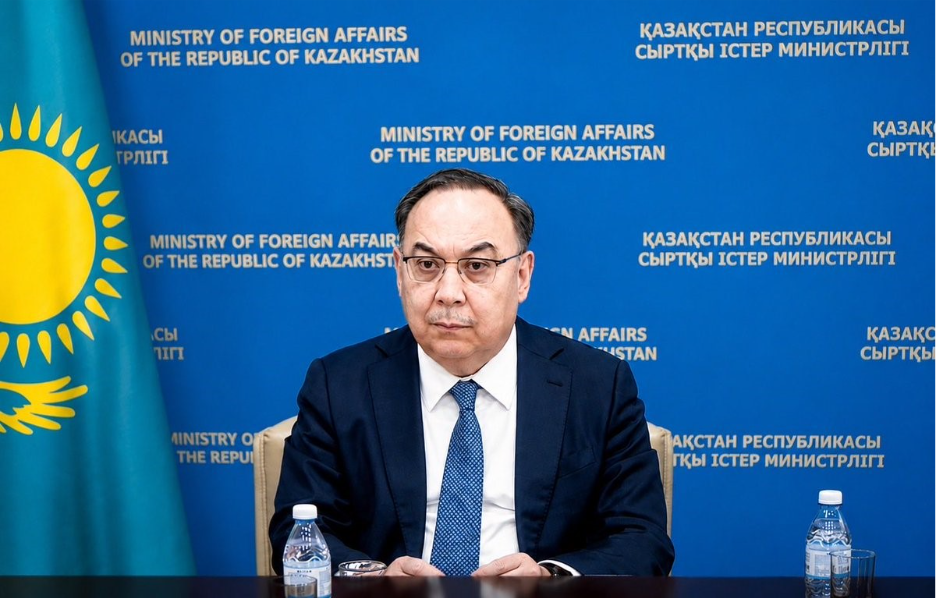
Hikmet Hajiyev, Assistant to the President of Azerbaijan, emphasized that the settlement of the Armenia–Azerbaijan conflict is opening new opportunities for a broader regional architecture, in which the Middle Corridor, connectivity with Nakhchivan, the C6 format, and the Organization of Turkic States are becoming important elements for strengthening connectivity, trade, and trust between Central Asia and the South Caucasus.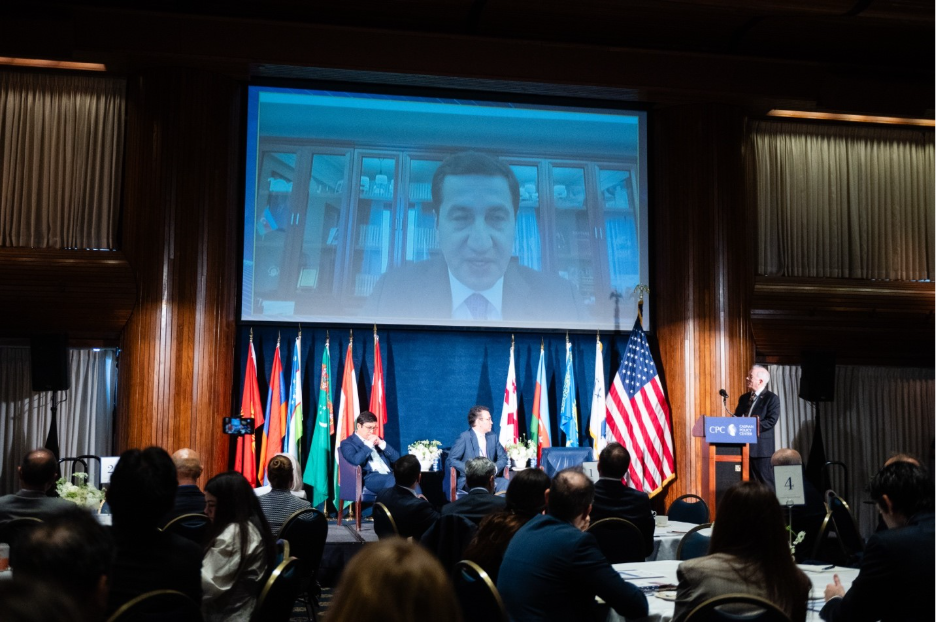
Edil Baisalov, Special Envoy of the President of the Kyrgyz Republic for International Initiatives and Ambassador of Kyrgyzstan to the United States, noted that Central Asia is entering a new stage of international consolidation. He emphasized that the China–Kyrgyzstan–Uzbekistan railway, expected to be completed by 2029, could become a project of strategic transformation for the entire region by opening new transport, economic, and mineral resource opportunities.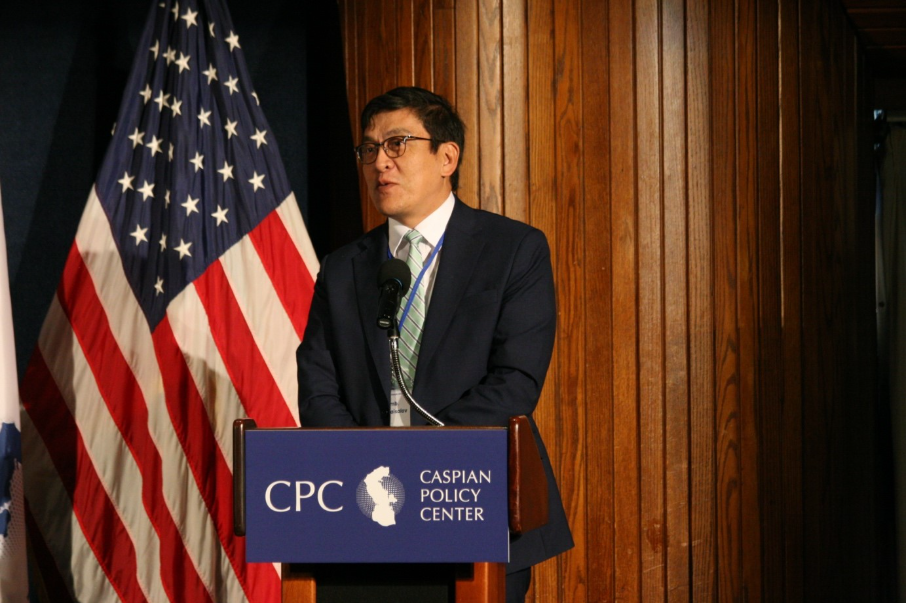
In conclusion, the participants stressed that the current dynamics in Central Asia and the South Caucasus are creating new opportunities to strengthen regional connectivity, expand economic cooperation, and develop a long-term partnership with the United States.