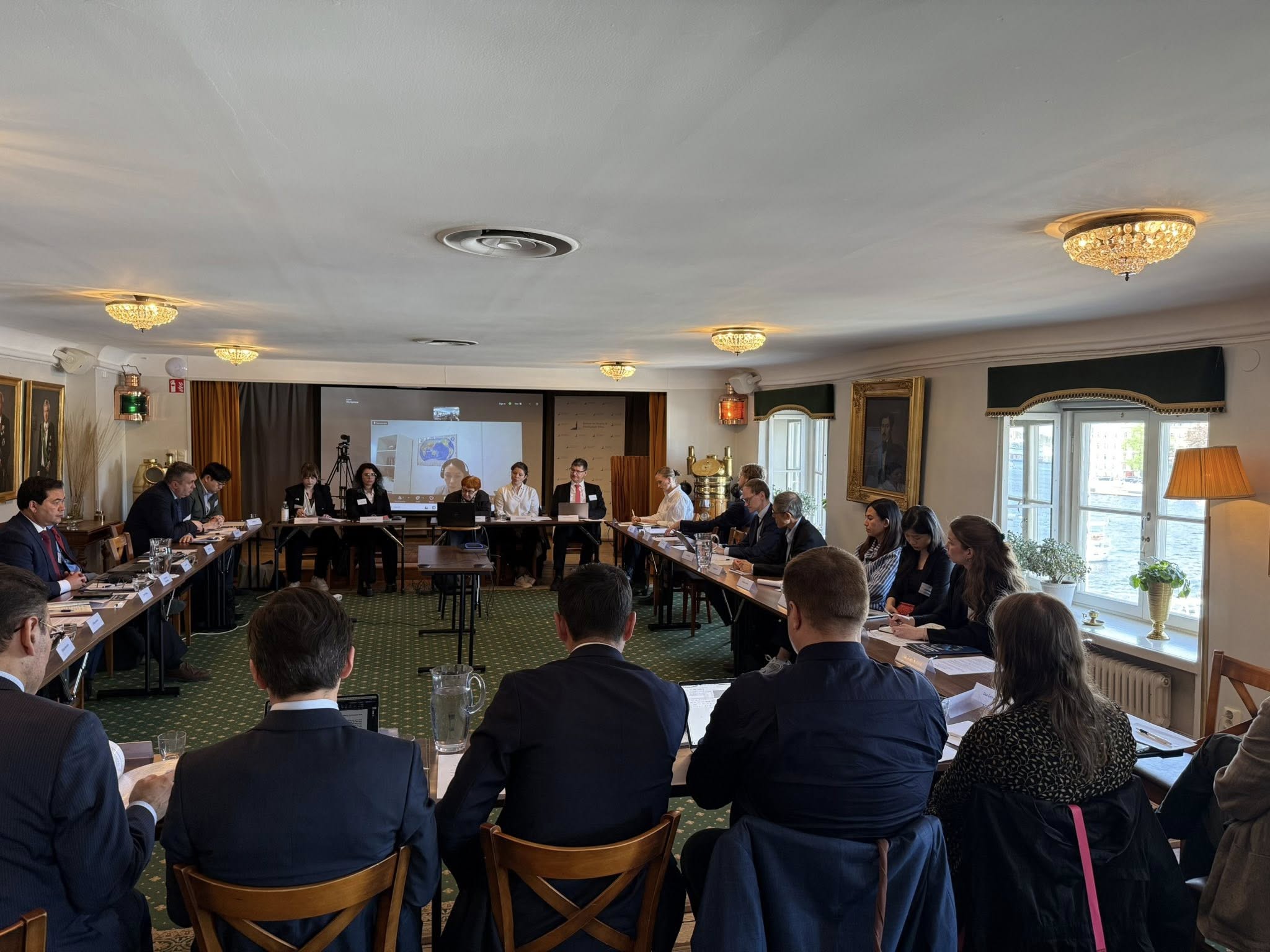
Uzbekistan was represented by a delegation including Javlon Vakhabov, Director of the International Institute for Central Asia (IICA); Eldor Tulyakov, Executive Director of the Development Strategy Center; and Umid Abidkhodjaev, Director of the Institute for Forecasting and Macroeconomic Research.
The conference featured expert participation from across Northern Europe, including Svante Cornell, Director of ISDP (Sweden); Roman Vakulchuk, Head of the Climate and Energy Research Group at the Norwegian Institute of International Affairs; Kristiina Silvan, researcher with the Finnish Institute of International Affairs; and Aida Musabekova, Senior Fellow at the Kazakhstan Institute for Strategic Studies under the President of Kazakhstan — among other leading policy researchers.
Over two days of panel discussions, the Central Asian delegation outlined the profound transformations taking place across the region, Uzbekistan’s regional priorities grounded in a “good neighborliness” policy, and the growing relevance of regional cooperation in achieving shared security, sustainable development, and long-term prosperity.
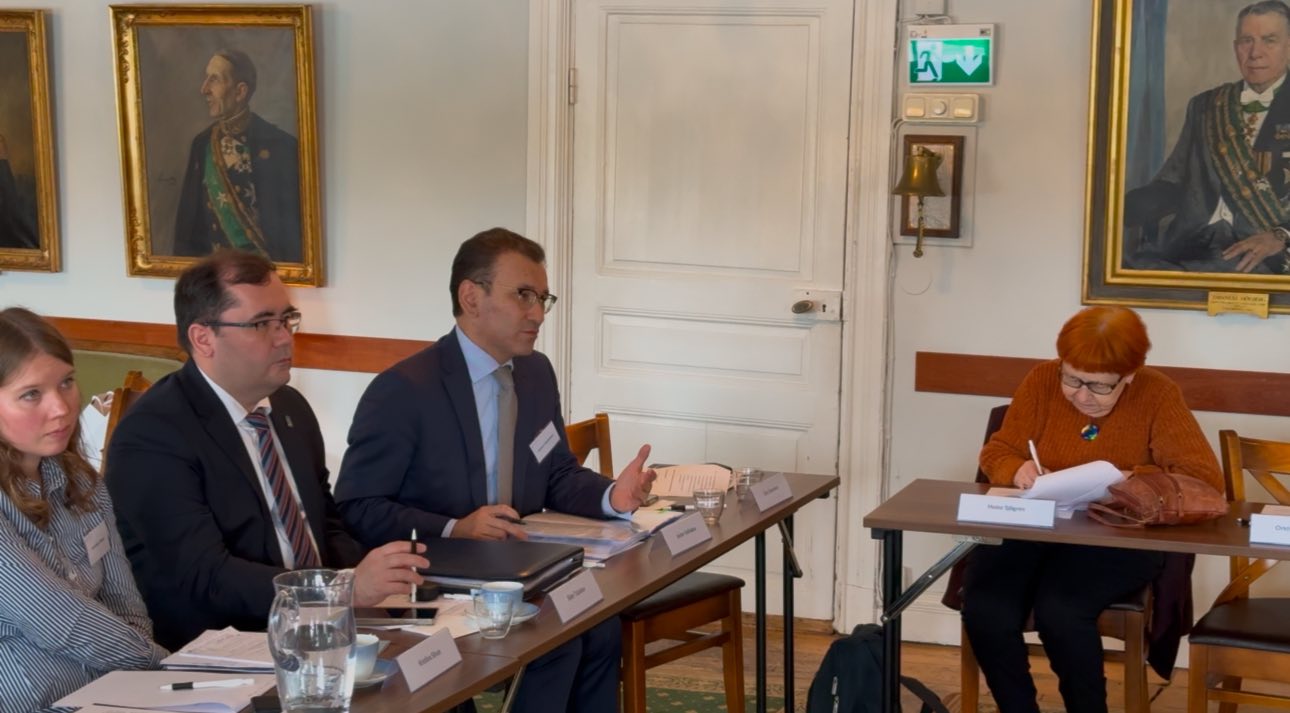
Speaking at the forum, IICA Director Javlon Vakhabov noted that as Central Asia expands its diplomatic outreach through over a dozen “C5+” formats with major global players, the Nordic Council stands out as a potential strategic partner offering both innovation and practical models for deepening interregional cooperation.
Discussions emphasized the promising areas for collaboration between Central Asia and the Nordic countries. J.Vakhabov highlighted that Nordic states are global leaders in green technology and digital transformation: Iceland generates over 90% of its electricity from renewables, Sweden recycles more than 99% of its household waste, and Finland and Denmark consistently rank at the top of Europe’s digital competitiveness indexes. He noted that such expertise — supported by institutions like the Nordic Investment Bank and the Nordic Development Fund — could significantly accelerate Uzbekistan’s and the region’s ecological and digital transitions, particularly as the country pursues 25 GW of renewable energy capacity and a 40% share of renewables in its energy mix by 2030.
IICA director also emphasized the importance of leveraging Nordic achievements in education and innovation, particularly for a demographically young region like Central Asia. He noted that adapting Nordic approaches could advance critical education reforms and help prepare a new generation of professionals for sustainable development.
On the issue of connectivity, he underlined Central Asia’s strategic location as a transit bridge between Europe and Asia — a position gaining renewed importance through projects like the Trans-Caspian International Transport Route (“Middle Corridor”). Nordic companies such as Denmark’s Maersk and Finland’s Nurminen Logistics are already active in strengthening this corridor through new container services, which are reducing transit times between China and Europe via Kazakhstan and the Caspian Sea.
In conclusion, participants underscored the importance of strengthening ties between research and policy institutions in Central Asia and the Nordic countries. As a next step, it was proposed to launch a dedicated Central Asia–Nordic Council Expert Forum, aimed at coordinating joint research, exchanging policy insights, and building long-term mutual trust between the two regions.