This strategy, he writes, is visible in concrete projects. The country’s first nuclear power plant anchors its relationship with Russia for decades. With China now Uzbekistan’s largest trading partner, Tashkent is prioritising industrial cooperation over raw-material exports. The joint automotive plant in Jizzakh, which already supplies neighbouring markets, is one example. The China–Kyrgyzstan–Uzbekistan railway, meanwhile, is turning the country from a terminus into a transit state.
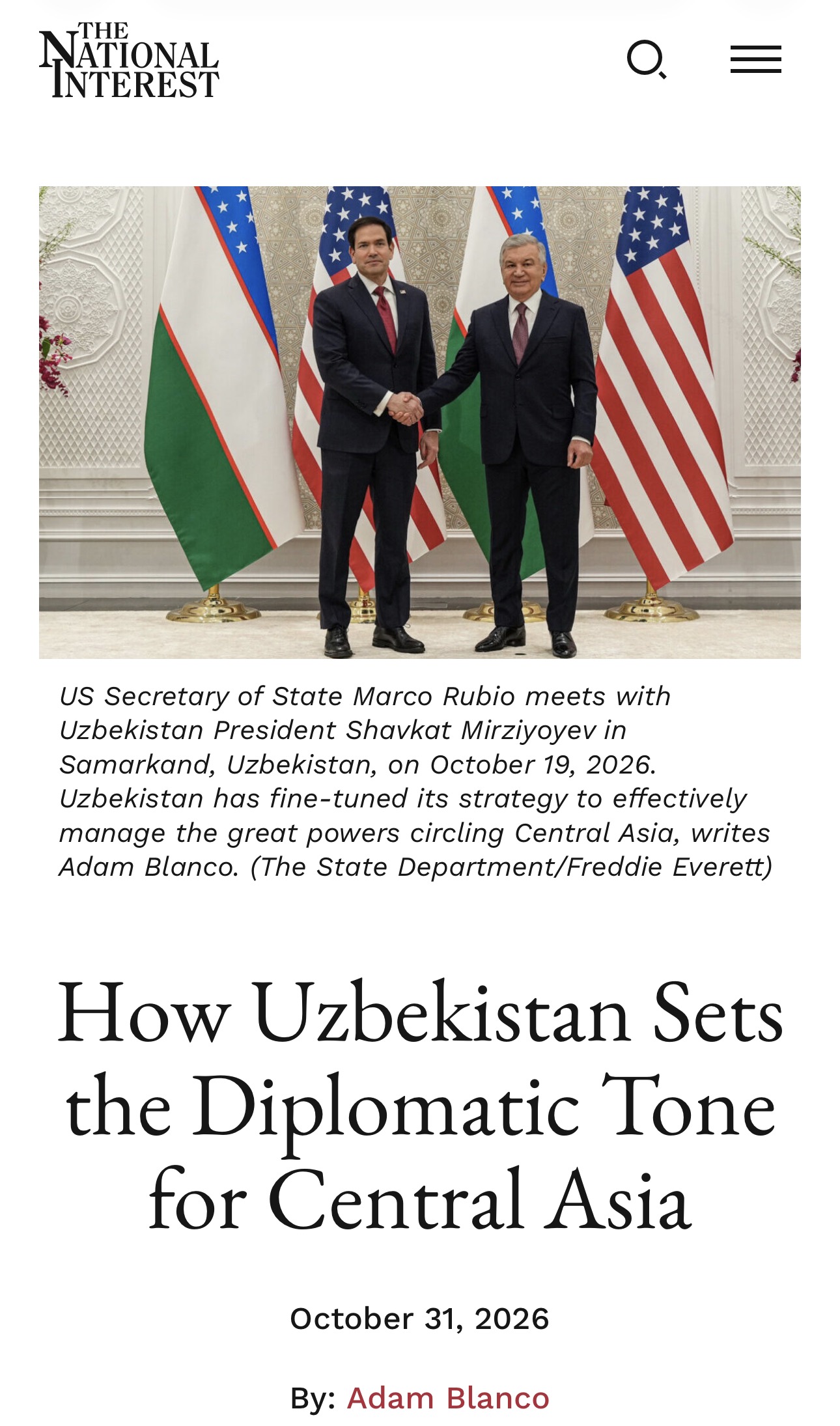
Blanco links the partnership with the United States to access to investment, technology and higher project-finance standards. Türkiye, with which Uzbekistan has established a comprehensive strategic partnership, provides a gateway to the Caucasus and Europe. Together, these relationships create lasting assets whose value extends beyond any single agreement.
In closing, Blanco compares Uzbekistan to a bass player in a jazz ensemble — “not the loudest instrument on the stage, but the one setting the tempo the others follow.” The National Interest
Read more: https://nationalinterest.org/blog/silk-road-rivalries/how-uzbekistan-sets-the-diplomatic-tone-for-central-asia