Over the past five years, the Organization of Turkic States has undergone a profound transformation, evolving into an effective mechanism for interregional cooperation and coordination.
The resilience and effectiveness of this format are largely determined by the maturity of its institutional architecture. Within the OTS, this architecture is structured as a multi-tier institutional structure comprising the Council of Heads of State, the Council of Foreign Ministers, the Committee of Senior Officials, the Council of Elders, and the Secretariat of the organization.
The organization’s development gained additional momentum from the adoption in 2021 of the “Turkic Vision – 2040” strategy, which became the conceptual foundation for sectoral roadmaps, action plans and a system of long-term priorities. The implementation of this strategy has been especially evident in the areas of transport digitalisation, customs procedures, investment cooperation and educational exchange.
Special attention should also be paid to the activities of TURKPA, within whose framework efforts to harmonise legislative approaches in trade, transport regulation and humanitarian cooperation have intensified considerably.
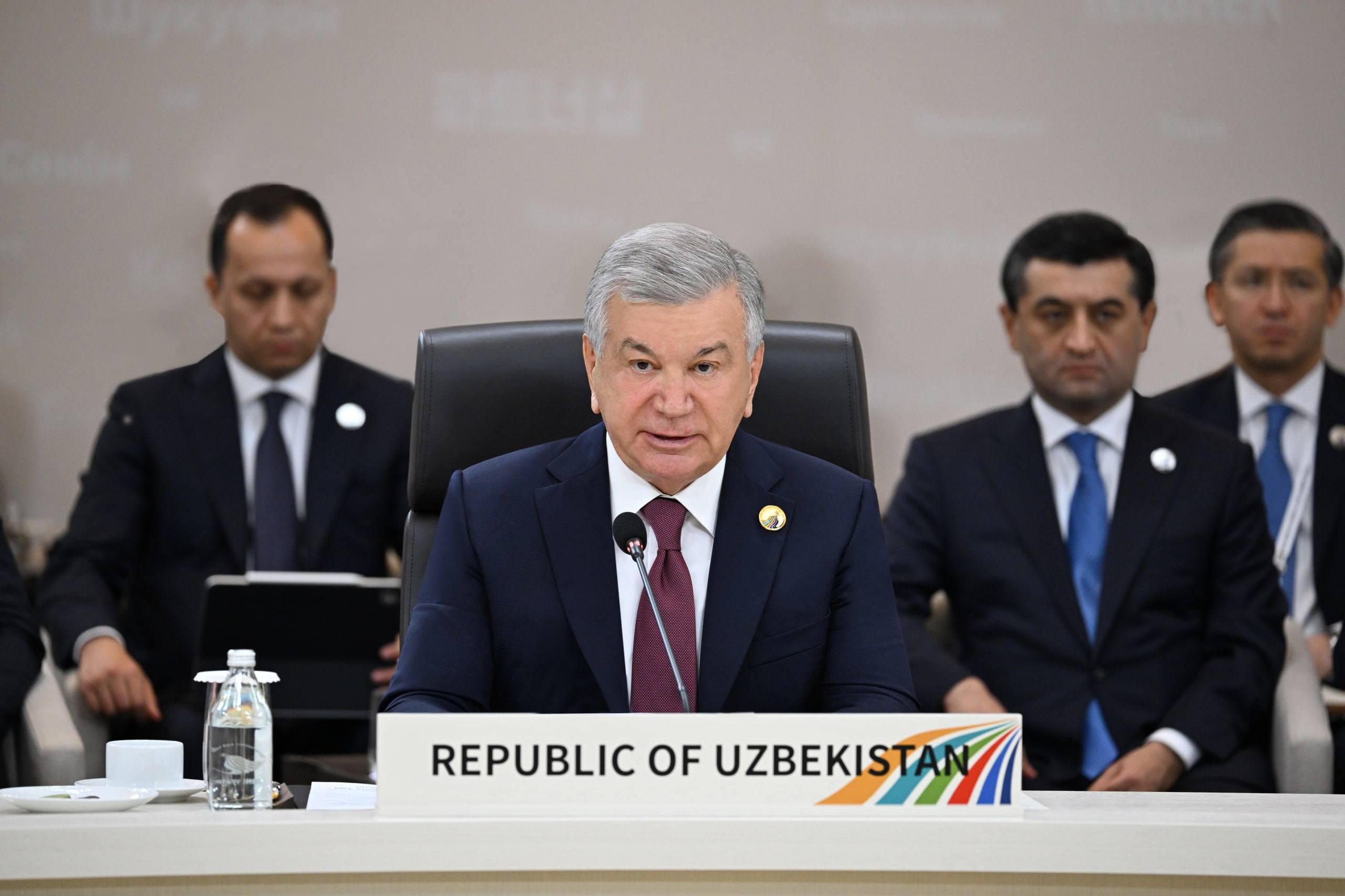
A significant impetus to the development of the Organization of Turkic States was provided by Uzbekistan’s active engagement in the organisation’s activities. In the years that followed, Uzbekistan emerged as one of the principal drivers behind the modernisation of the OTS agenda.
At the initiative of the President of the Republic of Uzbekistan, Shavkat Mirziyoyev, efforts to advance projects in transport connectivity, industrial cooperation, digital transformation and investment interaction gained substantial momentum. Many experts associate the transition of the organisation from a largely declarative platform to a stage of practical institutionalisation precisely with the intensification of Uzbekistan’s participation.
An additional symbolic and political impetus was provided by the 2022 Samarkand Summit, during which decisions were adopted to establish the Turkic Investment Fund and to expand the institutional scope of the organisation’s economic agenda. This stage consolidated the evolution of the Organization of Turkic States towards the formation of a fully developed geo-economic space while preserving its cultural and historical foundations.
At the same time, economic cooperation has gradually become established as the central vector of the OTS’s development. The organisation’s combined demographic potential is estimated at approximately 178 million people, a substantial share of whom belong to the young and economically active population. The aggregate nominal GDP of the participating states exceeds USD 1.8–1.9 trillion, while their combined foreign trade turnover stands at more than USD 1.1 trillion.
In recent years, intra-regional trade has demonstrated steady positive momentum. According to estimates by the Secretariat of the Organization of Turkic States, mutual trade turnover among member states has reached USD 22–23 billion, nearly doubling compared to the beginning of the decade.
Uzbekistan has played a notable role in this process. By the end of 2025, the republic’s trade volume with OTS member states exceeded USD 9 billion, whereas in 2019 this figure stood at approximately USD 4.2 billion. Thus, over a six-year period, trade turnover has effectively doubled.
A particularly illustrative example is the industrial cooperation between Uzbekistan and Turkey. The number of enterprises operating in Uzbekistan with Turkish capital participation has surpassed 2,000, while the total value of joint investment projects is estimated at more than USD 5 billion. A substantial share of these projects is concentrated in the textile sector, construction materials manufacturing, electrical engineering and the food industry.
The particular significance of this interstate association stems from its geo-economic position. The member states of the Organization of Turkic States are situated at the strategic intersection of major transport arteries linking East Asia, the South Caucasus, the Middle East and Europe.
Its central element is the Middle Corridor, connecting China, Central Asia, the Caspian region, the South Caucasus, Turkey and, subsequently, European markets. Over the past three years, the route has demonstrated stable growth in cargo traffic. By the end of 2025, freight volumes along the corridor exceeded 4.5 million tonnes, compared to less than 1 million tonnes in 2021.
A key driver of this growth has been the comprehensive modernisation of port infrastructure. Following reconstruction, the capacities of the Baku International Sea Trade Port now allow for the handling of up to 15 million tonnes of cargo annually, including up to 100,000 containers, with expansion potential reaching 25 million tonnes.
Another important factor has been the acceleration of delivery times. Whereas transportation of cargo from China to Europe along this route previously required between 40 and 50 days, the introduction of digital document management systems (e-CMR), the harmonisation of preliminary customs notification procedures and infrastructure modernisation have reduced transit times to 18–23 days.
A particularly promising area of cooperation is the creation of a transregional “green energy corridor” aimed at exporting electricity generated from renewable energy sources in Central Asia and the South Caucasus towards European markets. Azerbaijan, Kazakhstan and Uzbekistan have intensified coordination on issues related to grid synchronisation and the construction of the corresponding energy transmission infrastructure.
At the same time, amid accelerating global digitalisation, technological development is acquiring not only economic but also strategic significance, forming the foundation for enhancing the efficiency of interstate cooperation, modernising industry and strengthening infrastructural connectivity.
The combined volume of the digital economy across the member states of the Organization of Turkic States already exceeds USD 110 billion, while annual growth rates in the sector across a number of participating countries range between 12 and 18 per cent — significantly surpassing the global growth rates of traditional industries.
The OTS’s growing focus on digital development was evident in the informal summit held on 15 May 2026 in Turkestan, where artificial intelligence and digital transformation emerged as the central themes. This demonstrated the organisation’s transition towards viewing technological transformation as one of the priority areas of strategic cooperation.
Uzbekistan has likewise demonstrated accelerated digital modernisation. By the end of 2025, the country’s exports of IT services exceeded USD 1 billion — nearly five times higher than the figures recorded in 2020. Through a network of specialised IT parks, hundreds of companies are now operating in external markets, including those of OTS member states. Within the framework of regional cooperation, the republic has been actively promoting initiatives aimed at harmonising digital services and developing joint educational programmes in the field of advanced technologies.
However, the effectiveness of these processes is determined not only by economic factors, but also by humanitarian ones. In this regard, the Organization of Turkic States possesses a unique advantage, as it rests on a deep historical and cultural commonality, linguistic proximity, and similarities in civilisational traditions among its member states.
A key role in this process is played by a network of specialised institutions, among which the International Turkic Academy, TURKSOY, TURKPA, and the Union of Turkic Universities are of particular importance, ensuring the comprehensive development of humanitarian, scientific and educational cooperation.
These structures facilitate the coordination of scientific research, the development of joint educational initiatives, the promotion of cultural heritage, and the expansion of people-to-people interaction.
Particular attention is being paid to the development of academic integration. Since 2025, as part of inter-university cooperation among member states of the Organization of Turkic States, dozens of academic exchange programmes have been implemented, including joint master’s and doctoral degrees. The number of students participating in educational mobility between the organisation’s countries has been growing at an average annual rate of 18–22%.
A notable contribution to this process is made by leading universities such as Al-Farabi Kazakh National University, Ankara University, Samarkand State University and Kyrgyz-Turkish Manas University, which serve as key centres for human capital development and academic support of integration processes.
Member states are also placing special emphasis on expanding tourism potential. The combined tourist flows between OTS countries have increased by more than 35% over the past five years. A significant contribution to this growth has come from the development of joint tourist routes, including pilgrimage, historical-cultural and ethnographic programmes.
In this context, the “Cultural Capital of the Turkic World” programme, along with the designation of cities such as Khiva, Aktau, Turkmenbashi and Shusha as cultural capitals, has significantly contributed to the intensification of tourism exchange within the framework.
Another driver of tourism development has been the creation of a unified tourism product, “Tabarruk Ziyorat,” aimed at fostering religious and educational tourism between Uzbekistan, Kazakhstan, Kyrgyzstan and Turkey.
In the longer term, the Organization of Turkic States has considerable potential to further strengthen its role as a space for practical cooperation.
Key priorities in this regard will include deepening economic cooperation through the reduction of non-tariff barriers and the digitalisation of trade and customs procedures; further development of transport and logistics connectivity, primarily within the Middle Corridor; expansion of technological cooperation focused on the development of the digital economy and joint innovation platforms; as well as strengthening expert, analytical, academic and educational interaction.
Overall, the deepening of cooperation across key areas will contribute to strengthening the role of the Organization of Turkic States as one of the most promising frameworks for ensuring the development and resilience of the countries of Central Asia.
In this context, the informal OTS summit held in Turkestan represented an important milestone in advancing this agenda, reaffirming the member states’ commitment to expanding practical cooperation and outlining new directions for joint development, primarily in the fields of digital transformation and technological cooperation.