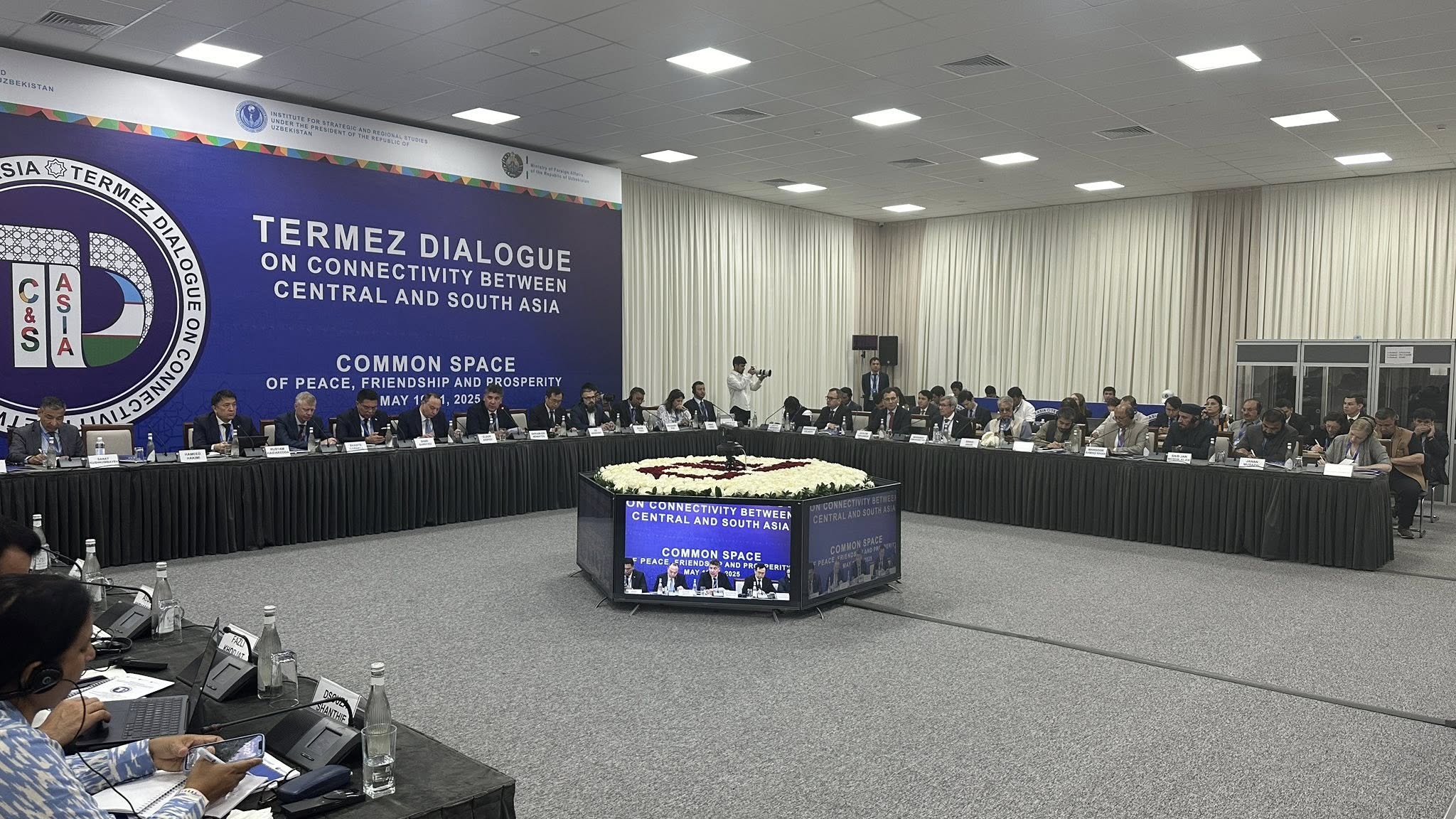
This newly launched platform aimed to bring Central and South Asia closer together, to explore pathways for building a sustainable connectivity architecture, and to define collective approaches to ensuring regional security and economic integration.
The three-day forum gathered deputy foreign ministers of Central Asian countries and Afghanistan, special envoys on Afghanistan, UN Special Representative and Head of UNAMA Roza Otunbayeva, UNRCCA Head Kaha Imnadze, CIS Deputy Secretary-General Dmitry Trefilov, SCO Deputy Secretary-General Pei Yanfan, heads and members of regional chambers of commerce, diplomats, business representatives, and leading experts from prominent think tanks and research institutions.
Director of the International Institute for Central Asia (IICA), Javlon Vakhabov, delivered a keynote address at the forum. In his remarks, he emphasized that a decisive condition for advancing interregional trade and investment ties lies in a dramatic enhancement of transport connectivity between the two regions. This, he argued, necessitates the development of a modern, efficient, and secure transport and logistics infrastructure.
In this context, he highlighted the significance of integrated infrastructure projects such as the China–Kyrgyzstan–Uzbekistan and Uzbekistan–Afghanistan–Pakistan railways. These projects, according to him, have the potential to significantly reduce logistics costs, diversify external trade routes, and reinforce market connectivity. Such outcomes would, in turn, create favorable conditions for private investment, expansion of production chains, and enhanced competitiveness of national economies.
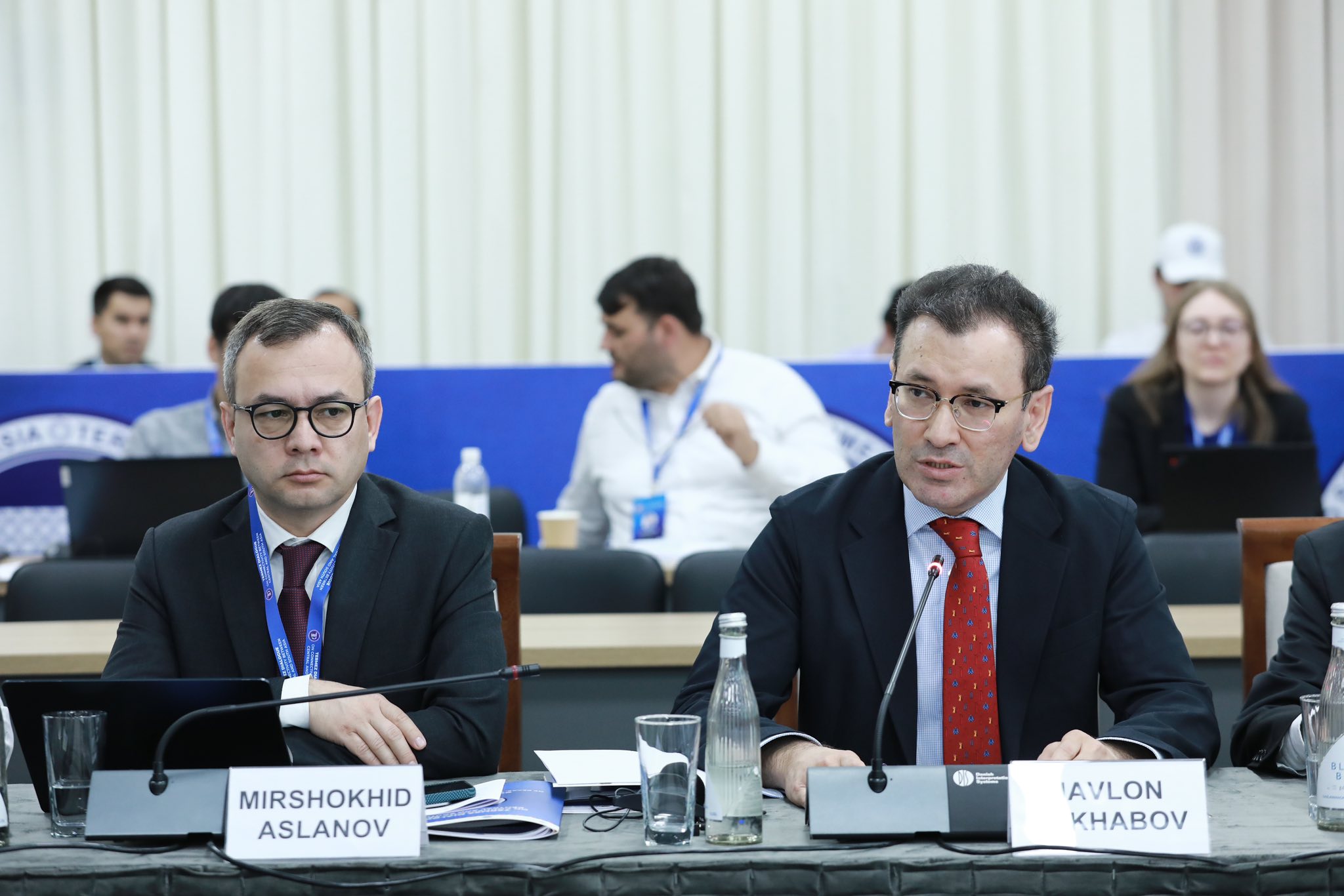
J.Vakhabov further noted that in light of rapidly evolving geopolitical and economic dynamics, Central Asia is actively pursuing a strategy of diversified transport and logistics linkages.
He drew particular attention to the increasing strategic importance of routes through Afghanistan: Turkmenistan is constructing the TAPI gas pipeline, while Kazakhstan is partnering on a railway project through Herat and Kandahar. Simultaneously, gaining access to Iran’s southern ports—especially the port of Chabahar—is becoming a key priority. Uzbekistan, he stated, attaches special importance to this direction and is engaged in dialogue with India and Iran to boost cargo transit. In his assessment, the construction of the Chabahar–Zahedan railway provides a foundation for integration into the International North–South Transport Corridor and for establishing a unified macro-regional space.
Among international multilateral transport and logistics frameworks, J.Vakhabov placed particular emphasis on the Ashgabat Agreement, underscoring its potential to facilitate a transnational transport and transit corridor linking Central Asia with the Persian Gulf and South Asia.
He stressed that further advancing regional connectivity will require intensified efforts to integrate Afghanistan as a full-fledged partner, as well as to revitalize multilateral development mechanisms such as RECCA and the Istanbul Process.
In conclusion, J.Vakhabov put forward several strategic proposals, including the establishment of a network of business councils and interregional forums to strengthen trade and investment cooperation; the development and regional integration of renewable energy under the CASA-1000 project; the creation of a specialized platform for coordinating transport and logistics operations; the enhancement of digital connectivity; and the launch of an annual Central and South Asia Think Tank Forum aimed at developing