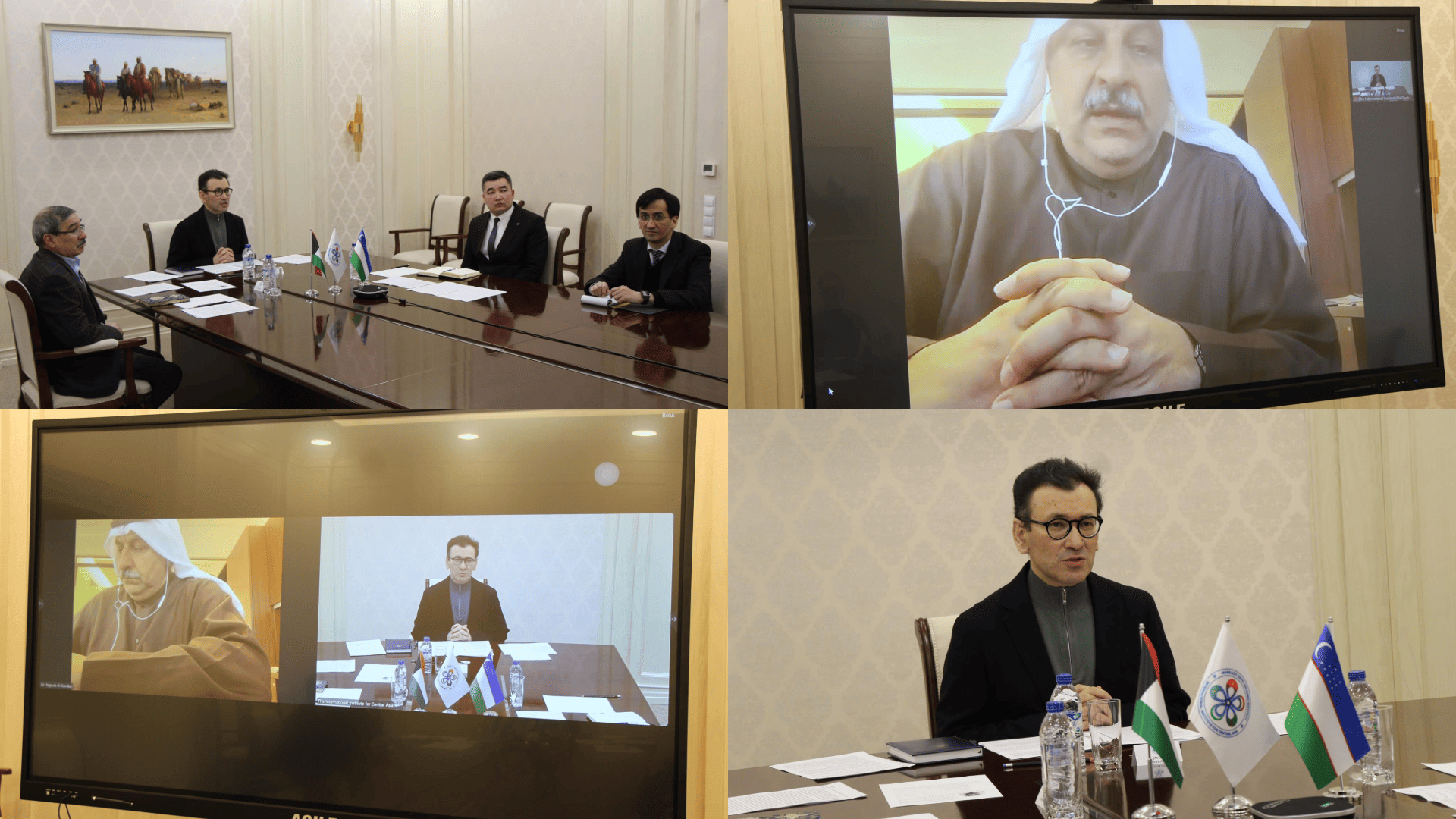
During the meeting, IICA Director Javlon Vakhabov and Dr. Yaqoub Al-Kandari, Director of the Gulf and Arabian Peninsula Studies Center, placed special emphasis on the implementation of key initiatives proposed by President of Uzbekistan Shavkat Mirziyoyev at the Central Asia – Gulf Cooperation Council (GCC) Summit in Jeddah on July 19, 2023. Their discussion revolved around advancing proposals for a multilateral Agreement on Friendship, Regional Connectivity, and Cooperation, establishing an Investors’ Council with the participation of business leaders from both regions, launching joint projects in green energy, developing a multilateral Trade Agreement, introducing a visa-free tourism zone connecting the Gulf and Central Asia, and expanding direct air links to enhance economic and cultural exchanges.
The two sides also exchanged views on the upcoming Second Central Asia–GCC Summit, set to take place this year in Samarkand. They underscored the potential for think tanks from Uzbekistan and Kuwait to contribute meaningfully to this multilateral platform, particularly by initiating educational programs designed to train specialists focused on both regions. These efforts would be particularly beneficial for young scholars and experts eager to deepen their understanding, gain hands-on experience, and drive forward cross-regional cooperation.
Dr. Yaqoub Al-Kandari reaffirmed his institution’s commitment to fostering a robust academic environment for research spanning a diverse array of topics. The dialogue also covered the prospects of launching joint research projects in transport and transit, with a special focus on optimizing tariffs along the Middle Corridor, leveraging existing multimodal transit routes passing through Afghanistan, and exploring innovative logistical solutions to strengthen trade linkages.
Representatives of both institutes further discussed the organization of joint conferences, roundtables, and seminars to serve as dynamic platforms for knowledge exchange, idea generation, and the sharing of best practices. This partnership is expected to pave the way for a deeper academic and policy-oriented dialogue between Central Asia and the Gulf, reinforcing their shared commitment to sustainable development and regional integration.