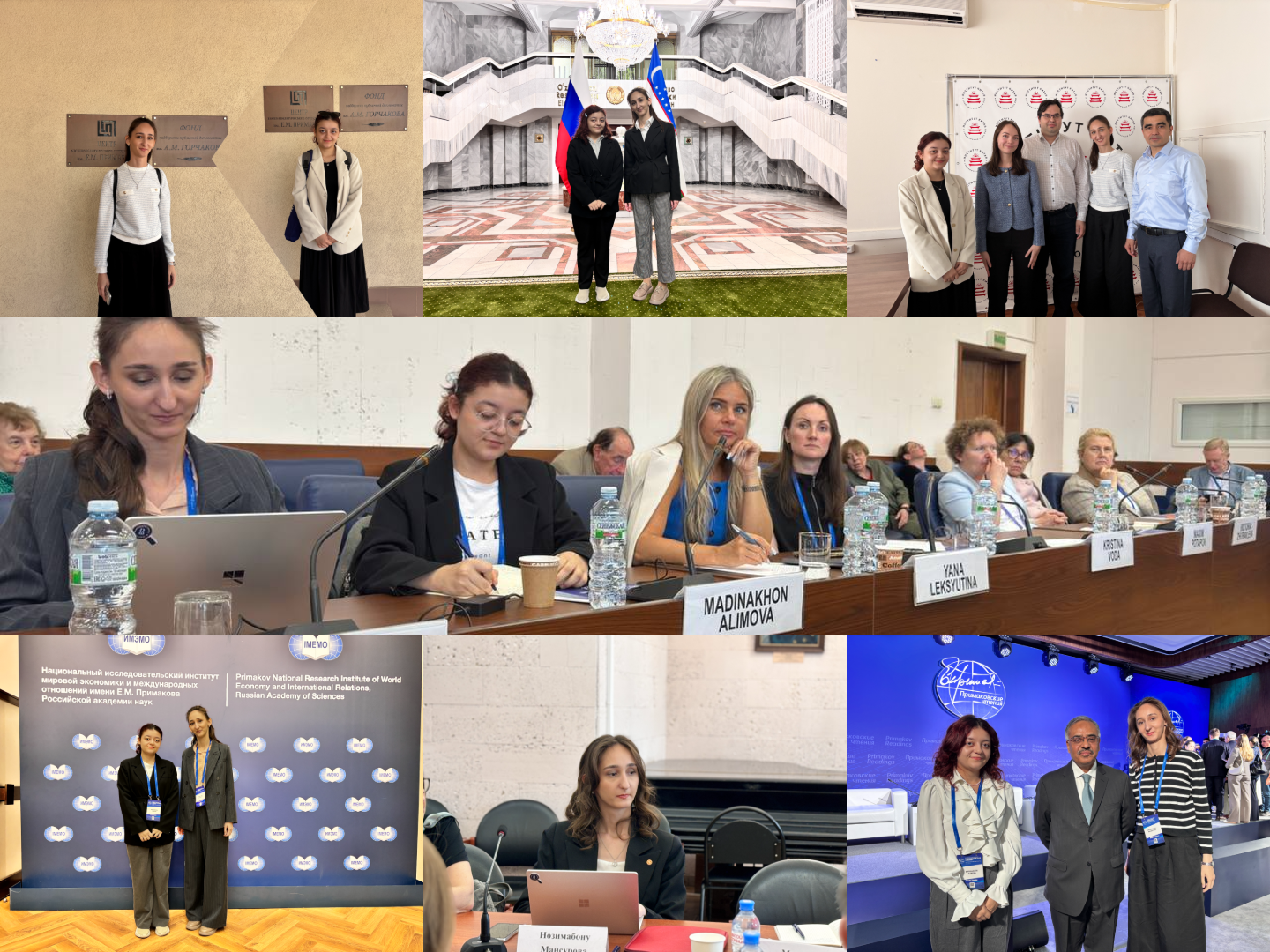
As part of the internship, IICA researchers took part in the 11th Primakov Readings, an international scientific and expert forum organized by the IMEMO RAS. The event brought together leading politicians, diplomats, and scholars from around the world. The forum’s sessions explored key issues including the transformation of the international order and the rising strategic relevance of Central Asia.
The IICA delegation held a series of meetings with prominent Russian think tanks. Discussions with the Alexander Gorchakov Public Diplomacy Fund centered on strengthening expert dialogue, joint event planning, and new academic exchange initiatives — with a particular emphasis on youth engagement.
At the IMEMO RAS, the parties reviewed ways to enhance the content of expert dialogue within the "Central Asia – Russia" format. In parallel, talks with the Institute of Oriental Studies of the Russian Academy of Sciences explored joint research in Middle Eastern studies and the identification of future collaborative themes.
Engagements at the Institute of China and Contemporary Asia (ICCA RAS) focused on expanding joint publications and analytical output, especially in the context of regional cooperation.
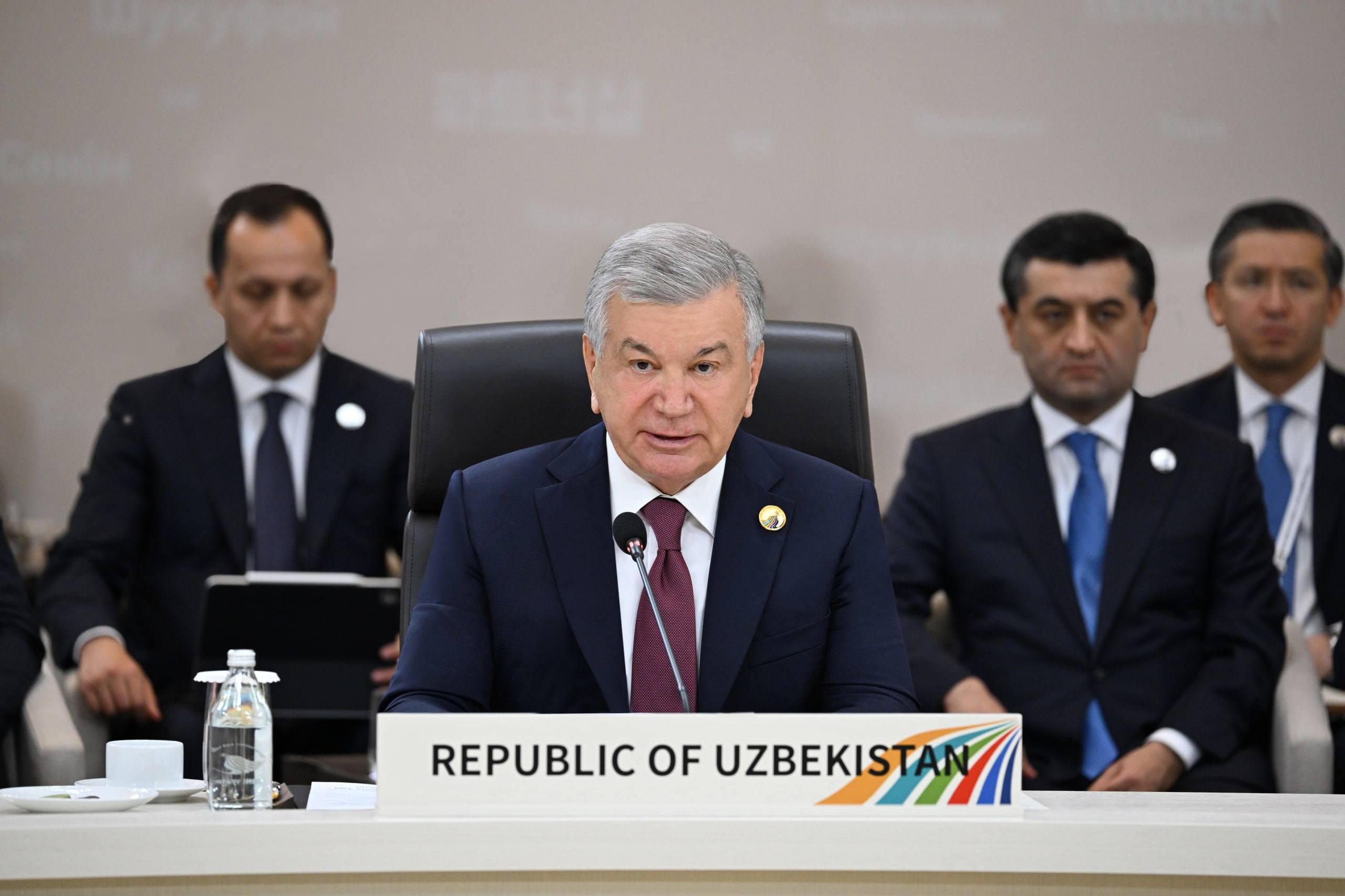
IICA researchers also took part in roundtables on regional development in Central Asia. At the Russian Institute for Strategic Studies (RISS), discussions focused on Uzbekistan’s priorities during its chairmanship of the Consultative Meetings of Central Asian Leaders (CMCAL), including the institutionalization of dialogue mechanisms, regional initiative coordination, and preparations for the upcoming summit.
To continue these discussions, the Embassy of Uzbekistan in Moscow hosted a joint roundtable involving several Uzbek and Russian research institutions.
The internship also provided an in-depth review of the current state and future prospects of Uzbekistan-Russia relations across a broad spectrum — from political dialogue and economic cooperation to humanitarian exchanges and scientific partnerships. Particular attention was given to deepening expert interaction and sharing analytical approaches on key regional and global issues.
Participants became familiar with the Embassy’s role in supporting academic dialogue, facilitating joint initiatives, and fostering stronger institutional ties between the two countries’ research communities.
The internship outcomes contributed to expanding professional exchange, reinforcing expert cooperation, and generating new strategies for long-term collaboration between Uzbek and Russian analytical centers.