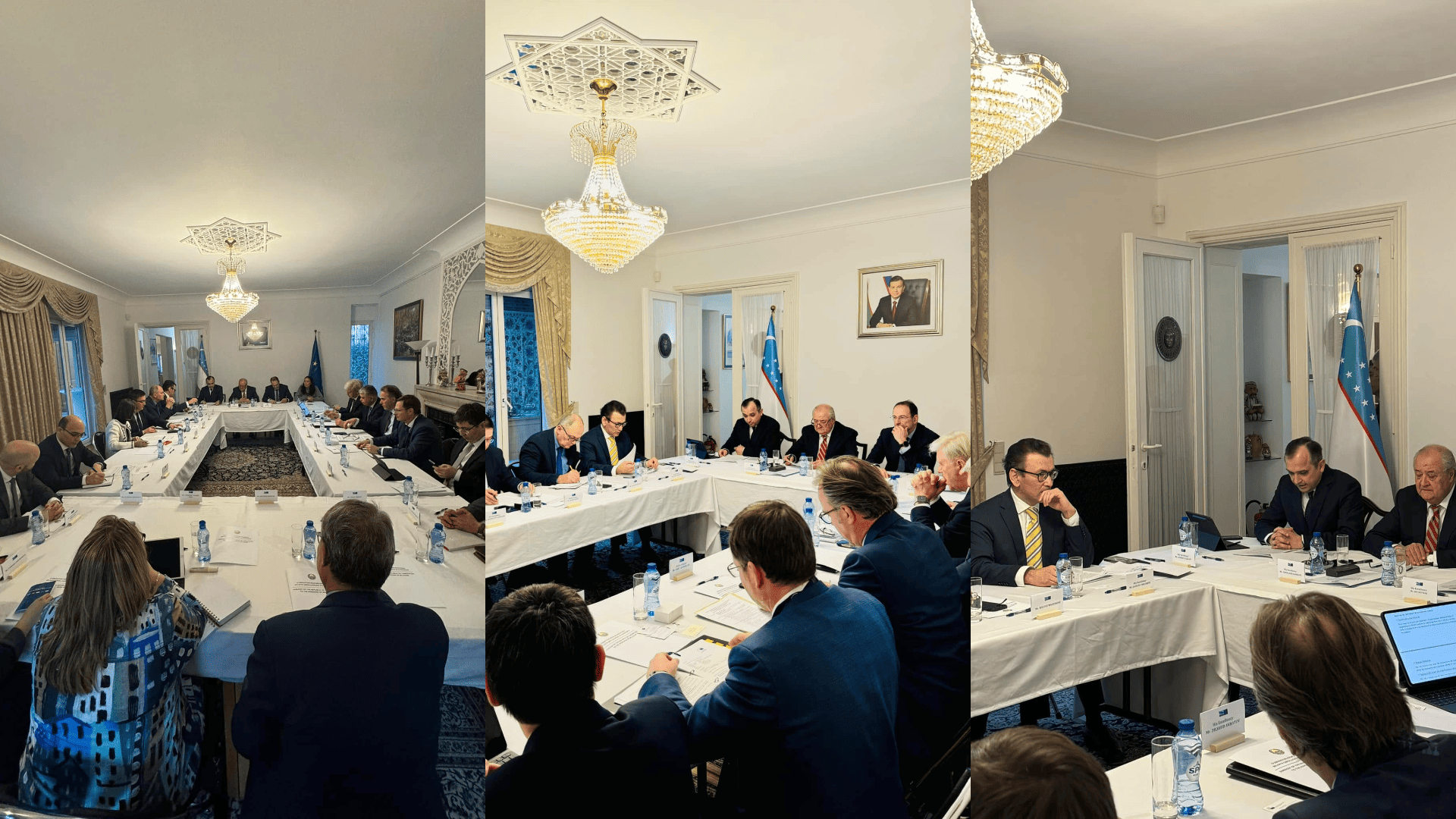
The event was organized by the Permanent Mission of Uzbekistan to the European Union and brought together representatives from key European institutions, including the European Council, the European Commission, the European External Action Service, and the European Investment Bank.
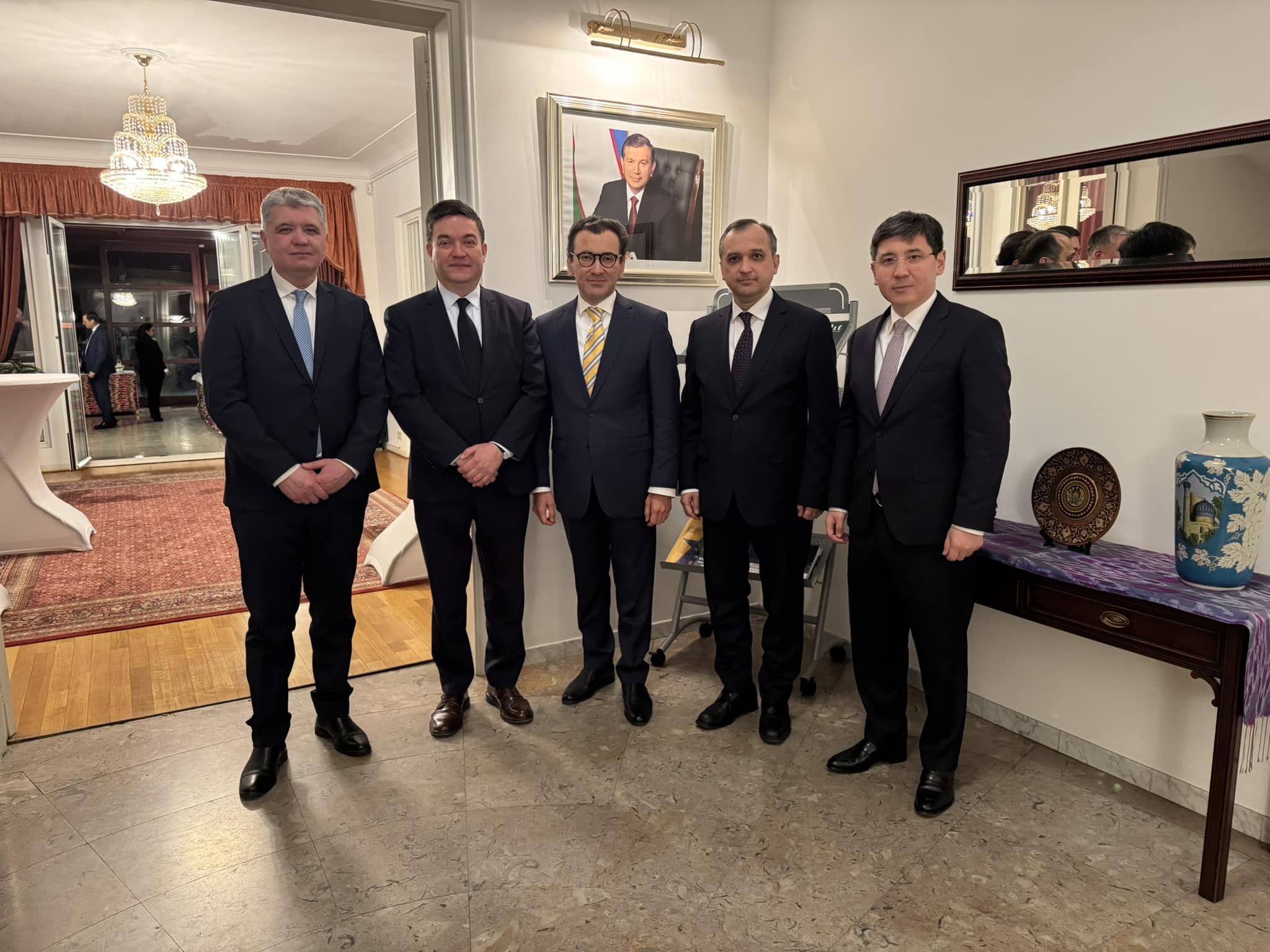
The Uzbek delegation was joined by Javlon Vakhabov, Director of the International Institute for Central Asia, as well as the heads of Uzbekistan’s diplomatic missions in Belgium, France, Germany, and Italy.
The roundtable served as a platform for in-depth discussions on strengthening interregional cooperation across a range of strategic sectors, including politics and security, trade and investment, energy, industry, and education.
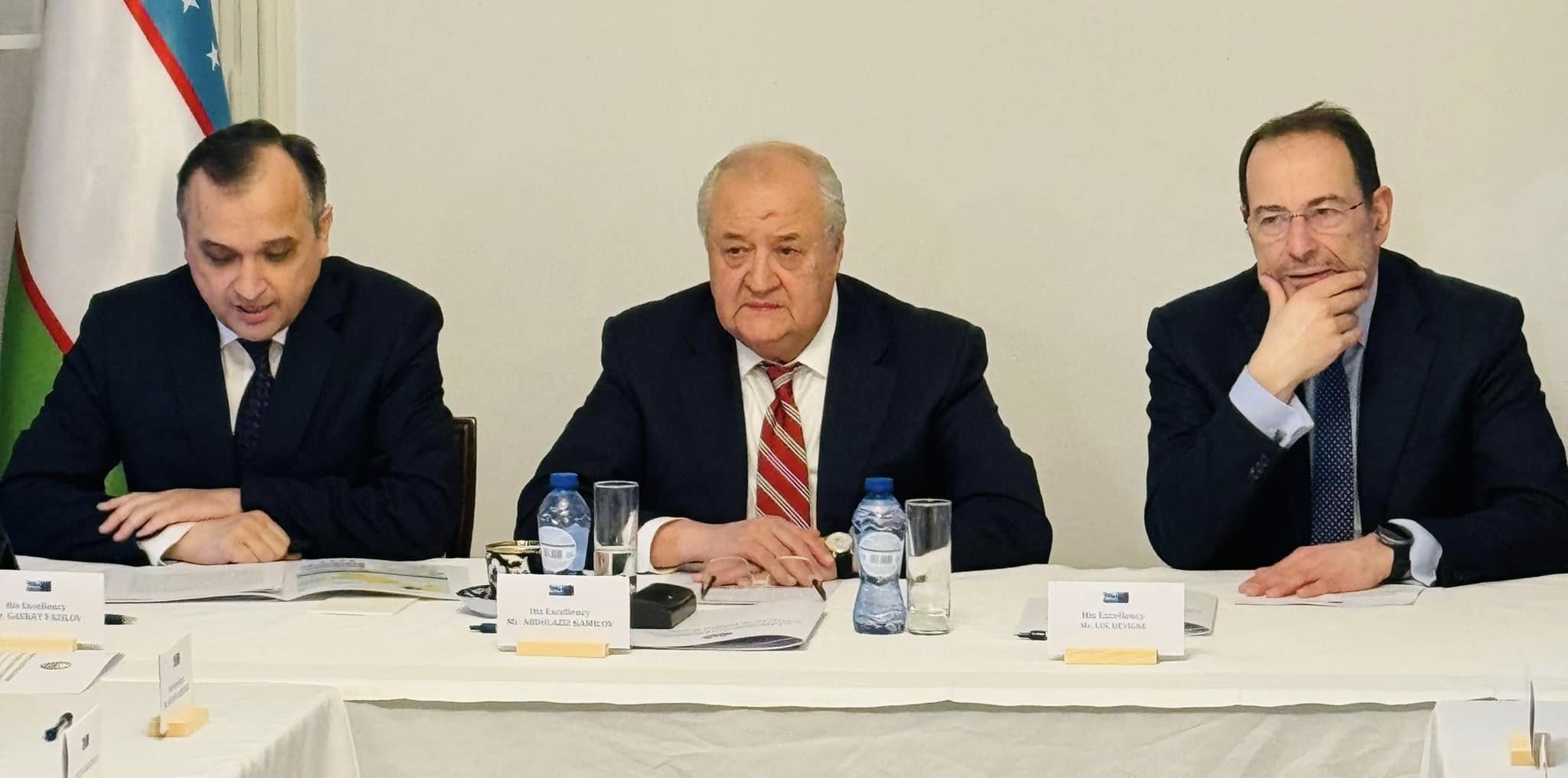
In the sphere of politics and security, both sides reaffirmed their commitment to deepening dialogue, enhancing joint efforts in counterterrorism and combating transnational threats, bolstering cybersecurity, and advancing collaboration on migration policy and border protection.
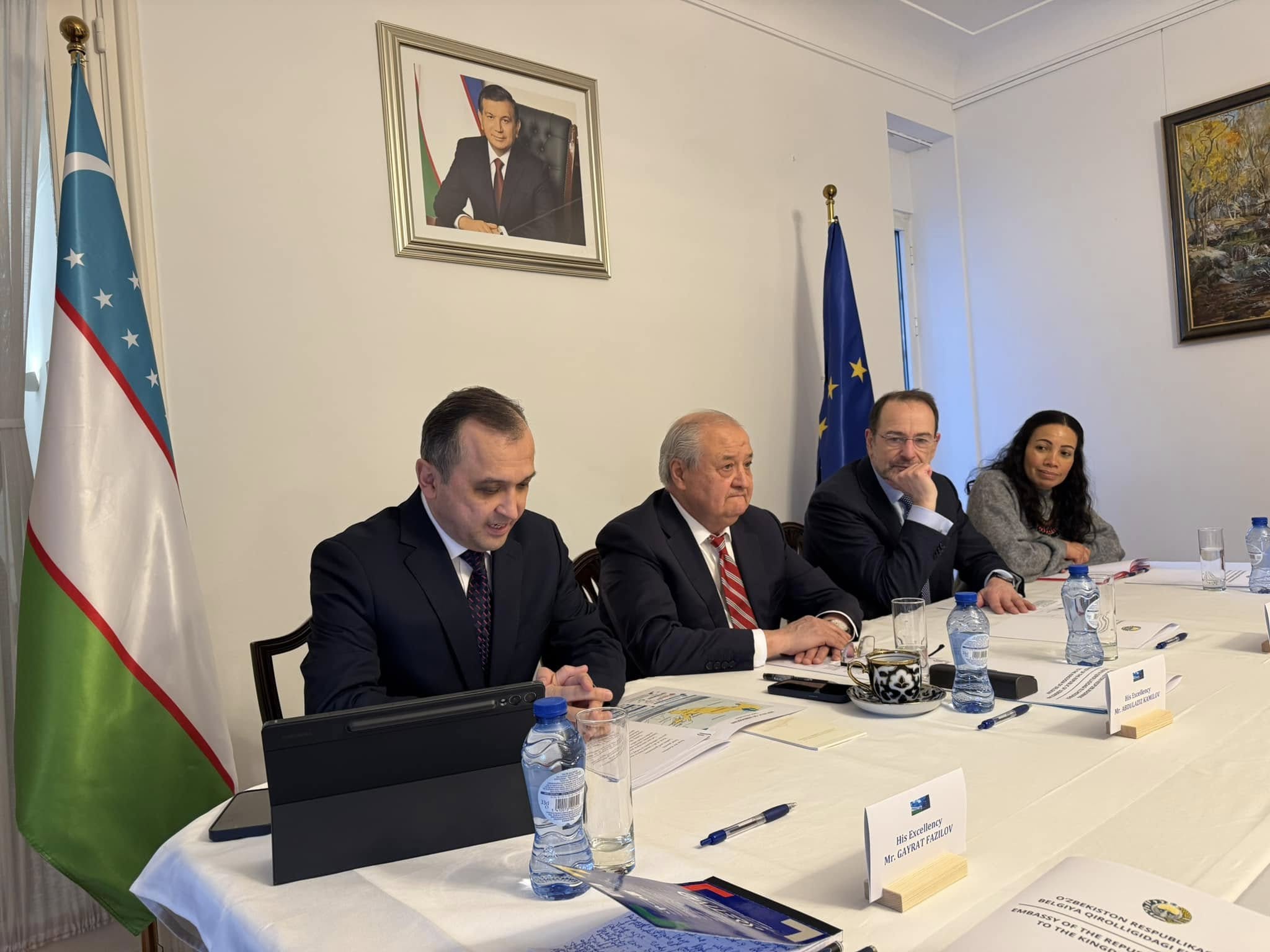
On trade and economic cooperation, participants emphasized the importance of the GSP+ mechanism in facilitating increased exports of Uzbek goods to European markets. Additionally, they underscored the significance of the EU’s Global Gateway initiative, which aims to enhance infrastructure and transport connectivity, including support for the Trans-Caspian Transport Corridor, creating new opportunities for trade and investment between Central Asia and Europe.
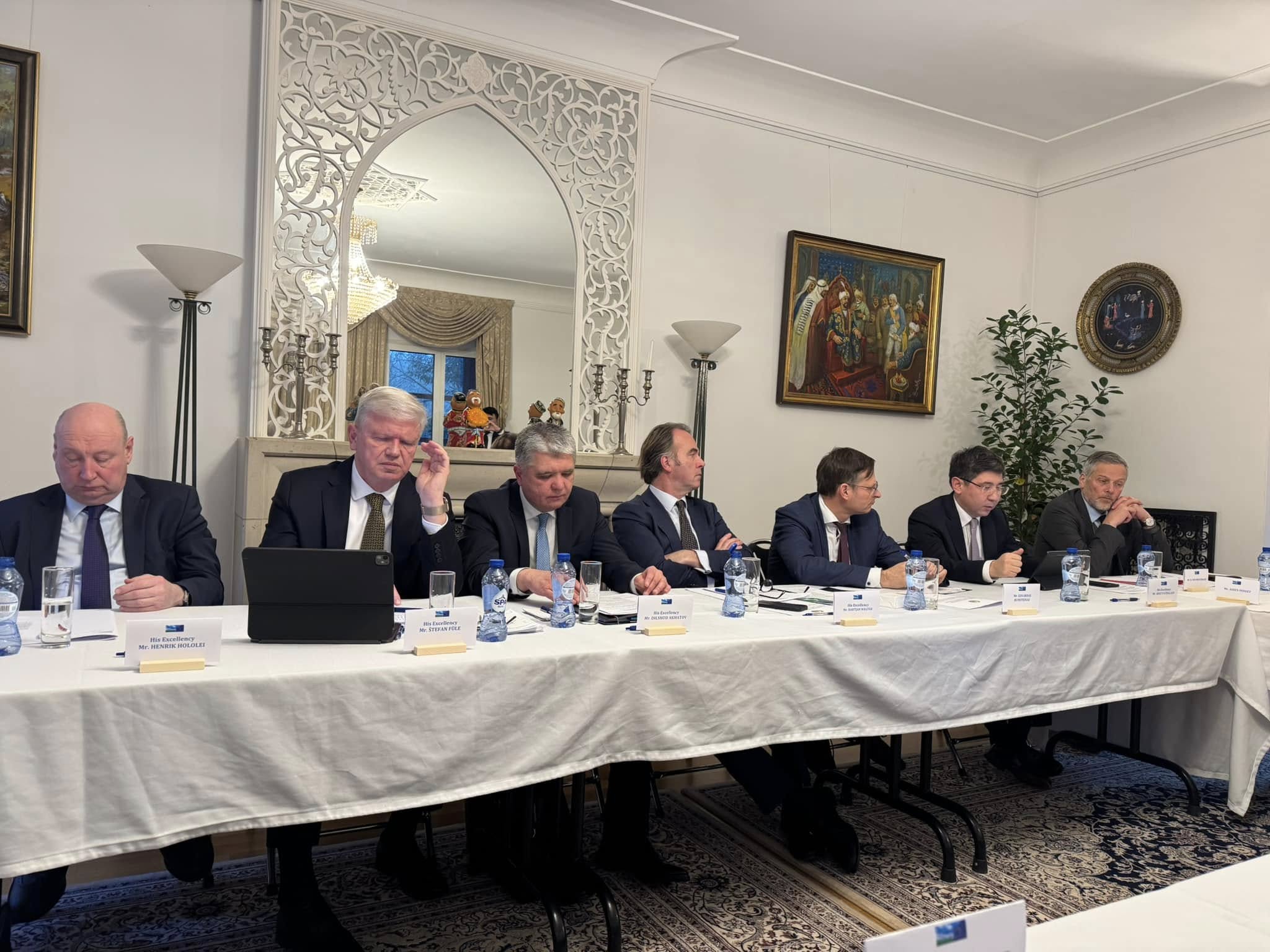
EU and Uzbek officials also highlighted the importance of cooperation in raw materials, noting successful progress under previously signed agreements. Special attention was given to joint research on critical minerals and the development of transport infrastructure, which would not only enable Central Asia to export resources but also foster value-added production within the region.
Overall, the roundtable marked a significant milestone ahead of the Central Asia – European Union Summit, scheduled for April 3–4 in Samarkand. The event reaffirmed the strong and evolving partnership between Uzbekistan and the EU, showcasing a shared commitment to deepening collaboration.
Both sides agreed to continue their dialogue on key areas of cooperation, including expanding trade and economic ties, advancing transport connectivity, and strengthening coordination on security matters.